
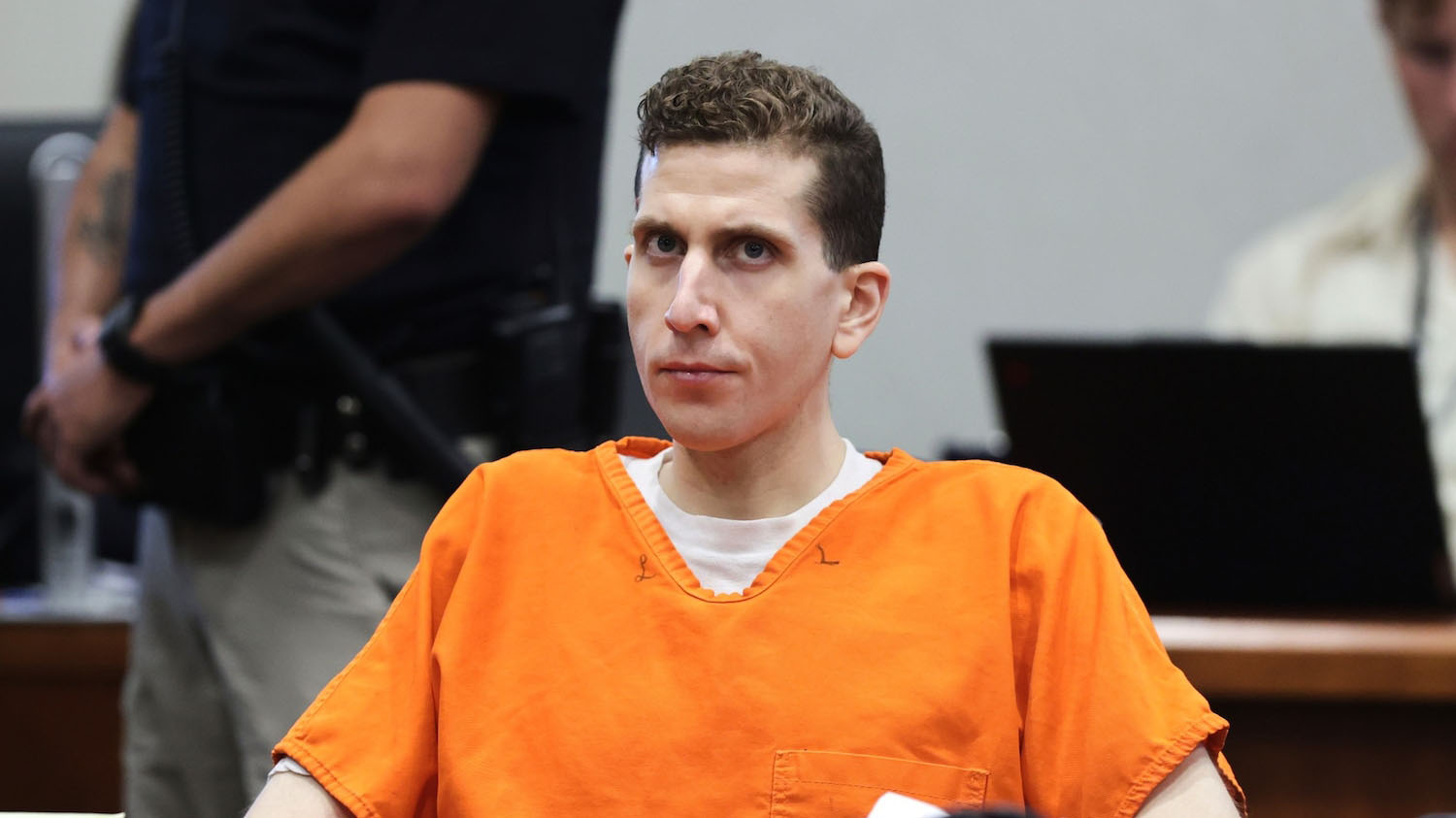
Bryan Kohberger granted new hearing in bid to take back guilty plea in Idaho murders: Court filings

Bryan Kohberger appears at the Ada County Courthouse for his sentencing hearing, July 23, 2025, in Boise, Idaho. (Kyle Green/Pool/Getty Images)

(NEW YORK) — Bryan Kohberger, who pleaded guilty last year to the University of Idaho quadruple murders, has been granted a new hearing in his bid to take back his guilty plea, according to court filings. 

His new evidentiary hearing has been set for June 17, 2027.

In 2022, Kohberger was arrested for the stabbing deaths of four University of Idaho students — roommates Kaylee Goncalves, Madison Mogen and Xana Kernodle, and Kernodle’s boyfriend, Ethan Chapin — at the girls’ off-campus house.

In July 2025, weeks before his trial was set to start, Kohberger pleaded guilty to all counts. As part of the plea deal, the death penalty was taken off the table. Kohberger was given four consecutive life sentences for four first-degree murder counts as well as 10 years for the burglary count.

Last month, Kohberger reversed course, filing a petition for post-conviction relief. Without offering new evidence, Kohberger — a criminology student at Washington State University at the time of the murders — claimed he was lied to and pressured to falsely confess, and that there was information withheld that could have potentially helped his case. 

This is a developing story. 

Copyright © 2026, ABC Audio. All rights reserved.
Federal judge won’t require ICE agent to remain imprisoned in Texas while extradition fight plays out

(CNN) — A federal judge declined on Wednesday to order Texas officials to keep an ICE agent accused of shooting an immigrant in custody while Minnesota’s effort to extradite him play out.The judge said he lacked authority over a lawsuit brought by Minnesota Democratic Gov. Tim Walz last week that aimed to keep the agent behind bars for now because he didn’t think there was evidence that Texas’ governor had violated federal law, as Walz argued.The upshot is that officials in Texas may be able to release the agent, Christian Castro, as soon as Thursday, even as GOP Gov. Greg Abbott mulls an extradition request made to him in June.“Minnesota cannot premise its causes of action on the allegation that Governor Abbott may” violate extradition laws in the future, Judge Fernando Rodriguez, Jr., a Trump appointee, wrote in the ruling. “The record before the court … reveals that Governor Abbott has not denied the request for a rendition warrant.”He continued: “Minnesota identifies no statutory or constitutional provision requiring Governor Abbott to complete his investigation and decide whether to sign the rendition warrant within a particular time period.”Texas Rangers arrested Castro in Cameron County, Texas, on May 29 on a nationwide warrant. He faced four felony charges and a misdemeanor in Minnesota after the shooting of Julio Sosa-Celis during the height of Operation Metro Surge in the Minneapolis area. Prosecutors in Hennepin County, Minnesota, say Castro shot Sosa-Celis in the leg through the front door of a home, injuring him and endangering several other people who were also inside.Castro is eligible for release from custody altogether as soon as August 27 due to a Texas criminal procedure policy that puts a 90-day limit on the detention of fugitives awaiting extradition.The Cameron County Sheriff Manuel Treviño told CNN on Wednesday that he’s waiting for further guidance from county attorneys on whether to release Castro.CNN has attempted to reach Castro’s lawyer as well as representatives for the Minnesota attorney general and Abbott.Minnesota, which sued Texas last week, argued that Castro posed a flight risk to Mexico due to a romantic relationship he has with a woman in Mexico. Rodriguez on Wednesday recognized that Castro’s potential flight to Mexico would “impose a hardship on Minnesota’s prosecutorial efforts,” but said that that concern alone was not enough to overcome the procedural issued he identified in the case.“The threat of injury by itself does not create an issue ripe for adjudication,” the judge wrote.Texas resisted the extradition because it took issue with Minnesota’s labeling of Castro as a “fugitive.” Castro was ordered back to his home base in Texas in January after the shooting, according to statements from an ICE field office director. Abbott’s office argued that extradition powers only apply to fugitives and it did not consider Castro a fugitive who was fleeing criminal liability, according to the law.As the extradition fight plays out in Texas, the Justice Department has been considering a federal prosecution, but no decision had been made on Tuesday.Justice Department spokeswoman Emily Covington told CNN this week that officials in the civil rights division have held conversations with local prosecutors in Minnesota. It is not clear what, if anything, the Justice Department will ultimately charge Castro with. Covington described the conversations as a standard part of any ongoing investigation.Federal charges would mark a significant move for the Trump administration, which has vigorously resisted attempts to hold ICE officers accountable for other shootings.Bringing a federal case against the officer wouldn’t on its own stop the Minnesota case from proceeding simultaneously.Devan Cole and Whitney Wild contributed to this report.The-CNN-Wire™ & © 2026 Cable News Network, Inc., a Warner Bros. Discovery Company. All rights reserved.
Read Next Story