
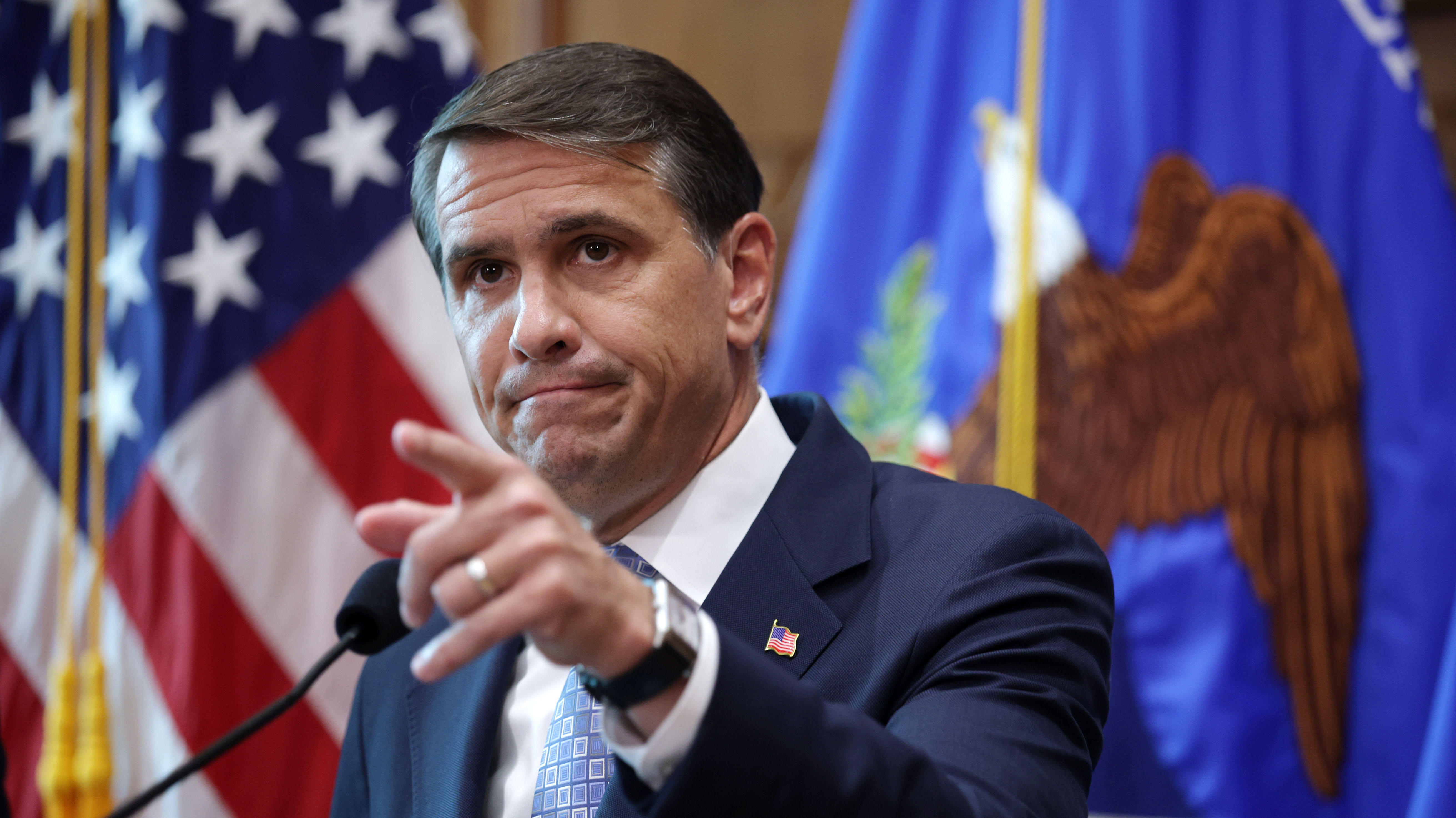
(WASHINGTON) — In his first news conference since his narrow confirmation as attorney general, Todd Blanche reiterated Wednesday that the Justice Department’s “Anti-Weaponization Fund” will not be revived — but suggested there could be other ways of compensating so-called “victims” of “weaponization.”
Blanche’s comments, during a press conference on an unrelated criminal fraud matter, came after President Donald Trump told reporters in the Oval Office earlier this week that the Anti-Weaponization Fund’s future would be Blanche’s to decide.
The $1.776 billion fund was announced in May by the Justice Department to compensate those who allege they were wrongly targeted under the Biden administration. Blanche affirmed in a written order prior to his confirmation as attorney general that the fund was dead, under pressure from two Republican senators whose support for his nomination hinged on whether he would make such a declaration.
“I keep on saying this over and over again, but I’m happy to say it one more time,” Blanche said at Wednesday’s press conference in response to a question from ABC News. “I have testified under oath that it’s dead. I have testified in front of the House where I wasn’t under oath where I said it was dead. I have answered questions after my hearing where I said that it was dead, I have rescinded the order that that set up the weaponization fund, which means that it does not exist.”
“I’m not sure how I can further say that the anti-weaponization fund doesn’t exist, or we use the word ‘dead,'” he added. “But if anybody has any ideas, we also have said under oath that if Congress would like to make it a law, that we would support that, as would the White House.”
At the same time, Blanche suggested the department would entertain other means to pay out so-called “victims” of “weaponization” under the Biden administration, as President Trump has repeatedly said he wants.
“The president feels very strongly, as do I, that there were people who were victims of a Department of Justice that was absolutely weaponized, and he feels very strongly that that he would want to — to make them whole, as do I, but it will not be through the Anti-Weaponization Fund,” Blanche said.
The fund was proposed in exchange for Trump agreeing to drop his $10 billion lawsuit against the IRS as well as two civil claims for $230 million related to the Russia collusion investigation he faced during his first term in office and the 2022 search of his Mar-a-Lago estate — sparking accusations by critics of self-dealing and a bipartisan uproar over the possible use of taxpayer money to pay rioters who attacked the U.S. Capitol on Jan. 6, 2021.
Copyright © 2026, ABC Audio. All rights reserved.