
▶ Watch Video: Sneak peek: My Uncle Joe’s Murder
As a reporter, you see a lot of strange things. You witness the most dramatic and traumatic parts of other people’s lives. You count on being able to control how it all affects you. But you never expect investigating someone else’s past will lead you back into your own.
And that’s exactly what happened to me, reporting on the case of Joe Shymanski, a Washington, D.C., photographer murdered in 2023. Covering this story took me back into some of the most familiar terrain of my life — my tiny, Pennsylvania hometown. But it also took me into unfamiliar territory: confronting someone I grew up with caught up in a murder case.

Nikki Battiste
Heather Snyder and I hadn’t communicated since 1998, the year I literally crowned her my successor as high school homecoming queen. Fast forward to 2025, and I discovered that the very same Heather I knew was a central character in this story. She was now Joe Shymanski’s ex-wife. She was the one who reported Joe Shymanski missing and it was Heather’s boyfriend after leaving Joe Shymanski, Brandon Holbrook, who became authorities’ prime suspect in Joe’s murder.
In an exclusive interview, Heather answered my questions about her relationship with Holbrook. She has an alibi and emphatically told us she had no involvement in Joe’s murder. She has never been identified by authorities as a suspect or charged with a crime in connection with the Shymanski case.
But Heather was the only known link between Joe Shymanski and Holbrook. And Joe Shymanski’s loved ones started asking questions about her.
“She just needed it done and she found her person that would do that for her,” Joe’s niece Janine Shymanski said.
Janine Shymanski and other friends and relatives spelled out their suspicions of Heather Snyder and Heather addressed those suspicions in the “48 Hours”‘ episode “My Uncle Joe’s Murder.” An encore of the broadcast airs Saturday, August 8 at 10/9c on CBS and streaming on Paramount+.
Heather said she began dating Joe Shymanski when they were vendors at a weekly Washington, D.C., food and crafts fair at the historic Eastern Market. Joe Shymanski sold his photographs there and Heather had a vegetable business. She had three children from a previous marriage, but wanted a big family and she remembers being excited to learn that Joe Shymanski wanted kids. She said that in the beginning, he was funny, charming and swept her off her feet.
“It was like a fairy tale,” Heather said.
They married in July 2014, Heather said, and bought a house in Calvert County, Maryland. She gave birth to a daughter and a son a year apart. But she says Joe Shymanski soon became obsessive about his kids and started to push her and her three older children aside. She says he became emotionally abusive to her and in one instance, she claims, he got physical.
The Shymanski family and friends say Heather Snyder’s allegations do not match the Joe Shymanski they knew. One friend told me Heather was attracted to Joe Shymanski’s money — an allegation she denies. Snyder says the pandemic only made things worse. She took the kids and left Joe Shymanski in July 2021, moving back to our hometown in Pennsylvania. Before long, she says, she began seeing Holbrook, who she met online. But Joe Shymanski’s friend Anneli Werner said the turbulence of Heather and Joe’s relationship was far from over.
“Joe was in an ugly, contentious divorce,” Werner remembered.
By the summer of 2023, Joe Shymanski had bought a million-dollar life insurance policy listing his two minor children as beneficiaries. The court had awarded him and Heather joint custody of the kids but gave Joe Shymanski primary physical custody when school was in session. And the judge had also reduced the amount Joe Shymanski owed her in the settlement.
“Joe had started winning,” Anneli said.
Joe Shymanski reported missing
It was Labor Day 2023 at 7:47 p.m. when authorities got the call from Heather to report Joe Shymanski missing. She told them she had driven to her ex-husband’s house to drop off their children in a custody exchange but had not found him home. So, she said she checked with the neighbors and then called 911. Investigators found Joe’s keys and phone inside his house. When a sheriff’s deputy escorted Heather inside to get pajamas for the kids, his body camera shows her getting emotional.
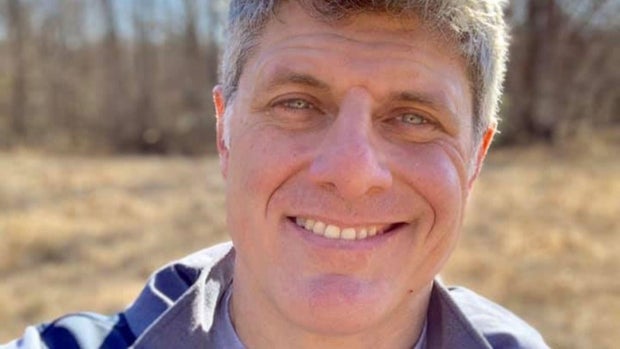
The next day, Calvert County investigators questioned Heather at the sheriff’s office.
“Are you in any relationship right now?” asked Calvert County investigator Joshua Buck. “No,” Heather replied. “No boyfriends or — ?” Buck continued. “No,” she answered. “I had a boyfriend but, briefly. But I don’t.”
Heather told Calvert County investigators she had recently broken up with Holbrook, who also lived in Pennsylvania. But they soon unearthed an image of his truck and license plate near Joe Shymanski’s house in Maryland the day Joe disappeared. The Calvert County, Maryland, Sheriff’s Office, which declined “48 Hours”‘ request for an interview, sent investigators to Pennsylvania. With the help of Pennsylvania police, they approached Holbrook’s house at about 11 p.m. on Sept. 5, 2023.
When they brought Holbrook to police headquarters for questioning, he told them he was a driver for a plant that processed waste from chicken slaughterhouses. Despite the camera images showing his truck near Joe Shymanski’s house, Holbrook claimed he hadn’t been there — or anywhere in Maryland — around the time Joe disappeared. But investigators found items that struck them as curious. On Holbrook’s property, there were firearms, plastic tarps, rubber gloves and cleaning fluid. There was also an open package of power saw blades without a matching saw.
“Is that a tool that’s powerful enough to dismember a body?” I asked Mifflin County, Pennsylvania, Detective Jessica Aurand, who helped investigate the case. “… Possibly,” she answered.
By this point, authorities had also noted a strange smell coming from Holbrook’s truck in the driveway, said Mifflin County Police Department Sgt. John Chester. In the back, they found something an investigator noted appeared to be human blood.
“It looked like a homicide scene,” Chester said.
But the blood in the truck would turn out to have come from an animal.
“Because he had access to the … chicken plant, did he put stuff in there and cover it up with chicken remains?” Aurand wondered aloud.
Despite having no body, authorities arrested Holbrook shortly afterward. The next day in a field near Holbrook’s house, they located human remains that later turned out to match Joe Shymanski.
All of this happened only about 45 minutes from where Heather Snyder and I grew up.
Both our families still live in Newport, Pennsylvania, home to only about 1,500 people. Even when you add up the cars and the horse-drawn, Amish buggies, there still isn’t enough traffic for a single stoplight. As a kid there, I never dreamed I would become a contributor to “48 Hours.” And if you’d told me I was one day going to interview a former teammate mentioned in connection with a murder case, I would have said you were crazy.
It was downright surreal when a “48 Hours” producer first told me that a murder victim’s family had questions about someone I knew in my youth. The Heather I remembered was a top student, a cheerleader and the treasurer of her class. We played field hockey together.
I knew Heather might not want to talk to me. If I could convince her to do an interview, I also knew it would mean asking her the toughest questions. When I learned another national news program was looking into the story, I contacted Heather. As I suspected, she told me it was too soon to talk to me. She said she wouldn’t consider meeting until after Holbrook’s trial last spring.
The trial of Brandon Holbrook
Prosecutors would argue Holbrook shot Joe Shymanski to death in Joe’s Maryland driveway, then drove his body back to Pennsylvania, dismembering him and disposing of his remains. They showed the images of Holbrook’s truck near Joe Shymanski’s house that night and video showing Holbrook shopping for cleaning supplies the next morning. They even showed video of Holbrook dumping what turned out to be human remains next to the parking lot outside the store.
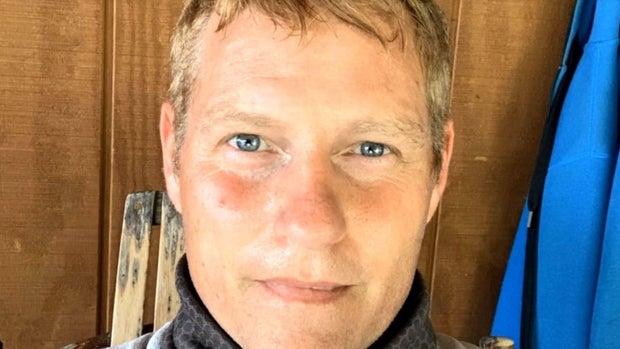
Holbrook’s defense team had little choice but to acknowledge there was evidence he was involved in disposing of Joe’s body. But they pointed out that there were no forensics tying him to the murder itself — nothing placing him at Joe Shymanski’s house — the images of his truck near Joe’s house hadn’t been clear enough to identify the driver, nor anything proving Joe Shymanski — alive or dead — was ever at Holbrook’s house.
Defense attorney Brendan Callahan insisted Holbrook had no motive to want Joe Shymanski dead and that his client may not have been the only one involved. Callahan said authorities failed to sufficiently investigate Heather Snyder and were slow to recover a gun she told them she had at home. He says they never searched her property.
“Only one person’s life is better today than it was before the murder of Joseph Shymanski,” said Callahan. “And that is Heather Snyder.”
Callahan argued Heather might have stood to gain custody of her two youngest children and, since they were minors, control over any life insurance payout they received.
In all, Heather Snyder was mentioned more than 400 times in the Brandon Holbrook murder trial – so many times it felt to me like she was on trial too.
Both sides had listed Heather as a witness. Everyone in the crowded courtroom wanted to hear what she had to say under oath. On the fifth day of trial testimony, she was called to the stand. But Heather invoked her Fifth Amendment privilege against self-incrimination. The jury gasped. But prosecutors later introduced Heather’s alibi: photos taken in her Pennsylvania home and video showing her buying a pizza in a Newport grocery store around the time Joe Shymanski was killed about a three-hour drive away.
It took the jury just 80 minutes to convict Holbrook of first-degree, premeditated murder. As I said, Heather Snyder has never been charged with a crime in this case.
Questions for Heather Snyder
After the trial, I met with Heather to talk about doing an interview. I think it’s fair to say she was reluctant, but she told me she understood she was the best person to tell her story. She also seemed keenly aware that Joe Shymanski’s family felt she was somehow involved in his death. She said she wanted to set the record straight and ultimately, she agreed to sit down with me for our “48 Hours” report. No questions were off limits.
On a rainy night in May 2025, our team set up our gear in a converted barn just minutes from both of our parents’ homes. As I was waiting for Heather to arrive, I recorded my thoughts in a kind of video diary.
When we began the interview itself, Heather seemed nervous, but before long, she became more poised.
“Did you ever say to Brandon Holbrook, I wish Joe were dead?” I asked her. ”No,” she said, and continued, “… the most I said to Brandon was that I thought Joe should be in jail for the way he was acting.”
“Did Brandon tell you he wanted to kill Joe?” I asked. “Nope,” she said. “Did you help him cover it up?” I continued. “Nope. Nope,” she answered.
Heather told me that a criminal lawyer advised her to invoke her Fifth Amendment privilege at the Holbrook trial. “If you don’t have anything to hide, why not just get up there and testify?” I asked. “… People twist your words,” Heather replied.
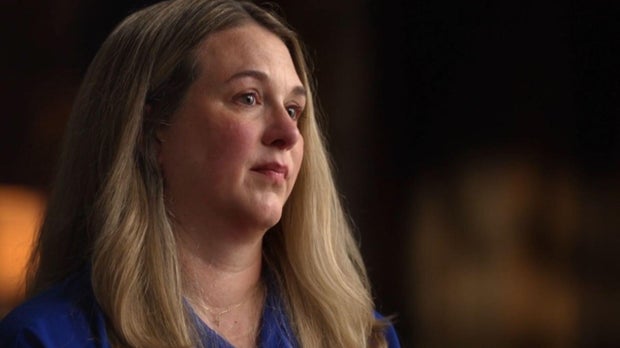
I asked her about texts with Holbrook in which he suggests “other solutions” for her problems with Joe.
“I thought it was a — just a joke,” Heather said. “It didn’t cross your mind for a second –.” “No,” she responded. “That he might hurt Joe?” I continued. “No,” Heather said.
I also asked her about text messages about her hope that karma would catch up with Joe in which she had said she was “tired of being patient.”
“That’s how I was feeling …” Heather told me. “Do you think … that may have triggered Brandon?” I asked. “I don’t know,” she said.
“Are you afraid authorities will come for you?” I wanted to know. “No,” Heather said. “Not at all?” I asked. “I’m not worried at all, no …” she said.
We asked Calvert County’s top prosecutor, Robert Harvey, for an interview about the Joe Shymanski murder investigation and about Heather Snyder. Harvey declined our request but wrote to us that there was “… a thorough and exhaustive investigation …” into Mr. Shymanski’s death. “Mr. Holbrook received a ‘fair and impartial trial …'” Harvey continued. “Because Mr. Holbrook’s case is under appeal … it remains open,” Harvey continued. “Therefore, I am not going to respond to questions regarding the investigation and I am not going to speculate on what may or may not happen in the future.”
We also asked Pennsylvania authorities about the status of the case:
“Is there a current investigation into Heather Snyder?” I asked. “I can’t answer that question,” said Aurand. “Should there be?” I continued. “I can’t answer that question,” Aurand responded. “Do you think Heather Snyder is involved in this crime in any way?” I continued. “I can’t answer that,” Aurand said. “But you do know the answer,” I asked. ”Yes. But I’m not allowed to say,” Aurand said.
Heather Snyder told me despite it all, she wants to keep Joe Shymanski’s memory alive for their children. She knows the Shymanski family wants to see them and says she is open to the idea, assuming they stop publicly pointing a finger at her.
She added she still has love for Holbrook, though she believes he belongs behind bars. “I think obviously psychologically he snapped over something,” she told me. “I think he did something horrible, horrific. He hurt my family. He hurt me.” Last July, a judge sentenced Brandon Holbrook to life in prison with no parole.
“So many people watching are gonna be frustrated,” I said. “Uh-huh,” she agreed. “… and they’re gonna think it — it just — logically you have to had known something.” “Right,” she said. “But I didn’t. That’s the torturous part, because people will — it’s almost like they want to believe that I was involved with it. They want that true-crime narrative. And it just simply wasn’t the case.”