What to know about the Social Security fix proposed by Sens. Elizabeth Warren and Bernie Moreno

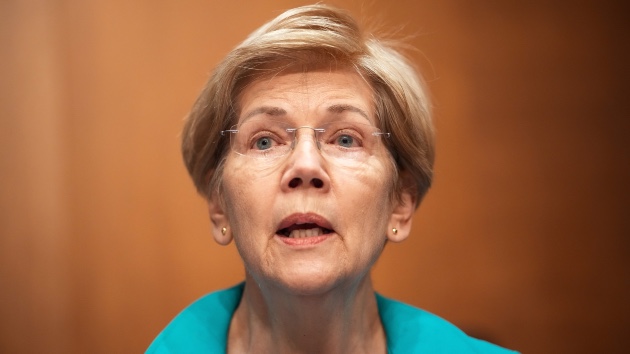
Ranking member Sen. Elizabeth Warren (D-MA) delivers an opening statement during the Senate Committee on Banking, Housing, and Urban Affairs confirmation hearing for Kevin Warsh, U.S. President Donald Trump’s nominee for Chair of the Federal Reserve, in the Dirksen Senate Office Building on April 21, 2026 in Washington, DC. (Photo by Andrew Harnik/Getty Images)

(NEW YORK) — The Social Security fund will run out of money in as little as six years, a shorter time frame than previously estimated, according to a report released earlier this month by the programs’ trustees.

News of the funding cliff prompted a pair of lawmakers to reach across the aisle and propose a rescue plan in an opinion piece last week for the New York Times.

Sen. Bernie Moreno, R-Ohio, and Sen. Elizabeth Warren, D-Mass., called for lifting a cap on the amount of annual income subject to the payroll tax that funds Social Security. Currently, the cap stands at $184,500.

In other words, the plan would require individuals making more than $184,500 per year to pay taxes on the entirety of their income, potentially generating trillions in additional funds for the program over the next 10 years.

The proposal could, in theory, help administrators avoid painful solutions for recipients, such as a reduction of Social Security payments.

Legislation reflecting the proposal has not been introduced. In the New York Times, Moreno and Warren said they are “working on legislation.” Spokespeople for Moreno and Warren declined to comment on the status of the measure.

Here’s what to know about a new bipartisan proposal for safeguarding Social Security:

Is Social Security in financial trouble?

Yes, the program faces an ever-tightening budget squeeze over the next handful of years, according to a report this month from the Social Security fund’s trustees.

The Social Security trust fund will run dry in 2032, unless Congress combines the program’s old-age and disability funds, in which case insolvency would arrive in 2034, the report found. A finding last year from the program’s trustees predicted Social Security would become insolvent in 2033 or 2034.

The program generates revenue through a payroll tax paid by employees and employers, setting the income apart from the overall federal budget. Since the early 2010s, however, Social Security has paid more in benefits than it takes in through taxes, shrinking the program’s available funds, according to a study issued by the Urban Institute earlier this year.

The budget shortfall has been exacerbated by a decline in births and a reduction of immigration, resulting in fewer taxpayers at the same time that many Baby Boomers have begun receiving benefits. The One Big Beautiful Bill also removed a tax on Social Security benefits, depleting another source of the program’s revenue.

What is the Social Security reform proposal from Warren and Moreno?

The bipartisan reform proposal would tweak the payroll tax that funds Social Security.

The program is funded by a 12.4% payroll tax, which is evenly split between employers and workers. The tax, however, applies only to a maximum of $184,500 in annual income, meaning any income beyond that amount remains tax free.

The proposal put forward by Warren and Moreno would lift the cap on taxable income, allowing the tax to apply to the entirety of a person’s income even if they make more than $184,500 per year.

“Since the vast majority of Americans make less than that, most people are paying Social Security taxes on 100 percent of their earnings while the highest earners are paying on only part of theirs,” Warren and Moreno said in a co-authored opinion piece in the New York Times.

The elimination of the cap on taxable income would generate about $3.4 trillion in added revenue over the next decade, according to an analysis from the non-partisan Peterson Institute. The policy change would close more than half of the program’s funding gap, the group said.

“With rising prices and artificial intelligence causing economic uncertainty for the future, Social Security must remain a stable foundation to help retirees afford life’s basic necessities,” Warren and Moreno said.

The proposal drew opposition from at least one conservative lawmaker. Sen. Jon Husted, R-Ohio, faulted the plan for what he described as a “giant tax increase.”

“We need to secure social security, we need to protect it, we need to make it stronger,” Husted told “The Guy Benson Show” last week. “But I’m not on board with the approach that they’ve outlined.”

What are some alternative reforms for funding Social Security?

As the program’s budget woes have deepened in recent years, elected officials and researchers have proposed a range of solutions. As with any financial shortfall, the fixes either increase revenue or slash expenses.

An alternate means of increasing tax revenue for the program involves ratcheting up the payroll tax by one percentage point from 12.4% to 13.4%, the Peterson Institute said. That move would generate $601 billion in additional revenue over 10 years, closing about a quarter of the program’s funding gap, the group added.

If Congress fails to address the projected budget shortfalls, automatic cuts will dial back Social Security benefits by about 25% in 2032, the Social Security fund’s trustees said earlier this month.

Earlier this month, a bipartisan bill introduced in the House proposed establishing an independent commission composed of 13 members appointed by leaders in Congress and the president. The commission would seek out fixes for the long-term sustainability of the program. The bill, which counts three cosponsors, has been appointed to two House committees for consideration.

As the years pass, the task of reforming Social Security becomes a greater and greater challenge, the Urban Institute said.

“Waiting only makes the changes larger and more difficult,” the group added.

Copyright © 2026, ABC Audio. All rights reserved.

‘They don’t trust him anymore’: How VA Secretary Doug Collins drew the ire of the White House and Republicans

(CNN) — A month after House Republicans failed to pass a veterans health bill, lawmakers are meeting behind closed doors to try to get the legislation back on track. But there’s one key person they haven’t invited to the table: Veterans Affairs Secretary Doug Collins.Collins and his team at the VA have been excluded from recent meetings on Capitol Hill because some senior congressional Republicans and Trump officials blamed him when the planned House vote was abruptly abandoned in July, according to multiple sources who were involved in crafting the legislation.“His relationship with the Hill directly is garbage at this point,” said one person familiar with the dynamics surrounding Collins.“They don’t trust him anymore,” another source familiar with the situation said.The episode underscores how Collins’ standing in the administration has steadily deteriorated over the past several months. A longtime ally of President Donald Trump who previously served in the House before joining Trump’s Cabinet, Collins has confounded those around him with his lackluster engagement on issues like the veterans health bill, spurring widespread speculation over how much longer he’ll remain in the job.Trump is unlikely to fire Collins, at least for now, amid efforts in the White House to minimize upheaval ahead of November’s midterm elections. But Trump officials have increasingly scrutinized Collins’ performance, including tracking his travel and examining the extent of his involvement in key departmental priorities, said the person familiar with the dynamics. Collins’ receding role has prompted speculation he may soon leave the administration of his own accord, the person added.Resurrecting the legislation, called the “Take Care of America’s Veterans Act,” is also considered key to the midterms. The bill would expand benefits for tens of thousands of veterans – a key constituency for many Republicans in Congress – and passage would be viewed as an important legislative win ahead of the November vote.The VA, in an email to CNN, denied that Collins worked against the bill’s passage. VA press secretary Quinn Slaven said: “The Trump administration, Secretary Collins and VA broadly support this bill, and while we believe it could benefit from some amendments, it contains many priorities of the administration.”Slaven added: “Under the leadership of President Trump, Secretary Collins is proud to work every day to make VA benefits better, faster and easier to use than ever before.”The White House did not address Collins’ role in GOP efforts to advance the veterans health bill.In a statement, spokeswoman Olivia Wales said that the VA secretary “is doing a great job and works tirelessly to deliver for our heroic veterans.” Another White House official downplayed the focus on Collins’ travel, contending that Cabinet officials are encouraged to be on the road to “highlight the administration’s accomplishments.”The White House also forwarded a statement of support from GOP Rep. Jack Bergman, who sits on the House Veterans Affairs Committee and insisted that Collins “has been great to work with” and has “taken action when we bring him difficult issues involving Veterans.”The veterans health bill would cut billions of dollars in future disability benefits to some veterans suffering from tinnitus and sleep apnea. The money saved from those cuts would pay for another measure that would allow veterans to receive both their retirement benefits and combat injury-related benefits. Veterans are currently allowed to receive one, but not both, of those benefits.The bill is also aimed at improving access to private sector care, working to cut down wait times for care and providing benefits for the spouses of deceased veterans, even if they re-marry.Democrats oppose the bill, along with some veterans service organizations including the Veterans of Foreign Wars, Disabled American Veterans, and Iraq and Afghanistan Veterans of America, saying they disagree with the idea of taking away some veterans’ benefits to pay for other benefits.Other veterans’ advocacy groups like The American Legion and Concerned Veterans for America are in favor of the bill, pointing to all the ways they say it would expand benefits for many of the roughly 9 million veterans enrolled with the VA as well as their families.Confusion over CollinsThe House adjourned for summer recess not long after the legislation was pulled from the House floor ahead of a scheduled vote. But sources say House Republicans are continuing discussions about the bill – without input from Collins.The VA secretary had initially indicated to Republican congressional leadership that he supported the measure, but then started to subtly work against it, according to two sources familiar with the interactions.They said he would signal to some lawmakers he wasn’t entirely behind the bill, telling some GOP members he shared their concerns about the legislation. The tension between Collins and the White House and congressional Republicans was first reported by Politico.Some of what the legislation aims to accomplish had been proposed during the Biden administration, through the rulemaking process. But a VA press secretary told the website Government Executive in June that that proposal “would need to undergo significant changes” – further baffling Hill staffers about where Collins stood on the issue.Confusion over Collins’ stance continued into mid-July, sources say, at which point too many House Republicans started to waver in their support. When the bill was pulled, White House officials and Republican House members and staffers grew angry with Collins, the sources said.“I’ve never seen them so mad,” one source said of some House Republicans. “Their anger was off the charts.”Sources say senior Republicans complained to the White House about how Collins and Don Bergin, the VA’s assistant secretary for congressional and legislative affairs, dealt with the bill – and that those Republicans do not view Collins and Bergin as honest brokers moving forward.After Collins’ handling of the legislation that the president and administration have prioritized, one of the sources said: “They can’t decipher or figure out what’s going on in his mind.”In the midst of the fallout, Collins praised Trump on Fox Business. “He is providing the leadership over the country to say ‘Hey we want to put America first. We want to put our veterans first,’” Collins said.The-CNN-Wire™ & © 2026 Cable News Network, Inc., a Warner Bros. Discovery Company. All rights reserved.
Read Next Story