
▶ Watch Video: Waylon Jennings’ son Shooter on rescuing his dad’s music
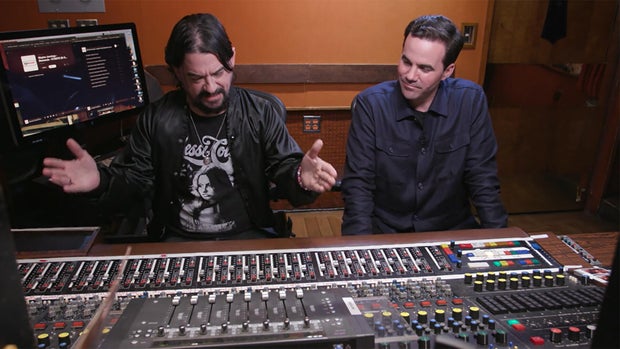
Shooter Jennings is a singer, musician, and the producer of Grammy-award winning albums for Brandi Carlisle and Tanya Tucker. At Sunset Sound in Hollywood, where Dolly Parton, Fleetwood Mac and Prince all recorded, Jennings – who’s made about 40 records here – is now using the space to produce a project that is deeply personal and emotional.
Having a conversation about his father, he says, will get him teared up. “I wear my emotions on my face all the time anyway, so for everybody out there, I’m a crier,” he laughed.
Raw emotions from the son of a man known for them: Waylon Jennings. With his black hat, beard and baritone voice, Waylon defined the rebel, gritty spirit of the country music outlaw movement. Blending honkytonk, folk, and Southern rock to create a revolutionary sound, Waylon had 16 #1 hits, including “I’m a Rambling Man,” “Mamas Don’t Let Your Babies Grow Up To Be Cowboys” (with Willie Nelson), and the theme song for TV’s “The Dukes of Hazzard.”
Shooter is keeping his father’s legacy alive by producing long-lost material which he found stashed away. So far, there are two albums: “Songbird,” and the upcoming “Diamonds.”
To hear the title track from the Waylon Jennings album “Diamonds” (featuring The Waylors with Glen Campbell on guitar), click on the video player below:
“I’m proud of him and I’m proud of the work that I’m doing, and I’m proud of the legacy he left behind, because you know, he just was a good guy,” said Shooter.
Listening to the previously unreleased tracks, Shooter said, “It felt like he was having a conversation with the listener.”
And talking to you? “Yeah, yeah, for sure. Talking to anyone who knows and loves his voice. It’s, like, emotional, beautiful material about love and life, and that’s what he connected with – the music, and the lyrics, and the dream.”
CBS News
That dream began in a small town in the Lone Star State. Shooter says Texas played a big role in shaping his father, “because he wanted to get out of there so bad, you know? He grew up in this little town that’s just right between Lubbock and New Mexico, and it’s, like, flat in every way. Like he says in his book, ‘If your dog ran away, you could watch him go for three days!'”
While working as a teenage DJ, Waylon Jennings met fellow Texan Buddy Holly. “He was his best friend,” said Shooter. “My dad always told me: not a day went by that he didn’t think about Buddy.”
Holly encouraged Waylon to become a musician. They toured together, and were playing the same show on a fateful night in Iowa in 1959. “The last conversation that was had was like, ‘I hope your bus breaks down and you freeze to death.’ And then he says, ‘I hope your whole plane crashes,’ you know?”
Shooter says he was haunted by Holly’s death. But he carried on, started a band, and eventually moved to Nashville, where he became a star, and a symbol of a new kind of sound.
Asked to define outlaw country, Shooter replied, “It was a marketing tool. They came up with it in Nashville. It was a way to package Waylon and Willie, and then kind of called it the outlaw movement.”
Shooter said his father changed music: “He got his creative freedom and artistic integrity and control, which is what he wanted. and that kind of freed everybody else in Nashville – independence for artists.”
Waylon was uncompromising, and controversial; he walked out during the “We Are the World” recording session. “He goes, ‘This isn’t about the kids.’ That’s the first thing he thought. He thought, ‘This is about the look of this,'” said Shooter, whose father thought too much attention was on photo ops, not fundraising. “And then he said, ‘So by the time it got to be 4:00 in the morning and they were like, ‘Let’s do it in Swahili,’ he was like, ‘I’m out of here. I’ve been here all day. This has been too long.’
“And they were gonna keep going, you know, and make him try to learn a language or something. And I think he was already like, ‘I can’t speak any other languages,’ you know? And later, I was on a bus with him, and Paul Simon walked in and he goes, ‘Waylon, every one of us wanted to walk out of that thing, and you were the only one that had the ***** to do it!'”
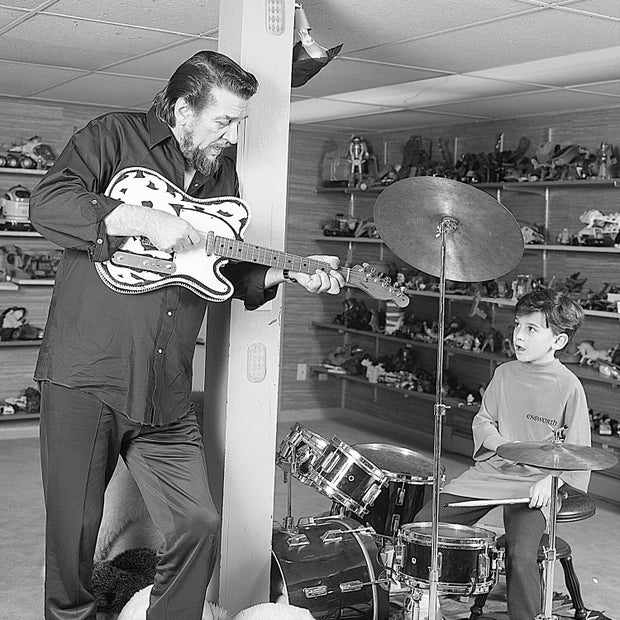
Waylon acknowledged that he long struggled with a drug habit. But he quit cold turkey in 1984. The catalyst, he said, was his young son.
Beth Gwinn/Getty Images
Waylon was candid about his struggles with drugs, and how he sometimes spent over $1,000 a day. “It bothered him so much,” said Shooter. “It didn’t affect me one bit. When I was a kid, he quit by the time I was, like, five or six. And I think once he won the battle, was when he realized he didn’t need it anymore. He was a great dad. “
Waylon Jennings died in 2002 at 64.
“Of course I miss him,” said Shooter. “But that’s not why I cry. If I get emotional, it’s because I feel how important this all is.”
“Diamonds” will be released later this year.
Asked what keeps him going, Shooter replied, “I want everybody to know the guy I know. And I think I’m in a place where I’m in the studio and I’m able to put this out there and people will get it and hear it. So, I feel like that should be my purpose, in a way.”
WEB EXCLUSIVE: Watch an extended interview with Shooter Jennings (Video)
Extended Interview: Shooter Jennings on father Waylon Jennings
21:45
For more info:
- Shooter Jennings
- Sunset Sound Studio, Hollywood, Calif.
Story produced by Gabriel Falcon. Editor: Steven Tyler.