▶ Watch Video: Details on newest U.S. strikes against Iran
The U.S. military said it used one-way attack sea drones for the first time in combat Sunday in an attack on an Iranian naval port.
In a statement shared Monday, U.S. Central Command said forces used multiple sea surface drones to strike a submarine and ship maintenance facility at the Bandar Abbas Naval Base on Iran’s coast in the Strait of Hormuz, marking the first time the weapons had been used in combat operations.
A video released by CENTCOM showed an aerial view of three small sea drones speeding toward a raised dock that appeared to be holding a small submarine and then exploding. It is unclear from the video how much damage was caused, but each explosion sent tall plumes of smoke into the air, and the last blast shown appeared to cause a large fire.
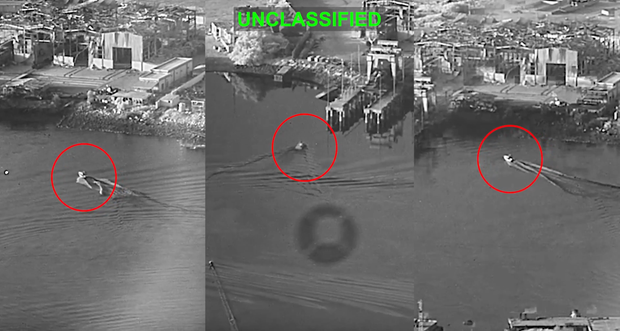
CENTCOM
CENTCOM called the attack successful and said it had “degraded Iran’s ability to continue attacking commercial shipping” in the region.
Saronic, a Texas-based weapons manufacturer, said their 24-foot Corsair Autonomous Service Vehicle was used in the attacks, and CENTCOM also said Corsair drones were used.
“We are proud that our technology supported this mission and helped to keep the brave men and women of the U.S. armed forces safe,” Saronic said in a statement posted on social media.
According to the manufacturer’s website, the Corsair is capable of carrying a payload of up to 1,000 pounds more than 1,000 nautical miles with a top speed of 35 knots.
Saronic publicly unveiled the sea drone in October 2024, and in December 2025, it announced a $392 million production contract with the U.S. Navy, which reportedly focused on the Corsair vessel. The Austin-based manufacturer said the weapon was transitioned from prototype to production in under a year.
Drones of all kinds have become hallmarks of modern warfare, rising to prominence particularly in the ongoing war in Ukraine launched by Russia more than four years ago. The attack on Iran shares similarities with Ukraine’s use of sea drones to target Russia’s navy in the Black Sea.
“U.S. forces deployed to the Middle East have employed several new capabilities over the course of the conflict to get the job done. This instance was no different,” CENTCOM spokesman Captain Tim Hawkins told CBS News in a statement. “Quickly equipping our warfighters with cutting-edge capabilities enhances combat effectiveness, which is why operationalizing these new tools remains a U.S. Central Command priority.”