
London — Residents of a tiny English village furious over plans to house hundreds of people seeking asylum in a nearby disused military barracks are preparing to hold a symbolic referendum calling for their community to declare independence from the U.K. and join the U.S.
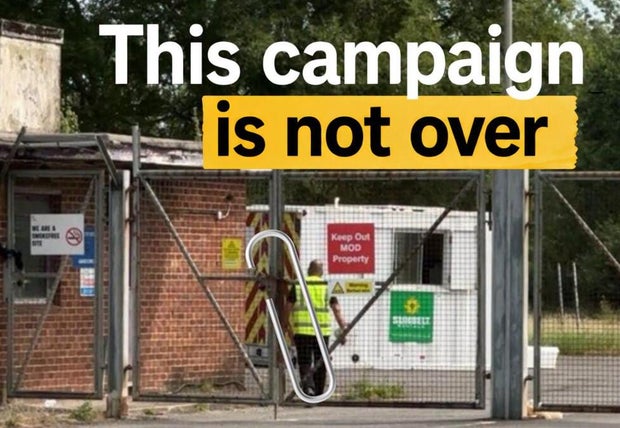
The referendum, which would carry no weight under British law, is being organized as a protest by villagers in Piddington. Residents there have overwhelmingly opposed the British government’s plan to house male asylum seekers at the site about a mile away, on a Ministry of Defense property.
Facebook/Calum Miller
Calum Miller, the local Member of Parliament, said the plans for the Bicester Garrison site could see as many as 1,250 people — more than three times Piddington’s population — housed at the facility.
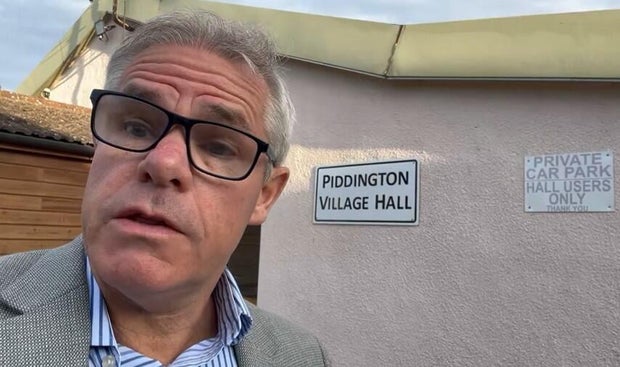
Piddington Parish Council chairman Tim McNally, one of the leading voices behind the protest campaign and referendum plans, compared the village’s struggle, and himself, to George Washington battling for independence from Britain.
“Washington brought change. I am going to make the change and then give away the power like he did,” McNally told The Sun newspaper. “If we vote to leave, we are going down to the U.S. Embassy and bring our declaration to them.”
X/Tim McNally
On July 4, as the U.S. marked Independence Day, Piddington residents voted on whether to hold a referendum on leaving the United Kingdom. According to CBS News’ partner network BBC News, 96% of participants backed the proposal to hold the referendum, which supporters call a symbolic act designed to draw national attention to their objections rather than a real attempt at secession.
Supporters argue the community was not adequately consulted before the housing plans were announced by the government, and they say the referendum is intended to highlight frustration with decision-making by the central government.
Jane Coles, from the regional Oxfordshire branch of the “Stand up to Racism” organization, told BBC News earlier this month that she opposed the “inhumane warehousing” of asylum seekers at any sites like the Bicester barracks.
“It would become a magnet for right-wing agitators and it will have a really polarizing effect on the population,” she said. “We believe the government would be better putting the money into the Home Office to ensure the system for processing asylum claims is much more efficient and much quicker, so the need for this kind of housing will be very much reduced.”
Even before the protest referendum, which hasn’t yet been scheduled, the political statement made by the plan has echoed around the world, drawing support from American tech billionaire Elon Musk, who often adds his voice to debates over immigration in Europe and the U.S.
“What has happened to towns who did nothing to deserve it, like little Piddington village, will happen to all of Britain, unless there is fundamental political change,” said Musk in a post on his social media platform X, formerly Twitter. “It’s not right. Not right at all.”
The British Home Office has defended the wider strategy of using former military sites to reduce reliance on hotels as accommodation for people applying for asylum.
Whatever the outcome, Piddington’s unusual referendum proposal has thrust one of Oxfordshire’s smallest villages to the forefront of a national debate over immigration and the extent to which the government should have to consult local communities on decisions that have direct impacts on residents.