U.K. announces plan to ban social media for children under 16

▶ Watch Video: U.K. announces plan to ban social media for kids under 16

London — The United Kingdom is the latest country to announce plans to ban children under 16 from using social media apps.

Prime Minister Keir Starmer said Monday that the U.K. would go even further than other nations, by also blocking children from accessing “harmful functions” such as livestreaming and the ability to communicate with strangers, and by extending the restrictions to gaming sites. He said the ban would protect children from content that is “designed to be addictive.” 

The proposed law would bar children under 16 from platforms such as Snapchat, TikTok, YouTube, Instagram, Facebook and X, but the government said messaging services like WhatsApp would still be accessible. 

People under 18 would also be banned from having artificial intelligence “romantic companions,” but the details of that restriction and how it might be implemented remained unclear.
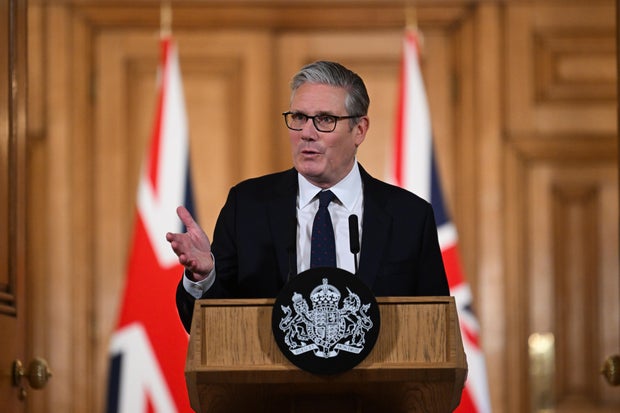
UK Prime Minister Keir Starmer Announces Social Media Ban for UK Teens
U.K. Prime Minister Keir Starmer is seen during a news conference announcing plans to ban young teenagers from using social media, at 10 Downing Street in London, June 15, 2026.

Jaimi Joy/Bloomberg/Getty

The legislation would put the onus on tech companies to ensure children aren’t using their platforms, and they could face huge fines for failing to comply. Starmer said he hoped to have the regulations passed by lawmakers by late December so the ban can come into force by the spring of 2027.

Australia banned under-16s from social media in December 2025 — the first country to impose such a measure. But around 70% of parents polled by Australia’s internet regulator in March said their children remained on the platforms, having found ways to bypass age-gating systems.

Starmer said he wasn’t deterred by such challenges.

“We don’t say: ‘Oh, look, a teenager managed to get a drink somehow, so let’s not bother banning drinks from children.’ That would be utterly ridiculous!”

Big tech companies are likely to fight the effort, and the U.S. Embassy in London published a notice about the proposed restrictions 10 days ago, voicing concern that age-gating would not work and calling for children to be protected in other ways while freedom of speech is preserved.

The embassy called parents “the first and best line of defense” for children.
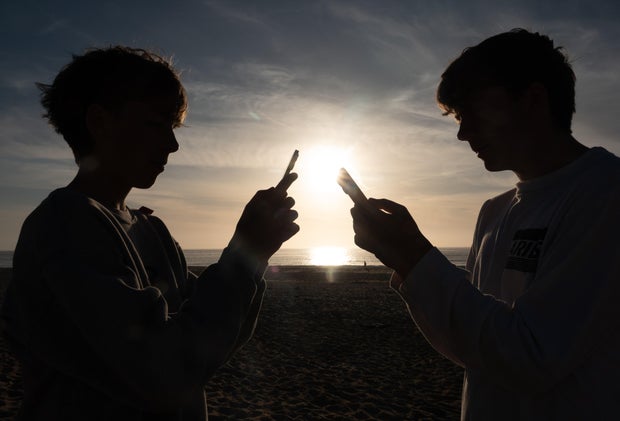
UK Prime Minister Announces Under-16s Social Media Ban
A 14-year-old boy and a 15-year-old boy look at smartphones as the sun sets on June 1, 2026 in Cornwall, England.

Anna Barclay/Getty

Starmer and his government note, however, that polling shows British parents overwhelmingly support a ban for under 16s.

In March, a Los Angeles jury ruled that Meta and YouTube were liable for creating products that led to harmful and addictive behavior by young users. The landmark decision in the U.S. could set a legal precedent for similar allegations brought against social media companies. 

More than a dozen other countries, including France, Denmark and Malaysia, were already weighing up legislation to restrict children’s access to social media platforms before the U.K. announced its plans. 

Ireland is among those nations, but as CBS News learned recently, in one small town on the Emerald Isle, residents have already gone much further on their own — taking smartphones away from kids entirely.

Federal judge blocks FIU from punishing group of students over silent anti-ICE protest on campus

Click here for updates on this story    MIAMI (WFOR) -- A group of Florida International University students celebrated a legal victory over FIU administrators.A U.S. District Court Judge granted a motion to enjoin the university from enforcing regulations that punished members of FIU's student-led ICEBreakers group for a silent demonstration.In March, six students stood silently wearing T-shirts that said "ICE OFF FIU" in front of a crowd gathered inside a campus building to hear FIU President Jeanette Nunez interview a guest.Administrators initially ruled that the six students violated campus rules by causing disruption. The students had until September 4 to record a video explaining their behavior or risk a hold on their enrollment status. That hold can prevent students from registering for classes or receiving their diploma.Instead of complying, senior music education student Andrew Caro and others filed a lawsuit with the help of the American Civil Liberties Union.Those punished are part of FIU's ICEBreakers organization that pushes university leaders to keep Immigration and Customs Enforcement off campus."Knowing that we don't have to record that video and that our university will not go ahead with punishing us at least until the case finishes is absolutely overwhelming," Caro said. "Our Latino community is consistently under attack. They are being oppressed by our government and by the [Department of Homeland Security], and the fact that my university is complicit in that is the entire reason why we engaged in the demonstration."The ruling ordered the university to stop enforcing regulations punishing the ICEBreakers' conduct.The judge said the students and ACLU are likely to win their lawsuit because FIU administrators acted "without regard for whether" the demonstration "materially disrupts the school's operations."FIU's Senior Director of Media Relations Madeline Baró released a statement to CBS News Miami late Monday afternoon."FIU values freedom of expression and supports an environment that fosters civil discourse and the respectful exchange of ideas. At the same time, the university's responsibility is to maintain campus operations, support its educational mission, and ensure safety and access for all members of the university community. As this matter is pending litigation, we cannot comment further. We will comply with the court's order while considering our legal options."Please note: This story was provided to CNN Wire by an affiliate and does not contain original CNN reporting. This content carries a strict local market embargo. If you share the same market as the contributor of this article, you may not use it on any platform.
Read Next Story