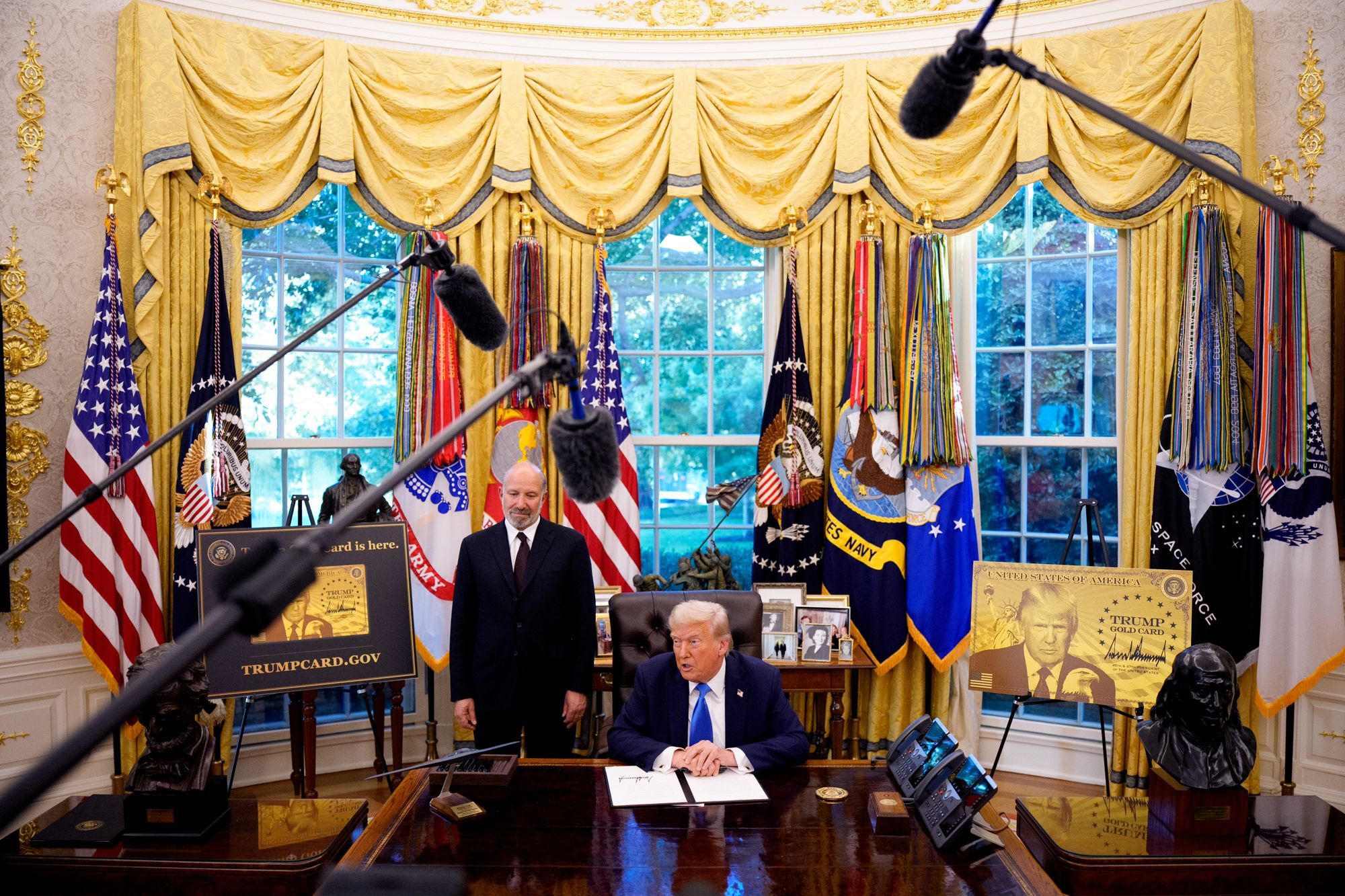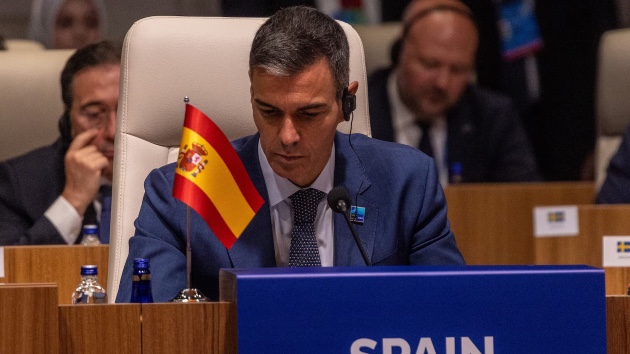
(ANKARA, Turkey) — President Donald Trump on Wednesday appeared to grow increasingly frustrated with NATO allies for not supporting his war effort in Iran, targeting Spain in particular and calling for “all trade” to be cut off with that country.
“Spain is a wasted cause,” Trump said at the NATO Summit in Ankara, Turkey, during an official greeting with Secretary General Mark Rutte. “We don’t want to do any trade business with Spain anymore. By the way, I’d like you to cut it up. Scan, Spain is a terrible partner in NATO. They don’t participate, they don’t pay. I don’t want anything to do with Spain. Cut off all trade with Spain, please, including visits.”
The comments were the latest complaint from Trump against Spain, the only member of the North Atlantic Treaty Organization that has not committed to defense spending equal to 5% of its GDP by 2030.
The U.S., because of its outsized military spending, indirectly contributes more to the NATO than any other country, Trump said last week. The U.S. is responsible for about 15% of NATO’s direct funding, according to the bloc.
At last year’s NATO summit at The Hague, allies agreed at Trump’s prompting to target defense spending equal to 5% of each NATO member countries’ GDP, up from the previous 2%. Spain was alone among the 32 member states in saying it wouldn’t commit to the target.
Trump has previously threatened to end trade with Spain, including in March, when the Spanish foreign minister said at the time that they wouldn’t allow the U.S. to use jointly operated bases in southern Spain for any strikes not covered by the U.N.’s charter.
“I don’t want to do any more trade with them. All right, take it immediately,” Trump said on Wednesday. “Don’t even talk to them, they’re hopeless, bad people, because you know they have everybody else going and paying and working in Spain, in particular Spain, there are a couple of others, but in particular Spain, they’re open about it, they’re hostile about it, and let’s see how hostile they remain when they call up, and they ‘please, please, we want to trade with you, sir, we want to trade with you, sir.’ They make so much money with us, and we’re going to see that they make a lot less. I want no business with them.”
After Trump’s comments, sources at Moncloa Palace, the Spanish prime minister’s office, told Madrid’s El Dario newspaper that Spain “maintains an excellent social, cultural, and economic relationship with the U.S., and it is not our intention for that to change.”
Trump on Wednesday said “nobody,” aside from the “small countries” wanted to help the U.S. in its war with Iran.
“There was calls made a few weeks ago,” Trump said, claiming he spoke with the United Kingdom, Germany and France, among others. “Nobody wanted to help. Some of the very small countries wanted to help, because they’re the most vulnerable. I mean, that’s the only reason they wanted to help.”
The leaders of the U.K., France and Germany did not immediately respond to Trump’s statement on Wednesday. Each has repeatedly declined to involve their countries directly in the war, although each also has said Iran should not be allowed to develop nuclear weapons.
Trump spoke about his displeasure with NATO allies at large, saying that the U.S. has paid for allies to be protected against Russia but that safety has “nothing to do” with the U.S.
“They weren’t there for us, and we’ve been there for them, ” he said. “We spent over a trillion dollars over the last short period, trillion in order to protect these countries from Russia, and has nothing to do with us. We have a notion, but it’s been a long-term thing, and they haven’t treated us right.”
Trump on Wednesday shook hands with Danish Prime Minister Mette Frederiksen, a day after the president renewed his calls for the U.S. to take control of Greenland, which is an autonomous territory under Denmark.
Frederiksen pledged earlier in the summit to defend Greenland, saying, “Our position is clear as it has been all through. Greenland is, of course, not for sale.”
Rutte later celebrated Trump’s ability to get allies to pay a greater share for defense. Rutte appeared to remind the U.S. president that Spain was a part of the coalition that upped their spending.
“And you mentioned Spain, even you got Spain to pay 2% they spent, they made a huge step in last year, so there are still issues we have to solve, but hey, also, even Spain, I would say they got to the 2%,” Rutte said.
Copyright © 2026, ABC Audio. All rights reserved.