
The Emmy Award-winning “CBS News Sunday Morning” is broadcast on CBS Sundays beginning at 9:00 a.m. ET. “Sunday Morning” also streams on the CBS News app beginning at 11:00 a.m. ET. (Download it here.)
Guest host: Tracy Smith
COVER STORY: How white supremacists staged the only successful coup in U.S. history
In 1898, Wilmington, N.C., was a prosperous integrated city, where Black and white North Carolinians shared political power and leadership positions. But white supremacists took back control of the city’s multi-racial government at gunpoint, and launched a wave of violence that killed scores of Black residents. That little-known history is the subject of The New Yorker journalist Lauren Collins’ new book, “They Stole a City.” She talks with Lee Cowan about her hometown’s darkest chapter – the only successful coup in our nation’s history.
READ AN EXCERPT: “They Stole a City” by Lauren Collins
For more info:
- “They Stole a City: Wilmington’s White Supremacist Coup and the Families Who Live With Its Legacy” by Lauren Collins (Penguin Press), in Hardcover, eBook and Audio formats, available July 14 via Amazon, Barnes & Noble and Bookshop.org
- Lauren Collins, The New Yorker
- Lauren Collins on Instagram
- Lauren Collins’ Lettre Recommandee (Substack)
- WilmingtoNColor Heritage Shuttle Tours
- Latimer House Museum and Gardens, Wilmington, N.C.
- Bellamy Mansion Museum, Wilmington, N.C.
- First Presbyterian Church, Wilmington, N.C.
Thanks to:
- New Hanover County Public Library
- Cape Fear Museum of History & Science
- Wilson Library, University of North Carolina at Chapel Hill
- “American Coup: Wilmington 1898” (PBS)
- 371 Productions
ALMANAC: July 12
“Sunday Morning” looks back at historical events on this date.
CBS News
SUNDAY BEST: The universal nostalgia for “Take Me Home, Country Roads”
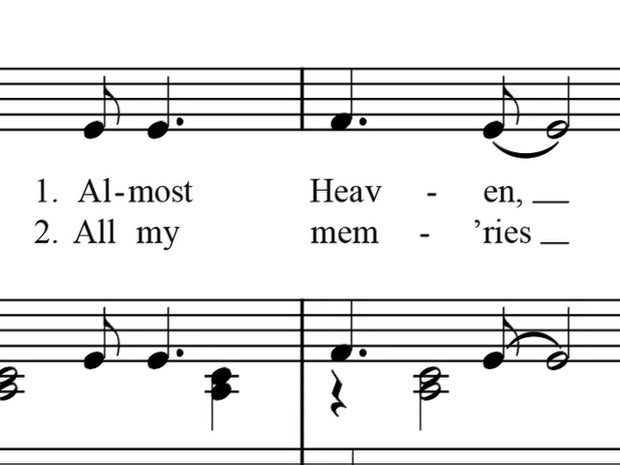
“Take Me Home, Country Roads,” a song about a longing for home (co-written by a songwriter who had never even been in West Virginia), has been embraced by the Mountain State in a big way, and has since been appropriated by singers around the world looking for their very own “place I belong.” Correspondent Conor Knighton looks into the genesis and global impact of John Denver’s first big hit; and with country star Brad Paisley about the special pull the song has for him. (Originally broadcast Dec. 26, 2021.)
For more info:
- Brad Paisley
- Bill Danoff
- “Take Me Home, Country Roads: Identity, (Be)Longing, and Imagined Landscapes” by Sarah L. Morris (West Virginia University Press), in Trade Paperback and eBook formats, available via Amazon, Barnes & Noble and Bookshop.org
- Sarah Morris, Department of English, West Virginia University
- Special thanks to West Virginia University
- Special thanks to West Virginia Department of Tourism

CBS News
ARTS: Grace notes: Art as a reverie of gentle sounds
French artist and composer Céleste Boursier-Mougenot’s “Clinamen,” at the Park Avenue Armory in New York City, is a mesmerizing installation in which porcelain bowls floating in giant basins of water collide, producing chiming sounds that reverberate in the 55,000-square-foot hall, to foster a state of grace. Tracy Smith reports.
For more info:
- Exhibit: “Clinamen” by Céleste Boursier-Mougenot, at the Park Avenue Armory, New York City (through August 9)
- Céleste Boursier-Mougenot on Instagram
- Images courtesy of Park Avenue Armory; photographs by James Ewing, Stephanie Berger and Da Ping Luo

CBS News
MUSIC: Gracie Abrams: Now center stage
At 26, singer-songwriter Gracie Abrams has won praise from critics and fans for her intimate songs – whispered words that become anthems, and which the shy girl-turned-superstar now performs to sold-out stadiums. Correspondent Tracy Smith talks with Abrams about how she worked up the nerve to post her early songs online. She also discusses being the opening act for Olivia Rodrigo and Taylor Swift, and recording her latest album, “Daughter From Hell.”
To hear Gracie Abrams perform “Hit the Wall,” click on the video player below:
For more info:
- Pre-order Gracie Abrams’ latest album, “Daughter From Hell,” to be released July 17 (Interscope Records)
- gracieabrams.com
Thanks to:
- Elizabeth Street Garden, New York City
- Apple Music
- Electric Lady Studios, New York City
PASSAGE: In memoriam
“Sunday Morning” remembers some of the notable figures who left us this week.

CBS News
WORLD: Training for a Tuscan tradition: The wine barrel race
Every August, the medieval Italian town of Montepulciano becomes the backdrop of intense rivalries among neighborhood teams competing in the Bravìo delle Botti – the wine barrel race. Correspondent Seth Doane talks with locals training for the grueling competition: to roll 200-lb. wine barrels uphill through the medieval city’s streets.
For more info:
HARTMAN: It takes a village
CBS News
SUNDAY BEST: Behind the scenes of “The Pitt”
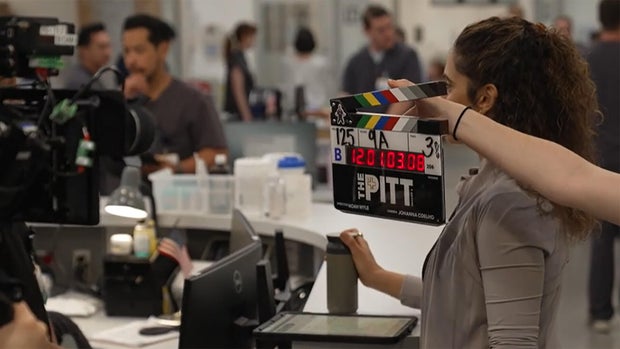
The Emmy-winning HBO Max drama “The Pitt” immerses viewers in the hour-by-hour struggles faced by the overworked-yet-superhuman emergency room staff at the fictional Pittsburgh Trauma Medical Center. CBS News chief medical correspondent Dr. Jon LaPook visits the series’ hyper-realistic set at Warner Brothers Studios in Burbank, Calif. (where cast members undergo a two-week medical boot camp), and talks with star, writer, director and executive producer Noah Wylie about why the former “ER” actor returned to the medical drama genre. (The series just received 25 Emmy nominations, including Outstanding Drama Series, the most of any program.) [Originally broadcast Jan. 4, 2026.]
Extended interview: Noah Wyle
23:09
EXTENDED INTERVIEW: Noah Wyle (Video)
In this web exclusive, CBS News chief medical correspondent Dr. Jon LaPook talks with Noah Wyle, the star of “ER” and the HBO Max series “The Pitt,” about how his new show depicts the fragility of the medical system, and about his character, Dr. Michael “Robby” Robinavitch.
For more info:
- Season 2 of “The Pitt” streams on HBO Max
- Noah Wyle on Instagram

Andrew Harnik/Getty Images
HEADLINES: Trump’s monumental reimagining of Washington, D.C.
President Trump has triggered a firestorm of lawsuits over his plans to remake Washington, D.C. – from constructing a 250-foot arch that would dwarf the nearby Lincoln Memorial, to demolishing the East Wing of the White House for a ballroom. CBS News chief White House correspondent Nancy Cordes looks at the president’s efforts to remake our nation’s capital, and opponents fighting to preserve it.
For more info:
- The Cultural Landscape Foundation
- D.C. Preservation League
- Commission of Fine Arts
- Michael Lemmon, et al., v. Donald Trump, et al (Public Citizen Litigation Group)
NATURE: Cape May, N.J.
WEB EXCLUSIVES:

Notable Deaths in 2026
44 photos
GALLERY: Notable deaths in 2026
A look back at the esteemed personalities who’ve left us this year, who’d touched us with their innovation, creativity and humanity.

Summer music highlights of 2026
23 photos
GALLERY: Summer music highlights of 2026
Summer is the time to enjoy live music, indoors and out. Scroll through our gallery of some of 2026’s leading musical acts, featuring images by CBS News photojournalist Jake Barlow and photographers Ed Spinelli and Kirstine Walton.
The Emmy Award-winning “CBS News Sunday Morning” is broadcast on CBS Sundays beginning at 9:00 a.m. ET. Executive producer is Rand Morrison.
DVR Alert! Find out when “Sunday Morning” airs in your city
“Sunday Morning” also streams on the CBS News app beginning at 11:00 a.m. ET. (Download it here.)
Full episodes of “Sunday Morning” are now available to watch on demand on CBSNews.com, CBS.com and Paramount+, including via Apple TV, Android TV, Roku, Chromecast, Amazon FireTV/FireTV stick and Xbox.
Follow us on Twitter/X; Facebook; Instagram; YouTube; TikTok; Bluesky; and at cbssundaymorning.com.
You can also download the free “Sunday Morning” audio podcast at iTunes and at Play.it. Now you’ll never miss the trumpet!
Do you have sun art you wish to share with us? Email your suns to SundayMorningSuns@cbsnews.com.