
Rubio expands plans for high-level meeting focused on ‘far-left terrorism’

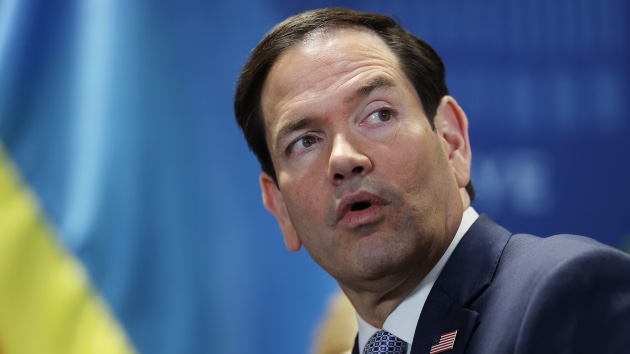
Marco Rubio, Secretary of State looks on as U.S. President Donald Trump meets with Volodymyr Zelenskyy, President of Ukraine for bilateral talks at Bestepe Presidential Compound during the NATO Summit, July 8, 2026 in Ankara, Turkey. (Win McNamee/Getty Images)

(WASHINGTON) — Secretary of State Marco Rubio is preparing to host delegations from more than 70 countries this week for a gathering focused on addressing what the Trump administration describes as the overlooked threat posed by “the resurgence of transnational far-left terrorism,” according to a State Department official and internal documents reviewed exclusively by ABC News.

“For too long this threat has remained a blind spot in the international community’s counterterrorism focus, underestimated and under-resourced, despite the danger it poses,” a note shared with foreign governments describing the concept of the meeting reads.

It goes on to assert that law enforcement and counterterrorism experts have revealed a “clear trend” of “globally networked, politically-motivated terrorists — particularly far-left terrorists” increasingly turning to “organized, deadly violence to advance their political objectives.”

The meeting, which will take place in Washington on Thursday, will lay the foundation for “coordinated action” to counter international organizations that are “seeking to implement an extreme political vision through intimidation and coordinated campaigns of terror,” the document states.

Representatives from roughly 60 countries were initially expected to attend, but the State Department said in a post to X on Friday it would expand the ministerial due to “overwhelming interest” by inviting additional countries “working to combat the growing international threat of far-left violence.”

A State Department official said more than 10 additional invitations had been extended.

Some critics of the Trump administration’s counterterrorism approach have claimed its focus on threats from the far left is misguided.

Analysis conducted by the Center for Strategic and International Studies (CSIS) in 2025 found that while left-wing violence in the U.S. has increased over the past decade, “it has risen from very low levels and remains much lower than historical levels of violence carried out by right-wing and jihadist attackers.”

The CSIS report concluded it was “important to resource all dimensions of the terrorism threat.”

“Left-wing terrorism is a Trump administration priority, but jihadist terrorism also remains a concern even though it has declined,” it states. “Right-wing terrorism could come roaring back, especially if in 2028 there are complaints of a ‘stolen election’ or similar incendiary claims.”

The ACLU has also taken issue with multiple actions taken by the Trump administration’s counterterrorism approach, accusing it of targeting politically opposed but peaceful activists and donors “under the guise of addressing political violence and domestic terrorism.”

Copyright © 2026, ABC Audio. All rights reserved.

Vance, Caine raised munitions stockpile concern, source says, as US pauses consecutive nights of strikes in Iran

(CNN) — Vice President JD Vance and Chairman of the Joint Chiefs of Staff Gen. Dan Caine both raised concerns about the US munitions stockpile to President Donald Trump as he weighed potentially escalating the war with Iran during a White House meeting on Friday, a US official told CNN.On Friday night, the US appeared to pause its bombing campaign on Iran after nearly two weeks of consecutive nights of strikes. Operations are “on a hold,” a Department of Defense source told CNN on Saturday.It’s currently unclear if the stockpile concern was the primary reason why the US paused consecutive nights of strikes or whether it will continue to do so.“President Trump has always been consistent in saying he prefers a diplomatic solution, but he continues to retain all options if Iran continues terrorist activities in the (Strait) of Hormuz or against allies,” White House Communications Director Steven Cheung said in a statement.“Combined with successful sanctions that have crippled Iran’s economy and 13 straight days of strikes against military targets in response to their repeated aggression, it would be wise for Iran to work towards a negotiated deal. Otherwise, they know what will happen.”CNN has also reached out to Vance’s office for comment.This comes as key US weapons stockpiles remain significantly depleted and could come under more pressure if strikes on Iran continue, as CNN has previously reported.Speaking to reporters after the Friday meeting with Cabinet members and top advisors, Trump stressed that the US officials were actively negotiating with Iran, though he also said it was possible the military could continue its bombing campaign or “make it a heavier dose.” He claimed Iran seemed to be getting “more serious” in ongoing talks.As of Friday afternoon, the Trump administration was still deliberating over what a potential escalation would look like, according to a source familiar. Gulf countries have urged restraint in recent conversations with administration officials but acknowledged the US has unique capabilities it could use to escalate the conflict if it chooses to do so, the source said.Even after Trump said he was considering a massive attack against Iran this week, he had privately directed his negotiators to “keep talking,” according to a source familiar with the matter, underscoring how the president has been grappling with the reality of limited escalatory military operations short of putting US troops on the ground.Few within Trump’s inner circle, or inside the Pentagon, believed the president’s options for escalating would yield the results he was looking for, according to multiple sources.CNN has also reported that before the war began, Caine and other military leaders had warned Trump that a protracted military campaign could impact US weapons stockpiles.“America’s military is the most powerful in the world and has everything it needs to execute at the time and place of the President’s choosing,” Chief Pentagon Spokesman Sean Parnell said in a statement to CNN.“We have executed multiple successful operations across combatant commands while ensuring the U.S. military possesses a deep arsenal of capabilities to protect our people and our interests.”The-CNN-Wire™ & © 2026 Cable News Network, Inc., a Warner Bros. Discovery Company. All rights reserved.
Read Next Story