
Record number of West Nile virus cases since 2004, CDC warns ahead of holiday weekend

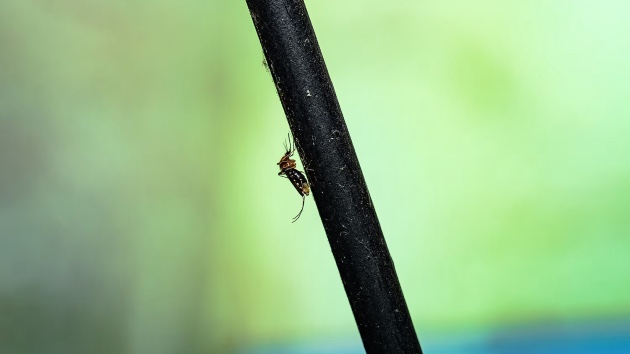
A Culex mosquito, primary vectors for several viral and parasitic diseases inside a house in Tehatta, West Bengal, India, March 3, 2026. (Soumyabrata Roy/NurPhoto via Getty Images)

(NEW YORK) — A record number of West Nile virus cases have been recorded for this time of year, the Centers for Disease Control and Prevention (CDC) warned on Wednesday ahead of the upcoming holiday weekend.

At least 48 cases of West Nile have been reported so far this year compared to an average of 10 typically by the end of June. This is the highest number of infections reported at this point in year since 2004, according to the federal health agency.

Additionally, at least 23 states are reporting West Nile activity, which is the highest number recorded over the last 10 years, CDC data shows.

The illness is the leading cause of mosquito-borne disease in the contagious U.S., with several thousand cases and over 100 deaths reported on average each year.

With millions gathering outside for Fourth of July, the CDC is urging Americans to take precautions and reduce their risk of mosquito bites.

Since 1999, the disease has killed more than 3,300 Americans. Cases have historically peaked in August and are mostly reported from June through October.

While many people infected do not develop symptoms, about one in five do. Symptoms include fever, headache, body aches, vomiting, diarrhea or rash, according to the CDC.  Most symptoms soon disappear, though weakness and fatigue may last for weeks or months.

Fewer than 1% of people infected develop severe illness that affects the central nervous system, including inflammation of the brain (encephalitis) and the membranes around the brain and spinal cord (meningitis), the CDC says.

Risk of severe disease, hospitalization and death increase with older age; certain medical conditions including cancer, high blood pressure and kidney disease; and a weakened immune system.

There are currently no vaccines for West Nile virus, nor disease-specific treatments. The CDC recommends rest, fluids and over-the-counter medications to treat the infection. Those with severe illness may need to be hospitalized and receive additional support treatments, such as intravenous fluids.

Copyright © 2026, ABC Audio. All rights reserved.

Netanyahu rejects Gaza peace plan, vows no military withdrawal until Hamas disarms

▶ Watch Video: Trump says Hamas agreed to next phase of Gaza peace deal, including disarmament Israeli Prime Minister Benjamin Netanyahu on Sunday rejected a U.S.-backed Gaza peace plan and vowed there would be no military withdrawal until Hamas is "genuinely" disarmed.Last month, President Trump hailed the peace plan as a "historic agreement for the complete disarmament of Hamas and all other groups in Gaza." He said it was negotiated by his international "Board of Peace" and called it a "monumental step toward lasting peace and security."On Sunday, after more than a week of gradually escalating criticism of the plan, Netanyahu explicitly opposed it as he faced pushback from his right-wing base ahead of elections."Israel rejects the 15-point document," he said in a cabinet meeting, adding that the military "will not make any withdrawal until Hamas is truly disarmed and will continue to thwart threats against our forces and citizens."Under the plan, Israeli forces would withdraw from parts of Gaza as "disarmament is completed," Mr. Trump said in a Truth Social post on July 30, with an International Stabilization Force and a new Palestinian police force responsible for security."This agreement is a critical step towards Gaza finally being governed by a new Palestinian government that will work closely with the Board of Peace to help the Palestinian people," the president wrote. "At the same time, Israel will have the security it deserves, with Gaza no longer used as a base for terror attacks."Netanyahu, who has faced calls from his far-right allies to hold a new cabinet vote and end the Gaza plan, said on Sunday that Israel is speaking with the U.S. about its objections."They have ideas, some of which are acceptable to us and some of which are unacceptable to us, and we know how to stand up to these things," he said. "We have proven this in the past and we are proving it today. In addition, the IDF will continue to thwart threats against our forces and against our citizens."Netanyahu said Hamas must give up all of its weapons, a goal that Board of Peace members say is not realistically achievable."We are talking about real disarmament, not fictitious disarmament," Netanyahu said.In response to Netanyahu's remarks, Hamas said Sunday that it remains committed to the roadmap reached by the mediators and the Board of Peace."Our acceptance of the roadmap, despite all the challenges, reflected a sense of national responsibility upheld by the resistance factions, foremost among them Hamas, in consideration of the interests of the Palestinian people," the group said.The negotiations stem from a 20-point peace proposal that Mr. Trump offered last fall to end the war between Israel and Hamas. The conflict broke out with Hamas' terrorist attack on southern Israel on Oct. 7, 2023.
Read Next Story