▶ Watch Video: Reclaiming the lost art of listening to music
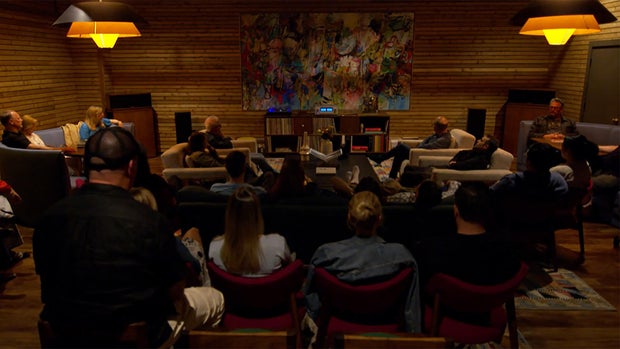
Seattle’s Shibuya HiFi is a listening bar. While guests can chat and sip cocktails in the lounge, they leave behind their drinks, and their shoes, as they settle into the back room to enjoy full-length albums in a communal setting. An evening might feature anything from Bjork to David Bowie.
CBS News
One fan, who showed us her Bowie tattoo, said, “I had to be here! It’s the closest thing I could get to a David Bowie concert.”
These curated sessions (Shibuya hosts around 80 a month) regularly sell out. People are buying $20 tickets to listen to albums they could hear at home for free.
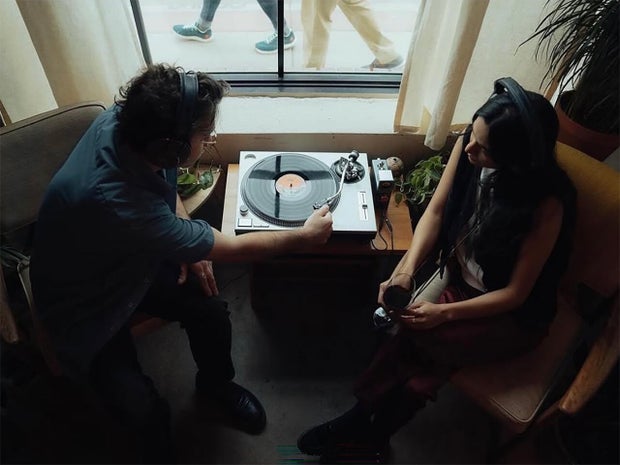
“That seems to me to be something that people are really rediscovering: that pleasure and the beauty of focus and intentional listening,” said Quentin Ertel, the co-owner of Shibuya HiFi, which takes its name from a neighborhood in Tokyo. In Japan, listening bars (often called jazz kissas) started gaining popularity back in the 1930s.
But similar venues have exploded in the U.S. in recent years, popping up everywhere from Minnesota (like noma hifi in Edina), to Missouri (XO HiFi in Kansas City), to Colorado (ESP HiFi in Denver).
ESP
A “new wave” of listening bars
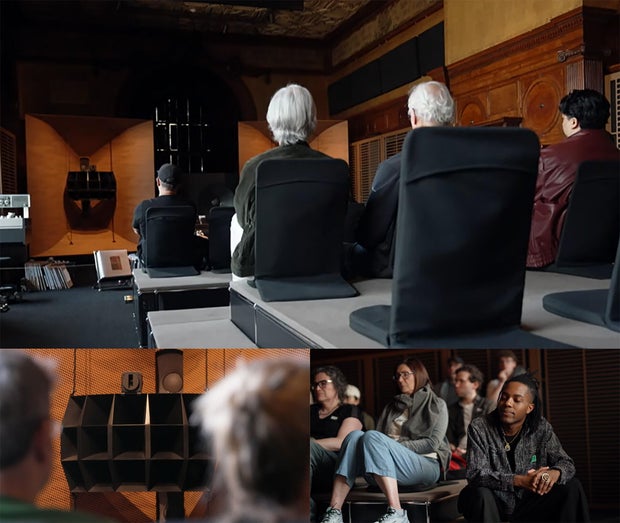
Artist and engineer Devon Turnbull describes these spaces devoted to listening as a “new wave” of listening bars. Turnbull designs high-end, handmade audio equipment for his company Ojas. While his speakers often end up in private living rooms, he’s also created larger public listening spaces.
Smithsonian’s Cooper Hewitt Museum, in New York City, is currently showcasing what Turnbull has called his “HiFi Pursuit Listening Room Dream No. 3,” installed in what was once Andrew Carnegie’s private library.
“Pursuit is a really important part of the title,” said Turnbull. “I am not here to say that I have made the ultimate sound system. This is about my pursuit as a builder, as someone who’s passionate about building audio equipment and listening to music through it.”
CBS News
Turnbull works out of a warehouse in Brooklyn’s Navy Yard. His interest in all things audio traces back to an early age: “My mom always told me that I used to just crawl to the living room and just sit in-between the speakers.”
The shift to digital music – first mp3s, and later streaming – meant that people suddenly had access to millions of songs they could listen to everywhere. But what was gained in quantity was lost in quality.
“I realized I was really, like, losing touch with the way of listening to music that was moving emotionally for me,” said Turnbull.
So, Turnbull immersed himself in DIY audio culture, spending time in Japan, sourcing old parts, and building custom equipment as he develops his craft. “I see it as a folk art, making the kinds of things that I love making,” he said.
In his speaker-building workshops, Turnbull has attempted to get younger listeners thinking more about all aspects of sound. When designing a listening room, it can be just as much about ensuring the quality of the experience as it is about the quality of the sound. “As much as the way it looks is important, just the smell and the light and everything – the comfort of the seat – that all contributes to the experience,” he said.
This can all feel very low-tech and old-fashioned – people sitting around listening to records. But for attendees of “HiFi Pursuit Listening Room Dream No. 3,” like Brandon Stalling, that’s the point.
“To sit and be quiet, it’s a lost form, it’s a lost art,” said Stalling. “To have a space to sit and just wonder and be in your own thoughts and be able to sit quietly and just let the music kind of take you on that ride, I think that’s the type of journey that needs to happen a lot more.”
A space devoted to listening, whether it’s in a museum or a bar, is also a chance to sample a sound system that might otherwise cost tens of thousands of dollars to own. Turnbull has already started thinking about what installation “HiFi Pursuit Listening Room Dream No. 4” might look like.
“I just love making this stuff, you know?” he said. “When my hearing is gone and my hands are shaky, I’ll still be messing around with circuits and speaker enclosures. I just love the process.”
CBS News
For more info:
- Shibuya HiFi, Seattle | HiFi Schedule
- Tracks & Tales international guide to listening spaces
- ESP HiFi, Denver
- in between days, St. Petersburg, Fla.
- noma hi-fi, Edina, Minn.
- XO HiFi, Kansas City, Mo. (Instagram)
- Devon Turnbull (Ojas)
- Exhibition: “HiFi Pursuit Listening Room Dream No. 3” by multi-disciplinary artist Devon Turnbull, at Cooper Hewitt, Smithsonian Design Museum, New York City (through July 19)
- Exhibition: “Art of Noise,” at Cooper Hewitt, Smithsonian Design Museum, New York City (through Aug. 16)
Story produced by Wonbo Woo. Editor: Jennifer Falk.