
Police say husband asked spellcasters to hex his now missing wife

▶ Watch Video: Searching for Maya Millete

Case update: On July 9, 2026, a jury found Larry Millete guilty of first-degree murder in the death of Maya Millete.  

Friends, colleagues and family of Maya Millete knew that it was unusual behavior for her to just disappear, but that is what happened in January 2021, just days before her eldest daughter’s birthday. Her husband Larry offered investigators and her family various stories of why Maya was gone. Did the real answer lie in something Maya may have told her husband in an argument right before she disappeared? 
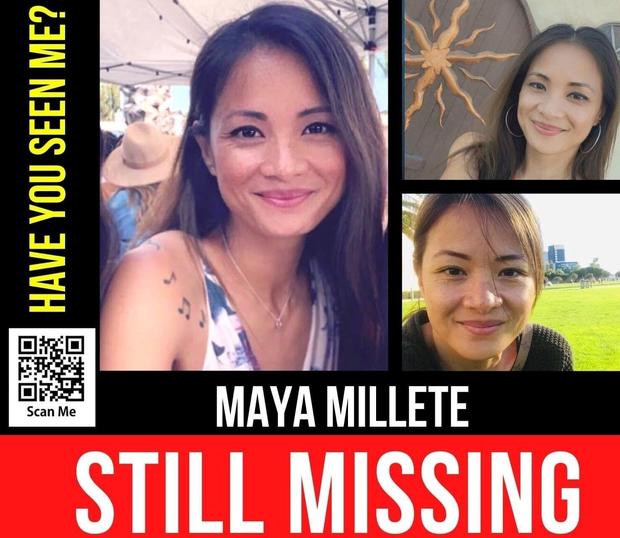
Maya Millete missing poster
Maya Millete’s family last heard from her on January 7, 2021.

Maricris Drouaillet

The search for Maya, the unusual details surrounding her disappearance and her husband’s arrest is the focus of “Searching for Maya Millete,” reported by “48 Hours” contributor Jonathan Vigliotti. 

On a chilly night in January 2021, I caught the local news coverage of a missing mother of three, Maya Millete, who suddenly disappeared from her Chula Vista, California, suburban home. Maya, who also went by the name May, had been planning the birthday celebration when she seemingly just vanished. Her family last heard from her on January 7.

Larry Millete gave her family different accounts about where Maya could have gone, from hiking to visiting wine country. But according to Maya’s family, friends and colleagues at the naval base where Maya negotiated contracts for the U.S. Navy, she was not the kind of person who would just take off.  

Maya’s sister and brother-in law, Maricris and Richard Drouaillet, explained that they immediately believed something was wrong. They were sure Maya would never miss one of her daughter’s birthdays. Maricris reported her sister missing to the Chula Vista Police Department on January 9. Maya’s family and friends were adamant in local news reports that she did not leave her children voluntarily. Maricris and Richard would later tell “48 Hours” that they grew suspicious of Larry almost from the beginning.
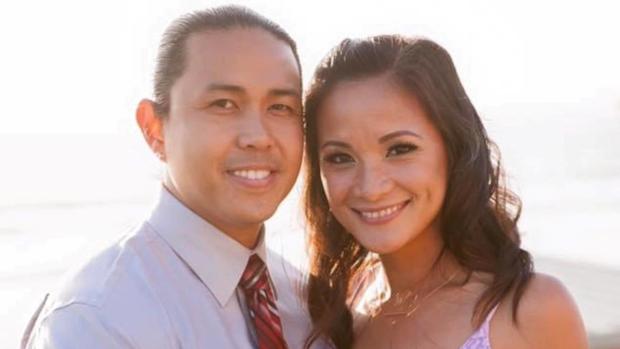
Larry and Maya Millete

Maricris Drouaillet

In a matter of days, the family’s pleas for help turned into weekly physical searches for Maya. The search parties were made up of dozens of friends, family members, colleagues of Maya’s and also strangers. They called themselves Team Maya and began looking for her in vast desert areas east of Chula Vista, near the Arizona border. They were focused on this area because Maya and Larry had gone hiking there and Larry was familiar with the area. Local media followed these searches with the hope that Maya might be found. Months later, I discovered for myself how vast, wild and desolate this location was. To search for Maya on such a terrain was a testament to Team Maya’s dedication to finding her.

The Chula Vista Police Department declined “48 Hours'” request for an interview but told local media last April that it had been conducting its own investigation since mid-January and was keeping its findings close to the vest. As I watched this case unfold over the following months, the family, and now a growing community of friends and strangers, were demanding answers about the investigation into Maya’s disappearance from authorities. Their weekly searches were also turning into gatherings of protest at Chula Vista Police headquarters. 

Although Maricris and Maya’s family say they were not getting many details from the police department, there was someone giving them some information. That person was Billy Little, an attorney and a former criminal defense investigator for the U.S. Navy who was asked to look into the case by his wife Lou, who worked at the naval base with Maya. “Somebody asks for help you just do it, right?” says Little.

Little had stepped into the case just days after Maya went missing, visiting Larry at his home on January 11 and noticing some odd things. Little says it appeared that Larry was airing the house out and he noticed what he says were a couple of recently repaired holes in the bedroom door and wall. Little also obtained numerous texts from Maya and Larry’s friends and family indicating the couple was having trouble in the marriage. 

And Little says Larry was taking some unusual approaches to try to avoid a divorce; Larry had contacted spellcasters in an attempt to get his wife to stay in the marriage. Little explains, “there are people on the internet that’ll sell you for five bucks, you know, how to make a spell that will get her to be attracted to you.”

Millete blood altar
Larry Millete’s bloody altar

Billy Little

Maya’s family and the public would learn a lot more about these alleged tactics when Larry was arrested for Maya’s murder on October 19, 2021. According to authorities, the month before Maya disappeared Larry was getting increasingly panicked, and in one message to a spellcaster Larry wrote, “Please punish May and incapacitate her enough so she can’t leave the house. It’s time to take the gloves off.” 

What’s more, authorities announced that the last known call that Maya had made was to a divorce attorney on the day she went missing. They believed that was the triggering event which led to her alleged murder.

Larry Millete has pleaded not guilty. He maintains that Maya left on her own, and his lawyer, Bonita Martinez, addressed reporters after a bail hearing, saying, “His wife was used to leaving the house in the past. You cannot rule out that she’s alive.”

Maya’s advocates bristle at some of the allegations that Larry’s attorney filed in court that suggest that she was a party girl and may have abandoned her family. They argue that Maya was a devoted mother who was dedicated to her job and family and would never leave her children.

Larry’s arrest was not the end of the weekly searches. In fact, it was just the beginning of a new pinpointed search because volunteers were now armed with evidence revealed by law enforcement which indicated that Larry may have travelled to an area two and a half hours from Chula Vista the day after Maya went missing. The family believes that area was one of the camping locations they were all familiar with in the Anza-Borrego Desert or at the Glamis, California, sand dunes in Imperial County. I joined several searches in these areas to document them on camera for “48 Hours.”
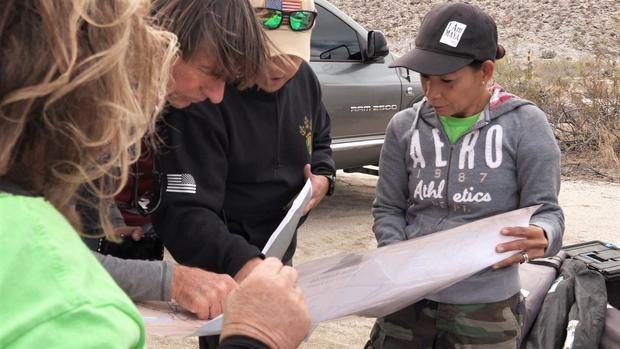
millete-search.jpg
Family, friends and strangers volunteer to help search for Maya each weekend, like this gathering in the Anza-Borrego Desert on October 23, 2021.

CBS News/Cindy Cesare

These dozens of volunteers, most of whom never knew Maya, try to meet this challenge every weekend, battling the extreme weather, the rough landscape and sometimes even rattlesnakes to try to find her and keep her story alive in the media.

Anyone with information about Maya’s disappearance is asked to contact San Diego County Crime Stoppers at 888-580-8477 or the Chula Vista Police Department at 619-691-5139.  

Doctor convicted of attempted manslaughter of his wife wants a new trial, saying jurors may have been confused

(CNN) — Along the steep Pali Puka trail last spring, the verdant beauty of Oahu spilled out to the Pacific Ocean from the scenic path where Gerhardt and Arielle Konig stood. On that high ridge, they fought for their lives – emotionally, then physically – each later would testify.A trip intended to celebrate Arielle’s birthday – and maybe salvage their troubled marriage – ended with the couple, who share two young children, on the ground attacking each other. He bashed her in the face with a rock. She bit him and squeezed his testicles.Who started the melee became the question at the heart of an attempted second-degree murder charge filed against Gerhardt Konig.Prosecutors said the defendant wanted to kill his spouse and tried to push her off the cliff. But after an emotional, 10-day trial a year later that saw husband, wife and one of Gerhardt Konig’s children from a prior marriage on the stand, the jury found him guilty of the lesser charge of attempted manslaughter.At Konig’s request, a judge on Friday heard arguments on whether a new jury should hear the case because of what two jurors in news interviews revealed soon after issuing the verdict that could send Konig to prison for up to 20 years, along with concern one juror may have communicated about the case outside the jury room during deliberations.“Jury irregularities call into serious question the integrity of this verdict,” defense attorney Thomas Otake wrote in an appeal filed in May.At Friday’s hearing, Judge Paul Wong said the court would question jurors about any outside communications during deliberations before deciding whether to grant a new trial. The court will revisit the matter on September 11.“The court must ascertain the extent of the influence,” Wong said.Whether defendant intended to kill is at issueFinding insufficient evidence to convict Konig of attempted murder, the jury found him guilty of attempted manslaughter, with his actions – even if extremely dangerous – motivated by “extreme mental or emotional disturbance.”Ruling out an attempted murder charge was a relief to Konig’s legal team and left open the possibility Konig could be sentenced to probation, with no jail time at all.“We are thankful that they did not convict him of attempted murder, which would have been life in prison,” Otake told reporters shortly after the verdict was announced.Still, the defense attorney immediately promised an appeal based on unspecified concerns about the judge’s rulings during the trial. When his motion dropped a month later, however, it wasn’t the judge Otake took issue with:The request for a new trial was based on what jurors said after the verdict.“Somebody was definitely hurt; it was a bodily injury to the head that could result in serious bodily injury,” foreperson Makalapua Atkins told CNN affiliate East Idaho News about jurors’ state of mind in deliberations.“The intent to kill is improbable to us based on the evidence presented,” Atkins said in an interview after the verdict with True Crime AZ, adding, “The only people who know what happened on that cliff are the two that were involved.”But under Hawaii law, Konig’s defense team has argued, even a conviction for attempted manslaughter would require the jury to find the defendant was trying to kill the victim – and the foreperson said they didn’t.“The jury did not unanimously believe that Dr. Konig had an intent to kill his wife,” Atkins confirmed in a sworn statement to the defense attorney accompanying his appeal. Prosecutors also asked Atkins to sit down with them for an interview, but she declined, their response to the request for appeal states. CNN could not reach Atkins for comment.Another juror, identified publicly only as Juror #3, also said he had not been convinced Gerhardt Konig intended to take Arielle’s life that day.“I don’t know if he was trying to kill his wife, personally,” he told Honolulu TV station KHON in an on-camera interview. “I do know that it was the capacity to kill his wife, personally. That how I felt about it.”If jurors didn’t understand what was required for conviction, Konig’s attorneys argued, it opens the door to a new trial.“Conduct that could result in death or has the capacity to kill may be reckless, but it is not necessarily intentional, and Hawaiʻi does not recognize attempted reckless manslaughter,” Konig’s defense attorneys said, with the emphasis, in a court filing.Did the jury understand the law?“The jurors’ public remarks raise a serious concern that the verdict may rest upon findings inconsistent with the convicted offense,” Konig’s defense attorneys said in a motion for a new trial.The judge’s instructions – 33 in all – were a lot to digest. They laid out a menu of five possible charges – from second-degree attempted murder to third-degree assault – explaining the order in which they had to be considered and steps to evaluating each.“If and only if you unanimously find that all the elements of Attempted Murder in the Second Degree have been proven by the prosecution beyond a reasonable doubt, and you unanimously find that the defendant was not acting in Self-Defense, then you must consider the affirmative defense of Extreme Mental or Emotional Disturbance,” one instruction states.In their response to Konig’s request for a new trial, prosecutors did not try to rebut the claim jurors were confused, instead saying it doesn’t matter. The “internal thought process” of the jury, even when revealed voluntarily by jurors, should not be reconsidered by the court after a verdict, prosecutor Joel Garner stated.“Jurors can change their mind, but what matters is whether the verdict was unanimous at the time it was rendered,” the prosecution wrote. “In this case it was, even according to the on-the-record statements of the foreperson – and therefore a later declaration disagreeing with the verdicts is not a sufficient basis to grant a motion for a new trial.”Juror may have revealed their discussions during deliberationKonig’s defense also raises another concern about the jury: that one member may have been communicating about the case to an outsider while deliberations were still underway.“I’ve been texting with one of the juror’s (sic) and they’re going for count 3 attempted manslaughter,” says a message posted to the live chat of trial coverage by the Law&Crime Network.The comment was first spotted by someone – whose name is redacted in the court filing – and emailed to prosecutors, who alerted the judge.“What caught my attention is that this commenter specifically predicted the verdict – that Konig would be convicted of attempted manslaughter – before it was announced,” the person wrote in the email.Whether it was legitimate or a hoax has not been proven, but Konig’s defense attorneys say the fact that it correctly foreshadowed the verdict should give it credibility.“Although the full scope of any such communication remains unknown, these circumstances raise substantial concerns regarding the jury’s exposure to outside influence or extraneous information during deliberations,” the defense team wrote.Prosecutors say even if the comment was authentic, it doesn’t require a new trial unless there is proof that “external influence” swayed the decision of the juror.“A juror disclosing where the jury stands is certainly problematic, but on its own it does not indicate that the other party influenced that juror in any way,” Garner said in their court filing.Could a new trial backfire?If Konig, who is in jail pending his sentencing, is granted a new trial, it could come with a big risk: He could face the attempted murder charge again after beating it in his first trial.Otake is trying to make sure that doesn’t happen.“The jury did not convict Dr. Konig of attempted murder in the second degree,” the defense lawyer wrote, arguing the conviction on the lesser charge amounts to an attempted murder acquittal since the jury could not convict Konig of both.“Any retrial must therefore be limited to offenses consistent with the jury’s verdict and the constitutional protections against double jeopardy,” Otake added.The Department of the Prosecuting Attorney in Honolulu has not said whether it would try to pursue an attempted murder conviction again if a retrial is ordered.Either way, the legal fight between Gerhardt and Arielle Konig will continue, as their divorce is still pending.“The marriage,” Arielle Konig wrote in her divorce petition, “is irretrievably broken.”The-CNN-Wire™ & © 2026 Cable News Network, Inc., a Warner Bros. Discovery Company. All rights reserved.
Read Next Story