
Police say husband asked spellcasters to hex his now missing wife

▶ Watch Video: Searching for Maya Millete

Case update: On July 9, 2026, a jury found Larry Millete guilty of first-degree murder in the death of Maya Millete.  

Friends, colleagues and family of Maya Millete knew that it was unusual behavior for her to just disappear, but that is what happened in January 2021, just days before her eldest daughter’s birthday. Her husband Larry offered investigators and her family various stories of why Maya was gone. Did the real answer lie in something Maya may have told her husband in an argument right before she disappeared? 

Maya Millete missing poster
Maya Millete’s family last heard from her on January 7, 2021.

Maricris Drouaillet

The search for Maya, the unusual details surrounding her disappearance and her husband’s arrest is the focus of “Searching for Maya Millete,” reported by “48 Hours” contributor Jonathan Vigliotti. 

On a chilly night in January 2021, I caught the local news coverage of a missing mother of three, Maya Millete, who suddenly disappeared from her Chula Vista, California, suburban home. Maya, who also went by the name May, had been planning the birthday celebration when she seemingly just vanished. Her family last heard from her on January 7.

Larry Millete gave her family different accounts about where Maya could have gone, from hiking to visiting wine country. But according to Maya’s family, friends and colleagues at the naval base where Maya negotiated contracts for the U.S. Navy, she was not the kind of person who would just take off.  

Maya’s sister and brother-in law, Maricris and Richard Drouaillet, explained that they immediately believed something was wrong. They were sure Maya would never miss one of her daughter’s birthdays. Maricris reported her sister missing to the Chula Vista Police Department on January 9. Maya’s family and friends were adamant in local news reports that she did not leave her children voluntarily. Maricris and Richard would later tell “48 Hours” that they grew suspicious of Larry almost from the beginning.
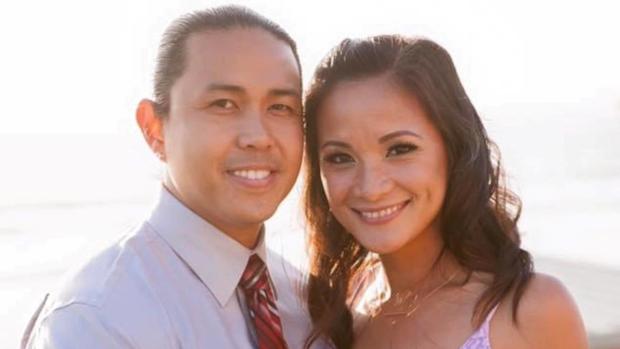
Larry and Maya Millete

Maricris Drouaillet

In a matter of days, the family’s pleas for help turned into weekly physical searches for Maya. The search parties were made up of dozens of friends, family members, colleagues of Maya’s and also strangers. They called themselves Team Maya and began looking for her in vast desert areas east of Chula Vista, near the Arizona border. They were focused on this area because Maya and Larry had gone hiking there and Larry was familiar with the area. Local media followed these searches with the hope that Maya might be found. Months later, I discovered for myself how vast, wild and desolate this location was. To search for Maya on such a terrain was a testament to Team Maya’s dedication to finding her.

The Chula Vista Police Department declined “48 Hours'” request for an interview but told local media last April that it had been conducting its own investigation since mid-January and was keeping its findings close to the vest. As I watched this case unfold over the following months, the family, and now a growing community of friends and strangers, were demanding answers about the investigation into Maya’s disappearance from authorities. Their weekly searches were also turning into gatherings of protest at Chula Vista Police headquarters. 

Although Maricris and Maya’s family say they were not getting many details from the police department, there was someone giving them some information. That person was Billy Little, an attorney and a former criminal defense investigator for the U.S. Navy who was asked to look into the case by his wife Lou, who worked at the naval base with Maya. “Somebody asks for help you just do it, right?” says Little.

Little had stepped into the case just days after Maya went missing, visiting Larry at his home on January 11 and noticing some odd things. Little says it appeared that Larry was airing the house out and he noticed what he says were a couple of recently repaired holes in the bedroom door and wall. Little also obtained numerous texts from Maya and Larry’s friends and family indicating the couple was having trouble in the marriage. 

And Little says Larry was taking some unusual approaches to try to avoid a divorce; Larry had contacted spellcasters in an attempt to get his wife to stay in the marriage. Little explains, “there are people on the internet that’ll sell you for five bucks, you know, how to make a spell that will get her to be attracted to you.”

Millete blood altar
Larry Millete’s bloody altar

Billy Little

Maya’s family and the public would learn a lot more about these alleged tactics when Larry was arrested for Maya’s murder on October 19, 2021. According to authorities, the month before Maya disappeared Larry was getting increasingly panicked, and in one message to a spellcaster Larry wrote, “Please punish May and incapacitate her enough so she can’t leave the house. It’s time to take the gloves off.” 

What’s more, authorities announced that the last known call that Maya had made was to a divorce attorney on the day she went missing. They believed that was the triggering event which led to her alleged murder.

Larry Millete has pleaded not guilty. He maintains that Maya left on her own, and his lawyer, Bonita Martinez, addressed reporters after a bail hearing, saying, “His wife was used to leaving the house in the past. You cannot rule out that she’s alive.”

Maya’s advocates bristle at some of the allegations that Larry’s attorney filed in court that suggest that she was a party girl and may have abandoned her family. They argue that Maya was a devoted mother who was dedicated to her job and family and would never leave her children.

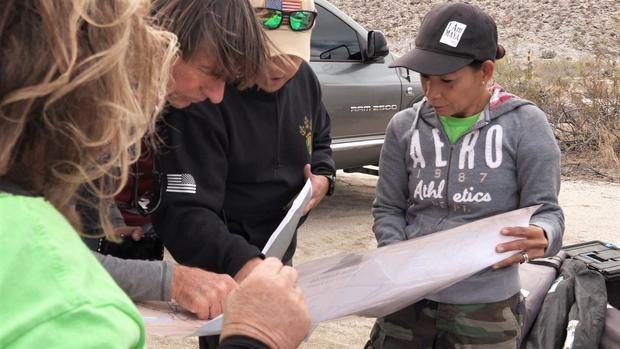
Larry’s arrest was not the end of the weekly searches. In fact, it was just the beginning of a new pinpointed search because volunteers were now armed with evidence revealed by law enforcement which indicated that Larry may have travelled to an area two and a half hours from Chula Vista the day after Maya went missing. The family believes that area was one of the camping locations they were all familiar with in the Anza-Borrego Desert or at the Glamis, California, sand dunes in Imperial County. I joined several searches in these areas to document them on camera for “48 Hours.”
millete-search.jpg
Family, friends and strangers volunteer to help search for Maya each weekend, like this gathering in the Anza-Borrego Desert on October 23, 2021.

CBS News/Cindy Cesare

These dozens of volunteers, most of whom never knew Maya, try to meet this challenge every weekend, battling the extreme weather, the rough landscape and sometimes even rattlesnakes to try to find her and keep her story alive in the media.

Another Democratic nail-biter in Wisconsin and other takeaways from Tuesday’s primaries

(CNN) — The Democratic primary for governor in Wisconsin was neck-and-neck early Wednesday morning, with democratic socialist state lawmaker Francesca Hong and moderate Milwaukee County Executive David Crowley separated by less than a percentage point.The race was seen as a gauge of the party’s ideological direction — testing whether the progressive insurgency that has played out in deep-blue districts this spring and summer would extend into another presidential battleground.Hong, though, faced deep concerns about her electability, and outgoing Gov. Tony Evers sought to rally Democrats behind Crowley in the race’s final days.It was the most closely watched race on a primary day that included a Democratic Senate battle in Minnesota, a Republican Senate contest in South Carolina and a long-time incumbent being ousted in Connecticut. Here are takeaways from Tuesday’s primaries:Another underperformance for the leftAugust has been a big test for the left-wing of the Democratic Party – a rare chance for it to demonstrate its ability to win not just in deep-blue urban areas but also swing states.But for the second straight week, its candidate had a dogfight on their hands. Last week, it was Abdul El-Sayed winning the Michigan Democratic Senate primary by a very narrow margin; this week, it’s Hong facing a race that is closer than many expected.So, what might explain this?One possibility is that some voters might be gun-shy about following through and voting for candidates who might struggle to win in the general election. Democratic leaders have worried greatly about nominating both El-Sayed and Hong, and perhaps some voters were convinced those votes would be too risky.Polling primary elections is also more difficult than general elections, because the universe of voters isn’t as predictable. And there is some thought that these surveys might be over-sampling more-educated, urban voters (who favor more left-wing candidates) and under-sampling more rural, blue-collar ones.Plus, there just wasn’t much quality polling in either race.But in the case of the Hong-Crowley race, there could be another explanation: that the opposition to Hong simply consolidated late.A late July poll from Marquette Law School showed Hong at 46%, former Lt. Gov. Mandela Barnes at 21%, and Crowley at 11%.Sometimes when it’s clear a race is coming down to two candidates, voters see that and decide to choose between them. Crowley became the alternative when Barnes dropped out the day after that poll was released.Progressive wins Minnesota Senate primaryNext door in Minnesota, progressives won yet another race that served as a proxy battle between the party’s left and center flanks.Lt. Gov. Peggy Flanagan defeated moderate Rep. Angie Craig in the Democratic Senate primary. The two were competing for the party’s nomination to replace retiring Sen. Tina Smith.Flanagan criticized Craig’s history of financial support from the American Israel Public Affairs Committee. She also lambasted Craig’s vote for the Laken Riley Act, which mandates the detention of undocumented immigrants charged with certain crimes and which the congresswoman now says she regrets supporting. The issue of immigration enforcement became a flashpoint in Minnesota after federal agents shot and killed two US citizens who were protesting mass deportation efforts there in January.Flanagan, however, never ignited the sorts of deep worries about electability that Hong faced in Wisconsin. She was also endorsed by Vermont Sen. Bernie Sanders and Massachusetts Sen. Elizabeth Warren, both of whom sat out the Wisconsin governor’s race.The lieutenant governor will be the heavy favorite in November, when she’ll take on former NFL broadcaster Michele Tafoya, a first-time candidate.Progressives notched another victory in Minnesota in the primary for the 2nd District House seat that Craig is vacating. Matt Little, a former state senator, emerged as the winner in a crowded field in the Twin Cities’ southern suburbs.Darline Graham makes runoff, but has her work cut out for herDarline Graham rode President Donald Trump’s support to a Senate appointment and, now, to first place in South Carolina’s Republican special primary for a full term. But whether it will take her any further in the August 25 runoff is a big open question.Graham took about one-third of the vote on Tuesday, running well ahead of her new runoff opponent, Rep. Ralph Norman. But that’s no guarantee that she’ll be the favorite in the runoff, where the winner needs to get a majority of the vote.In fact, Graham is pretty far from 50%-plus-one, relative to other Trump-endorsed candidates. Before Tuesday, only one Trump-backed statewide candidate took less of the primary vote than she did.That was South Carolina Lt. Gov. Pam Evette in the June gubernatorial primary; she went on to lose by 37 points in the runoff, when her opponents’ supporters coalesced.One of the other candidates in that gubernatorial primary was Norman, who finished in third place with 17% in the initial contest. That wasn’t a great showing, but it meant he had a statewide campaign infrastructure to tap into in the wake of Sen. Lindsey Graham’s death last month.Norman has strong conservative bona fides as a leader of the House Freedom Caucus, which could be especially valuable in a one-on-one matchup with Darline Graham. And he served notice Tuesday that he’ll contrast his proven conservative record with her lack of a political track record.“My record is an open book,” he said.If Norman has one problem, it might be his decision in 2024 to back former South Carolina Gov. Nikki Haley over Trump. Norman has explained it was because of personal ties, but Trump often holds grudges over such things.It’s been a bad week for Trump’s endorseesNot only does Graham have plenty of work to do, but MyPillow founder Mike Lindell’s loss in the Minnesota GOP gubernatorial primary means three Trump-backed candidates have lost since last Tuesday.The first was Michigan congressional candidate Amir Hassan on August 4. He lost to a candidate who had dropped out of the race, Tom Smith, by double-digits.Then it was incumbent Rep. Andy Ogles falling to former Tennessee Agriculture Commissioner Charlie Hatcher on Thursday.And now it’s Graham going to a runoff and Lindell losing to Minnesota state House Speaker Lisa Demuth.Lindell’s loss means seven Trump-backed candidates for Congress or statewide office have lost this primary season, including five who ran for statewide office.The seven losses are more than Trump-backed candidates had in 2018, 2020 and 2024, according to a CNN review of data from Ballotpedia. And the four gubernatorial candidates who have now lost this year is more than in 2022, as well.Democratic upheaval in ConnecticutIn central Connecticut, the Democratic divide was less about ideology than generational change as voters in the 1st District ousted 78-year-old incumbent Rep. John Larson in favor of 47-year-old former Hartford Mayor Luke Bronin.Bronin’s win is a reminder of just how restive Democratic voters are. The party’s youth movement is being accelerated in the aftermath of former President Joe Biden’s ill-fated decision to seek reelection, only to drop out of the race as concerns about the then 81-year-old president’s age and mental acuity mounted.Larson, a 14-term incumbent, faced health concerns after abruptly freezing on the House floor during a February 2025 speech. He later said he suffered a complex partial seizure and had been prescribed medication that would “greatly reduce” the chances of another such episode.The longtime congressman made the case that his seniority best positioned him to deliver on the district’s priorities. But Bronin said Democrats need a new direction and a greater sense of urgency in taking on the Trump administration. He won the Connecticut Democratic Party’s endorsement, and was also backed by former Transportation Secretary Pete Buttigieg, a likely 2028 presidential contender.Dems stick with establishment’s pick in key Wisconsin districtRebecca Cooke will get the rematch she sought with Republican Rep. Derrick Van Orden in southwestern Wisconsin after she fended off progressive rival Emily Berge, the former Eau Claire city council president, in the 3rd District Democratic primary.It was a key race, with the Driftless Area congressional district looking like one of Democrats’ prime pick-up opportunities after Cooke, a small business owner and waitress who highlights her background as the daughter of dairy farmers, came within 3 percentage points of ousting Van Orden in a political environment more favorable to the GOP in 2024.Establishment Democrats are backing Cooke, who has proven to be a strong fundraiser. But the race wasn’t a traditional progressive-versus-moderate showdown. Cooke has distanced herself from left-leaning policies like defunding the police and abolishing Immigration and Customs Enforcement. But she was also endorsed by Sanders, and aired a television advertisement focused solely on highlighting the Vermont senator’s support.The biggest question entering Election Day was whether a progressive wave led by Hong would also sweep Berge to a surprise victory. But that surge did not materialize on Tuesday.The-CNN-Wire™ & © 2026 Cable News Network, Inc., a Warner Bros. Discovery Company. All rights reserved.
Read Next Story