
New Jersey accidentally registered 6,600 noncitizens to vote years ago, governor says

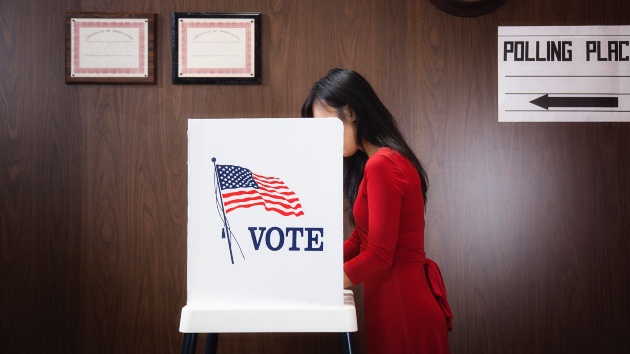
Person voting (Hill Street Studios/Getty Images)

(NEW YORK) — About 6,600 people in New Jersey who said they were not U.S. citizens had been incorrectly registered to vote due to a technical error during the previous gubernatorial administration, Gov. Mikie Sherrill, who took office this year, said Tuesday. She added that fewer than 400 were found to have actually voted and that the state is taking action to remove them from its voter rolls.

The admission came less than a week after Department of Homeland Security Secretary Markwayne Mullin sent letters to New Jersey and three other states alleging that those states might have tens of thousands of noncitizens registered to vote, although Mullin did not explain how precisely DHS got those numbers.

Mullin and DHS had alleged that New Jersey could have “as many as … 35,152 non-citizens registered to vote in New Jersey.”

Sherrill said in a statement on Tuesday, “Last week I learned that a serious software error in New Jersey’s Motor Vehicle System led to the registration of roughly 6,600 people who indicated that they were not U.S. citizens between June 2023 and June 2024, almost three years prior to my taking office. These individuals answered ‘no’ when asked on a keypad whether they were a U.S. citizen when applying for drivers’ licenses and identification cards, but through no fault of their own, the system registered them anyway.”

The governor’s statement said that the state’s “preliminary analysis” found that less than 400 people who were erroneously registered to vote had voted in elections and were not tied to just one party; they were registered as Democrats, Republicans, or unaffiliated voters.

During a press conference on Tuesday, Sherrill said those voters could have potentially voted in any election since being registered, but the state has “no evidence at this time that any elections were swayed” because of those voters

Sherrill said that she has ordered an independent investigation about what happened, the removal of any New Jersey residents from the state’s voter rolls who should not have been registered to vote, and that the new administrator of New Jersey’s Motor Vehicle Commission is starting to replace the vendor tasked with running the faulty system.

The governor also said she will present the state’s findings after it investigates, and that the state is taking care to protect the identities of noncitizens who were registered inadvertently so that their immigration status does not get imperiled.

In a statement, IDEMIA, the company that runs the system faulted by the governor, said: “IDEMIA works with the New Jersey Motor Vehicle Commission, and has for more than 40 years, to support the process through which eligible individuals may indicate their interest in registering to vote when applying for or renewing a driver’s license or state-issued identification card. IDEMIA’s role is to transmit information through the motor vehicle system. The voter registration information is transmitted to the New Jersey Department of State, Division of Elections, which is ultimately responsible for verifying eligibility to vote. Information submitted by IDEMIA must still be validated and adjudicated by the Division of Elections.”

At her press conference, Sherill pushed back against any insinuation that the finding validates claims the Trump administration has made about New Jersey’s voter rolls.

“Let me be clear: Donald Trump has zero credibility on the issue of election integrity. For the past 10 years, he’s cried wolf and peddled bizarre conspiracy theories about fraud with no evidence,” she told reporters during the press conference.

Sherrill also briefly referenced the DHS letter, saying that the number of alleged noncitizen voters appears to be unrelated to the number of noncitizen voters New Jersey uncovered. She confirmed New Jersey received the DHS letter, but said the state asked the administration for any evidence of there being that many noncitizen voters and has not gotten anything back yet.

Meanwhile, the Department of Justice said Tuesday that is investigating the matter.

In a letter to Sherrill shared on social media, Assistant Attorney General Harmeet Dhillon, wrote: “Ensuring that U.S. citizens’ votes are not illegally diluted by noncitizens votes is of paramount importance. We therefore write to formally request additional information to assess New Jersey’s compliance with various federal statutes.” Dhillon asked for the state to provide within five business days personal information on the registered noncitizens the state identified and details on the around 400 who voted.

The White House said Tuesday’s announcement from Sherrill bolsters the need for Congress to pass the president’s signature SAVE America Act, which would significantly retool the administration of American elections.

“Democrats and their media allies have repeatedly said it is impossible for noncitizens to register to vote, let alone cast a ballot,” White House spokesperson Abigail Jackson said in a statement.

“As President Trump has said, there is nothing more important than the integrity of our elections. And this latest incident underscores the absolute necessity of the SAVE America Act,” she added. “American voters deserve to have confidence that our elections are safe and secure — President Trump will never stop fighting to make that happen and all patriotic Americans should join in his effort.”

Copyright © 2026, ABC Audio. All rights reserved.
Arrestan a agente policial que rastreó a su exnovia unas 2.000 veces mediante el sistema de cámaras Flock, dicen autoridades

Un agente de policía de Kentucky fue arrestado después de que las autoridades afirmaran que utilizó el sistema de cámaras lectoras de matrículas Flock Safety para rastrear a su exnovia más de 2.000 veces, lo que constituye el caso más reciente de una serie de dimisiones o arrestos de agentes de las fuerzas del orden por presuntos abusos con esta controvertida tecnología.La presunta actividad del agente Asad Zahir, del Departamento de Policía de Shively, fue detectada por la nueva herramienta de auditoría impulsada por inteligencia artificial e implementada por Flock Safety ante la creciente inquietud por la seguridad y el uso indebido por parte de la policía, dijeron las autoridades, en muchos casos relacionados con agentes acusados de utilizar el sistema para acosar a exparejas.La herramienta de asistencia para auditorías, que ahora es un requisito de Flock Safety, detecta usos anómalos por parte de los agentes.El sistema Flock Safety ha sido elogiado por las autoridades por su capacidad investigativa, mientras que los críticos señalan la creciente lista de agentes acusados de abusar del lector de matrículas como un ejemplo de su extralimitación y de las vulneraciones de las libertades civiles. Algunas ciudades han cancelado sus contratos con Flock —incluida Tempe, Arizona, el miércoles— y algunos críticos han llegado incluso a vandalizar las cámaras.“La cámara Flock funciona. Cuando se utiliza correctamente, funciona. Hay muchísimas estadísticas que demuestran que funciona”, dijo este miércoles el jefe de la Policía de Shively, Andre Bottoms, en una conferencia de prensa en la que anunció el arresto y prometió revisar los protocolos de Flock. “Es una herramienta muy eficaz y no queremos que se nos juzgue por las malas decisiones de un solo agente”.Los investigadores descubrieron que Zahir realizó 2.048 búsquedas en Flock desde enero hasta mayo para rastrear dos vehículos registrados a nombre de la víctima, la madre de su hijo, en Kentucky e Indiana, según muestran los registros judiciales.Durante el período en que realizó esas búsquedas, Zahir acosó a la víctima e hizo comentarios amenazantes, lo que llevó a la mujer a solicitar una orden de protección contra él, según los registros judiciales.Los investigadores determinaron que 241 búsquedas en Flock se realizaron mientras esa orden de protección estaba vigente, del 17 de abril al 6 de mayo, dijo Bottoms.Zahir, agente desde 2022 y asignado a la división de patrullaje, indicó como motivo de la investigación una pesquisa relacionada con drogas o narcóticos, aunque la mujer rastreada no era objeto de ninguna investigación de ese tipo y no tiene antecedentes que indiquen infracciones semejantes, dijeron funcionarios en la conferencia de prensa.La herramienta de inteligencia artificial detectó la actividad este lunes y, para el martes, Zahir ya estaba bajo custodia, acusado de cinco cargos de conducta inapropiada en el ejercicio de funciones oficiales en quinto grado y cinco cargos de acceso ilegal a una computadora en cuarto grado, según muestran los registros judiciales.Zahir se encuentra actualmente suspendido sin sueldo, a la espera del resultado de la investigación penal y de la revisión interna, dijo Bottoms. Fue puesto en libertad bajo palabra este martes y se espera que comparezca ante el tribunal para la lectura de cargos el viernes, según muestran los registros judiciales en línea. Aún no se sabe quién será su representante legal.“Acusar a este agente no fue agradable. Para mí, personalmente, fue un golpe muy duro”, dijo Bottoms, quien añadió que había llegado a conocer personalmente a cada miembro del pequeño departamento de policía. “La rendición de cuentas no puede depender de quién seas, del cargo que ocupes ni de la placa que lleves”.Mientras tanto, se está llevando a cabo una revisión completa de los procedimientos y las directrices sobre el uso y la supervisión de la tecnología Flock, dijo Bottoms. La revisión examinará el acceso de los usuarios, los requisitos de búsqueda, la supervisión de los superiores, las prácticas de auditoría y la frecuencia de las revisiones de cumplimiento, dijo Bottoms. Esto determinará si deben implementarse modificaciones u otras salvaguardias, afirmó el jefe.La red nacional de cámaras lectoras automatizadas de matrículas (ALPR) de Flock —instaladas a lo largo de vías públicas— toma imágenes de las matrículas, el color y otras características de los vehículos que pasan para incorporarlas a una base de datos. Los departamentos de policía contratan a la empresa para consultar la base de datos, promocionada como una herramienta para ayudar a resolver delitos.El sistema ALPR ha sido objeto de escrutinio en los últimos meses, y sus críticos cuestionan la extralimitación en materia de privacidad. El Institute for Justice, un bufete de abogados sin fines de lucro de interés público que ha presentado demandas contra Flock por motivos relacionados con la Cuarta Enmienda, ha documentado al menos 47 casos de agentes que fueron sancionados de alguna manera por el presunto uso indebido del sistema Flock para acechar a personas con las que tenían un interés romántico.Se cree que esa cifra es mucho mayor, según un periodista del instituto que administra su base de datos.“Hay muchas razones para pensar que esto es solo la punta del iceberg”, dijo Christopher Ingraham a CNN. “Muchos incidentes simplemente no se han denunciado o aún no se han detectado”.El sistema Flock se ha utilizado para recuperar cientos de vehículos robados, localizar a un menor desaparecido e incluso ayudar en investigaciones de homicidios, dijo Bottoms, al defender su uso responsable.“Así es como se ve la rendición de cuentas”, dijo Bottoms, en referencia a la respuesta del departamento ante la presunta actividad ilegal del agente. “Estas medidas envían un mensaje claro a todos los miembros del departamento. Si hacen un uso indebido de su autoridad, infringen las políticas del departamento o quebrantan la ley, deberán rendir cuentas”.The-CNN-Wire™ & © 2026 Cable News Network, Inc., a Warner Bros. Discovery Company. All rights reserved.
Read Next Story