N.Y. enacts nation’s first statewide moratorium on building new data centers

▶ Watch Video: New York officially becomes first state to put moratorium on new AI data centers

New York is the first state in the nation to enact a moratorium on data centers, pausing construction on new facilities for one year.

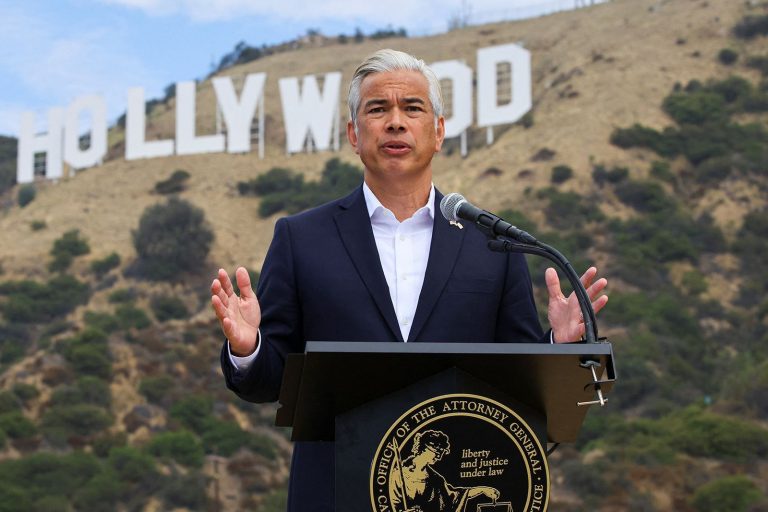
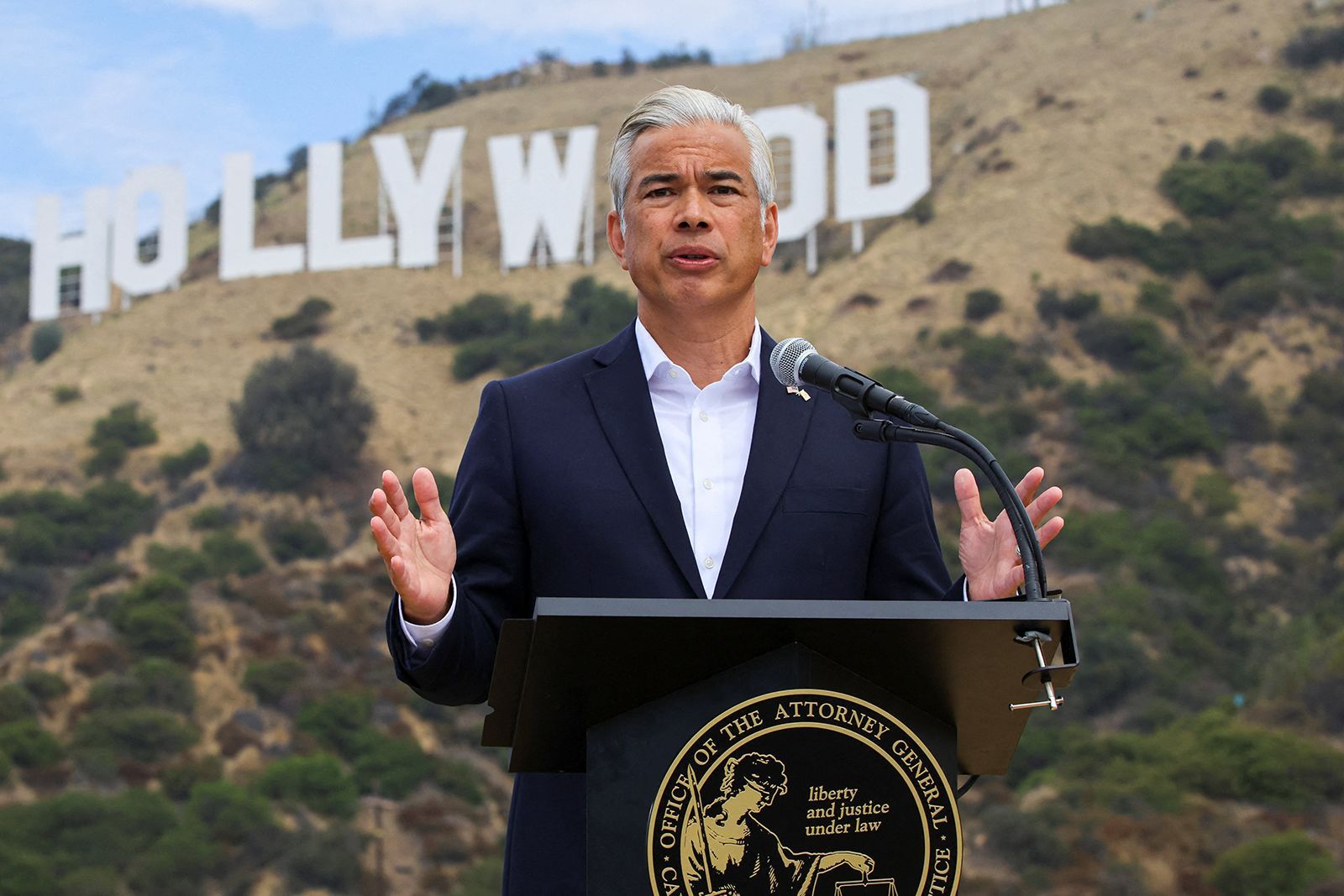
An executive order by Gov. Kathy Hochul bans state lawmakers from approving environmental permits for hyperscale data centers. Hochul said Tuesday the pause will give lawmakers time to create a framework to protect residents and the environment. 

Hyperscale data centers contain thousands of computer servers and typically use 50 or more megawatts of power, the equivalent of 50,000 homes, to operate. They also require a steady supply of water to keep cool.

The moratorium only applies to new projects, so ones that were previously approved will still go forward.   

Hochul’s reason for the temporary ban

“Massive data centers are being built across our state and our country. The scale and speed of this development has put unprecedented demand on energy and water resources, and threatens to drive up utility costs. Before it goes any further, I need safeguards in place to protect New Yorkers,” Hochul said

Hochul said the state still welcomes AI investments and businesses, and looks forward to helping them grow and thrive. 

“But when you benefit from the talent and energy of New York, we expect you to protect our resources and give back to our communities,” Hochul said. 

The order comes as the state is experiencing unprecedented growth in the demand for data center development driven by AI and other computing operations, according to the governor’s office. In addition to energy needs, the data centers require “millions of gallons of water, draining the local supply.”

“The bottom line is progress shouldn’t arrive with a higher utility bill, depleted water supplies, or noise pollution. So we have no choice but to address these challenges created by these massive facilities,” Hochul said.

“It is a fact that our energy grid is already too strained. Over the July 4 weekend, we saw how vulnerable our grid was when Mayor Mamdani asked New Yorkers to keep their thermostats at 78 degrees during a heat wave,” state Sen. Kristen Gonzalez added.

Hochul said New York will require data centers to either produce their own energy or pay a premium for accessing New York’s grid. Hochul also said she opposes any tax subsidies for AI data centers. 

“We’ve seen parts of our country collect millions, even hundreds of millions of dollars from these centers to go from everything for new roads, water supply, infrastructure, schools, community centers, playgrounds, fire departments, medical centers, even farm preservation,” Hochul said. “The bigger the data center, the bigger the investments that communities can and should expect.”  

The Department of Public Service will create the guidelines for centers to ensure new facilities meet consistent standards. 

Hochul said the process will take up to a year, prompting the moratorium.

Once state officials finalize the standards, the ban will be lifted. 

A call for “clear, reliable rules of the road”

Sen. Kirsten Gillibrand applauded the move. 

“This one-year moratorium is fundamentally about trust. Right now, New Yorkers aren’t convinced these massive facilities benefit them. Before we move forward, our communities need ironclad guarantees that their energy bills won’t spike, their water will be protected, and their air will remain clean,” Gillibrand said.   

Gillibrand described the need for federal action regarding AI as well. 

“That requires establishing clear, reliable rules of the road. We must build a framework that protects our kids from harmful algorithms and social media tools; shields seniors and consumers from AI-driven scams and fraud; and safeguards American jobs and livelihoods from displacement,” she said. 

“It kills good-paying union jobs”

Not everyone is pleased with the moratorium. 

“A shortsighted moratorium only accomplishes one thing: it kills good-paying union jobs. Rather than implementing guardrails to build the future of American ingenuity, Gov. Hochul is taking her ball and going home. We urge the governor to work with all parties, including the hardworking New Yorkers whose jobs are at stake, to implement common sense guardrails,” said Mark McManus, general president of the United Association of Union Plumbers and Pipefitters. 

The Associated General Contractors of New York State also objected to the moratorium, calling it “the wrong policy for New York.” 

“Halting permits for as much as a year in this fast-moving sector will not simply delay projects — it will send them permanently to Virginia, Texas, Georgia and other states actively competing for these investments and the construction and other jobs that come with them. Once a developer breaks ground somewhere else, that project — and the opportunities and tax revenue that come with it– are not coming back,” AGS NYS president and CEO Mike Elmendorf said. “Data center construction is the strongest-performing segment in an otherwise uncertain construction market nationwide, and New York’s construction industry, which still has not recovered to pre-pandemic employment levels, cannot afford to forfeit it.”

Elmendorf called the moratorium a “de facto ban that tells the marketplace New York is closed for business.”
World’s most beautiful castles

(CNN) — What is it about castles that fascinates so many people around the globe?A lot of the allure derives from the history and human drama that played out within the walls, as well as the astonishing architecture that features on so many castles. But they’re also romantic and somewhat mystical, places that spark our imagination and conjure visions of long-ago knights in shining armor and powerful warrior queens.“Because they combine two functions, they are far more interesting than fortresses or palaces,” says Marc Morris, author of “Castles: Their History and Evolution in Medieval Britain.”“What makes a castle a castle is that it combines the functions of defense and dwelling — it’s a fortification and a stately home rolled into one. Creating a building which is both comfortable and defensible is difficult. The ingenious ways in which castle-designers reconciled this balance is always intriguing.”Although we normally associate castles with European history, it’s actually an architectural form found around the world — in nations as varied as Japan and India, Morocco and Mexico.Many are now hubs of living history where modern visitors can watch jousting and other ancient combat forms, listen to medieval music or watch artisans demonstrate the arts, crafts and everyday skills of a thousand years ago.They also make great backdrops for outdoor concerts, films, theater and military performances, or for the on-location filming of movies and television shows.“With a castle you get not only the stories of sieges, but also stories of the domestic lives of the rich and famous,” says Morris. “Castles are places were plots were hatched, marriages were consummated, murders carried out, royal babies born, and so on. With castles, you are never short of fascinating things to talk about.”Read on to find out more about 21 of the world’s most beautiful castles, fortified homes that are both a feast for the eyes and a time trip back to the bygone age during which they were created.Himeji Castle, JapanLocated about 30 minutes by bullet train west of Osaka and Kobe, Himeji rises above the Inland Sea and is considered the epitome of the Japanese feudal castle.Both a Japanese national treasure and World Heritage Site, the elegant whitewashed structure is also called “White Heron Castle” because of its resemblance to a great bird taking flight.Completed in the early 17th century, Himeji offers daily guided tours in Japanese and English.Palace of the Grand Master of the Knights of Rhodes, GreeceThis classic medieval castle towers above the island of Rhodes in the Aegean Sea. Originally built as a Byzantine citadel, it was reworked into its present Gothic form by the crusading Knights of St John when Rhodes served as the headquarters of their grand master.During the brief Italian occupation of the Dodecanese Islands, Benito Mussolini used the castle as a holiday home. Its permanent archeological exhibitions feature relics from ancient Greece and the early Christian period.Neuschwanstein, GermanyEven though many people consider this Bavarian masterpiece the epitome of a German castle, it’s a relatively new creation, erected in the late 1800s at the behest of King Ludwig II.The Bavarian monarch instructed his architects to design something that would reflect both the operas of Richard Wagner and the romantic ideals of the Middle Ages — as much a fantasy as Sleeping Beauty Castle at Disneyland, but with the snowcapped Alps as a backdrop and the Bavarian plains spread out beneath.Neuschwanstein is also a cinema darling, having appeared in numerous flicks over the years including “Chitty Chitty Bang Bang” and “The Great Escape.”Alcázar of Segovia, SpainOne of the most striking castles in all of Europe, the Alcázar rides a narrow, rocky promontory overlooking the plains of Old Castile in central Spain.Although it started life as a Roman fort, the structure evolved over hundreds of years into a prototypical medieval castle with a deep moat, drawbridge, round guard towers and a robust keep, as well as lavishly decorated royal chambers.Segovia Castle is most renowned as the home of Queen Isabella and powerful Phillip II before the royal court was moved to Madrid.Pena Palace, PortugalAnother offspring of the Romantic movement that swept 19th-century Europe, Pena crowns a hilltop near Sintra, Portugal.Commissioned by King Ferdinand II on the site of a ruined monastery dedicated to the Virgin of Pena, the castle is a flamboyant blend of various historic styles including Gothic, Moorish and Renaissance details.The castle’s vivid red-and-yellow color pattern — and its flashy clock tower — endow Pena with a much more playful air than the somber castles found elsewhere in Europe.Amber Fortress, IndiaErected in the early 17th century by the Mughal ruler of Rajasthan, the Amber Fortress crowns a hilltop near Jaipur, its stout walls reflected in the waters of Maota Lake.The palace complex inside the walls revolves around courtyards flanked by exquisite examples of Rajput architecture like the Maharaja’s Apartments, Sukh Niwas (Hall of Pleasure) and Diwan-i-Am (Royal Audience Hall).Although it was once fashionable to ride an elephant up the steep entrance road, visitors are now advised to walk or take a 4x4 taxi.Ksar of Aït-Ben-Haddou, MoroccoThis massive mudbrick structure on the edge of the Sahara has starred in more than a dozen movies and television shows including “Game of Thrones,” “Gladiator” and “The Man Who Would Be King.”The complex features a fortified lower town along the Asif Ounila River — where people still reside — and a partially ruined hilltop citadel.Berber-style guest houses provide accommodation for visitors to a ksar originally built in the 17th century as an overnight stop for caravans traveling between Marrakech and the Sudan.Kalmar Castle, SwedenFounded in the waning years of the Viking Age, Kalmar Castle traces its roots to a 12th-century defensive tower overlooking the Kalmar Strait on the Baltic Sea.Four centuries later, King Gustav and his sons transformed Kalmar into a splendid royal residence that (with the help of renovation) looks much the same today as it did in 1592.In addition to exhibitions, children’s activities and guided tours, Scandinavia’s best-preserved Renaissance castle also features special events like an exhibition of ancient Egyptian artefacts, which is open until November 2025.Castillo San Felipe del Morro, Puerto RicoGuarding the entrance to San Juan Bay, this 16th-century Spanish citadel is one of the most impressive structures in the Caribbean.Protected by a moat (with a drawbridge), stone battlements and rugged sea cliffs, the castle has repelled numerous attacks including several assaults by French pirates and a 1595 strike by Sir Francis Drake. However, it surrendered to US forces after a fierce naval bombardment during the Spanish-American War.Since 1962, El Morro and nearby Castillo San Cristóbal (the largest fort constructed by the Spanish in the western hemisphere) have been part of the San Juan National Historic Site. The grassy “field of fire” in front of the castle is now immensely popular for picnics and kite flying.Topkapi Sarayi, TurkeyAlthough it’s officially called a palace, Istanbul’s sprawling Topkapi compound bears all the features of a classic castle: defensible site, fortified walls, powerful gateways and a royal residence occupied by the Ottoman sultans from the late 15th century when it was originally constructed until the 1850s.Converted into a museum when the Ottoman Empire dissolved after World War I, the Topkapi offers extensive gardens, wall-top walks overlooking the Bosphorus, the Ottoman Imperial Harem where the ruler’s concubines resided and the Imperial Treasury with its famous emerald-encrusted golden dagger — stolen and eventually retrieved in the 1964 heist movie “Topkapi.”Edinburgh Castle, ScotlandPerched on an ancient volcanic outcrop at the end of the Royal Mile, Edinburgh Castle is considered the “most besieged place” in Britain with at least 26 major attacks during its 1,100-year lifespan.From Mary Queen of Scots to Oliver Cromwell and Sir Walter Raleigh, many famous Britons are indelibly linked the ancient edifice.Britain’s oldest crown jewels (the Honours of Scotland) are safeguarded inside a castle that also provides an incredibly fitting venue for the annual Royal Edinburgh Military Tattoo.Music concerts, living history events and weapons demonstrations are among the many events staged throughout the year inside the walls. And bygone military mascots are buried in the castle’s Dog Cemetery.Schloss Vianden, LuxembourgDespite its diminutive size, the Grand Duchy of Luxembourg is well-endowed with castles — more than 50 are spread across an area smaller than London’s metro area. The most spectacular of these is Schloss Vianden, poised high above the Our River in northern Luxembourg.Built on the site of an ancient Roman fortress that protected the empire from barbarian invasion, the castle was constructed between the 11th and 14th centuries.Blending aspects of Romanesque, Gothic and Renaissance design, it remained in royal hands until 1977 when the Grand Duke bequeathed it to the state. Vianden’s biggest annual bash is an August medieval festival with dueling knights, troubadours, jugglers and artisans.Novgorod Detinets, RussiaThe Kremlin in Moscow may be better known, but it can’t hold a candle to the one in Novgorod when it comes to medieval ambiance.Located 200 kilometers (124 miles) south of St. Petersburg, Novgorod was the seat of a powerful Russian republic from the 11th to 15th century when it was finally overshadowed by Moscow.That power was concentrated inside the detinets or kremlin with its sturdy walls and heavily fortified towers.Among its landmarks today are the Cathedral of the Holy Wisdom with its silver domes, the Novgorod Museum and the Millennium of Russia monument.Château de Chambord, FranceThere’s no better example of the transition from the fortified castles of the medieval era to palatial homes of the Renaissance than this enormous chateau in the Loire Valley.Commissioned as a “hunting lodge” by King François I in the early 16th century, the massive structure (440 rooms) took 28 years to construct.While it’s moat, corner towers and keep are purely decorative, the 500-year-old castle has nevertheless protected some real treasures, not least the a magnificent double helix staircase said to have been inspired by Leonardo da Vinci.Shuri-jô Castle, OkinawaOne of the finest examples of Chinese castle architecture is Shuri, a hilltop fortress and palace complex on the island of Okinawa in Japan.As the royal court of the independent Ryukyu Kingdom for more than 450 years — when the islands were heavily influenced by nearby China — Shuri developed a warren of imperial living quarters, audience halls, religious shrines and an extravagant throne room reminiscent of the Forbidden City in Beijing.The compound was heavily restored after World War II, when Shuri served as the local headquarters for the Imperial Japanese Army. The castle’s present-day activities range from a morning gate-opening ritual called Ukejo and multilingual audio tours of the grounds to daily dance performances and nighttime illumination.Bodiam Castle, EnglandEngland has far larger castles (Windsor) and others that are more steeped in history (Tower of London). But none boasts that textbook form of Bodiam Castle in East Sussex.Erected in 1385 as the bastion of a former royal knight, it’s the epitome of a medieval castle – thick crenelated walls supported by nine stubby towers, arrayed around a square central courtyard and reached via a wooden walkway (a drawbridge in olden days) across a wide moat.Among its many visitor summer activities are archery sessions, dressing up in medieval costumes, afternoon tea with cakes and scones and guided tours. And just seven miles away is where the landmark Battle of Hastings played out in 1066.Castillo de Chapultepec, MexicoThe only royal castle in the Americas hovers high above Mexico City.Erected in the late 1700s as a summer house for the viceroy of New Spain, the castle has played many roles since then, including the palace of Emperor Maximillian and an 1847 battle between Mexican troops and invading Americans that features in the “Marine Corps Hymn” (“From the Halls of Montezuma …”).Nowadays Chapultepec is home to Mexico’s National Museum of History. The royal quarters — including the precious Malachite Room and Maximillian’s flamboyant bedroom — are included in castle tours.Predjama Castle, SloveniaWhat makes this Slovenian castle so special is its astounding location — Predjama is arrayed across a cave mouth beneath a natural rock arch on the side of a sheer cliff.The lofty setting made it virtually impregnable when it was constructed in the 13th century. Attackers laid siege to Predjama on numerous occasions, but a secret passageway (that still exists today) allowed the defenders to come and go at will.Located 62 kilometers (38 miles) from Ljubljana, the castle and its park-like grounds host the Erasmus Knight’s Tournament, a medieval festival and jousting competition staged every July.Castello Aragonese, ItalyThis island bastion overlooking the Bay of Naples is the oldest castle on our list, tracing its roots to the 5th century BC when Greeks colonized the region. From Roman legionnaires to Napoleon’s troops, many armies have occupied Aragonese over the years.The castle now belongs to the family of an Italian lawyer who purchased the fortified island in 1912 and began restoration of its battlements, churches, convents, crypts and gardens. In addition to views that stretch all the way across the bay to Mount Vesuvius, Aragonese Castle boasts outdoor cafes, a bookshop, art exhibits and outdoor movies.Prague Castle, Czech RepublicPrague’s imposing citadel is also one of the few castles anywhere in the world that still boasts real political power — the official residence of the president of the Czech Republic.Among the other landmarks inside its spacious confines are St Vitus Cathedral, the Old Royal Palace, 10 gardens and a row of 16th-century cottages called the Golden Lane that once housed the castle guards.Guided tours, offered during daylight and evening hours, last around three hours.Krak des Chevaliers, SyriaReportedly damaged during Syria’s recently ended civil war, Krak des Chevaliers remains one of the world’s great castles — and the only one on our list that has experienced 21st-century conflict.Created in the 12th century by the Knights of St. John, the celebrated Krak is considered the epitome of a crusader castle in the Middle East and one of the greatest statements of medieval military architecture.The structure features two mighty walls separated by a moat on a steep hillside between Homs and the Mediterranean Sea. It’s hoped that the end to the fighting in Syria will enable restoration and repair work.This article was first published in 2019. It was updated and republished in June 2025The-CNN-Wire™ & © 2026 Cable News Network, Inc., a Warner Bros. Discovery Company. All rights reserved.
Read Next Story