Lindsey Graham, longtime senator from South Carolina and Trump ally, dies at 71

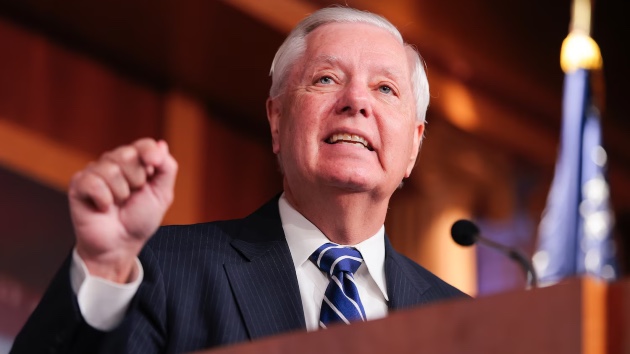
Sen. Lindsey Graham speaks during a press conference at the U.S. Capitol, April 27, 2026, in Washington. (Heather Diehl/Getty Images)

(WASHINGTON) — Lindsey Graham, a longtime Republican senator from South Carolina, who had become one of President Donald Trump’s staunchest political allies, died on Saturday after a “brief and sudden” illness, his office said in a statement. He was 71.

“Senator Graham’s family appreciates prayers at this time and asks for privacy during this incredibly difficult period,” said the statement, which was posted early Sunday on social media.

First elected to the Senate in 2002, Graham had in 23 years risen to be one of the chamber’s most prominent figures. He won reelection three times, most recently in 2020.

“Senator Lindsey Graham, one of the greatest people and Senators I have ever known, is dead!” Trump said on social media on Sunday morning. “He was always working, and was a true American Patriot. Lindsey will be greatly missed!!!”

The flags above the White House, as well as on the White House North Lawn flagpole, have been lowered to half staff following the news of Graham’s death.

Graham was aligned with the president on most matters and the two were seen together frequently on the golf course and at events. He advised the president on matters of foreign policy, including recently on the Iran war. He was outspoken in support of the president’s decision to lead strikes on nuclear sites in Iran last year.

Graham served as the current chair of the Senate Budget Committee, a role he had most recently used to lead the Senate’s efforts to pass a roughly $70 billion budget reconciliation bill to provide funding for border security. That legislation was signed by Trump in June.

He was a also member of the Appropriations, Judiciary and Environment and Public Works committees.

In his time in the Senate, Graham also helmed the powerful Senate Judiciary Committee from 2019 to 2022.

While atop the panel, he led the committee through the swift confirmation of Justice Amy Coney Barrett to the Supreme Court, following the death of Justice Ruth Bader Ginsburg in the final months of Trump’s first term. Graham had earlier been among those who blocked President Barack Obama’s nomination of Merrick Garland, his pick to fill the vacancy left by the death of Justice Antonin Scalia, almost 11 months before the 2016 presidential election.

Graham would have returned to the top GOP position on the committee next Congress.

Before his time in the Senate, Graham had served in the House, where he represented South Carolina’s third district. He was first elected to that office in 1994 and served four terms.

In his more than three decades in Washington, Graham had sparred with several presidents. As a member of the House in 1998, he was appointed a manager of the impeachment proceedings against then-President Bill Clinton. He was a harsh critic of Obama, as well as President Joe Biden, whom he also considered a longtime friend from their years together in the Senate.

Graham was also once numbered among the fiercest critics of Trump, whom he ran against in the 2016 presidential election, a race he withdrew from before the primaries. But their relationship had softened, with Graham saying he had turned into one of his closest friends.

“On a professional level, I am proud to have been there at the beginning when President Trump — through sheer force of will — achieved the greatest political comeback in American history,” Graham said in March 2025. “On a personal level, I genuinely enjoy our friendship. He’s an awesome golfing buddy, who I have yet to beat.”

The president recently endorsed Graham in his primary campaign, in which Graham sailed to victory in June with nearly 57% of the vote, defeating several challengers. He was slated to appear on the ballot this November.

Trump held a tele-rally for Graham ahead of the race, praising their partnership amid the war in Iran, which Graham staunchly defended.

“They cannot have a nuclear weapon,” Trump said at the time. “And Lindsey has been fighting with me all the way. All the way for that. We’ve been a very tough team and I think we are winning that battle.”

He was a member of the Judiciary committee since he first joined the Senate in 2003. His time on the panel was spent working to mold the federal judiciary. While serving on the committee he helped to advance confirmation of conservative judges to the federal bench, and also became a staunch defender of Trump, his close friend and ally.

Graham in recent statements appeared positive that he and Trump would continue in lockstep if Graham was reelected the in fall.

“Let me tell you in ’27, if I win in November, I’ll be chairman of the Judiciary Committee,” he said. “I’ll wake up every morning and go to bed every night, thinking, ‘How many judges can we put on the bench before Trump leaves in ’28.'”

He had been a foreign policy hawk during his time in office, supporting the president in his war with Iran, making visits to Israel and fostering a strong and at-times contentious relationship with Ukrainian President Volodymyr Zelenskyy. He pushed for military aid to the country, including weapons and financial assistance.

Shortly before his death, Graham made his 10th visit to Ukraine — meeting with Zelenskyy and visiting a drone manufacturer in the country. He and a bipartisan group of senators announced on Friday a bipartisan deal with the White House on a Russia-sanctions bill that Graham had long-championed.

“In my opinion, this summer is the time to go all in to put pressure on [Russian President Vladimir] Putin to get to the peace table and end the bloodbath,” he said on July 7.

Zelenskyy said on Sunday that he and Graham met twice in the past week, adding that he was “deeply saddened” by the news, calling the senator a “true defender of freedom,” a “staunch advocate” for Ukraine and a “determined leader.”

Israeli Prime Minister Netanyahu, in a statement posted on Sunday morning, called the senator a “dear friend,” going on to say, “Israel has lost one of its greatest friends. America has lost a great patriot. I have lost a beloved friend.”

Graham was also highly involved, earlier in his career, in efforts to craft a bipartisan deal on immigration. He worked across the aisle in 2013 to negotiate a border security bill that created a pathway to citizenship for some undocumented migrants while increasing border security and changing immigration rules. That legislation never became law.

Lindsey Olin Graham was born on July 9, 1955, in Central, South Carolina, a town in the state’s northwest that, at that time, had little more than 1,000 residents.

His official Senate biography described his family as “blue collar,” saying his parents ran a local restaurant and pool hall. He became the legal guardian to his younger sister and raised her after his parents died.

“The first member of his family to go to college, Graham earned his undergraduate and law degrees from the University of South Carolina,” his bio said.

The year after he earned a law degree in 1981, he joined the U.S. Air Force, where he served as a lawyer. He was assigned overseas in Germany between 1984 and 1988, before leaving active duty the following year.

As a reservist, he was later called to active duty during the first Gulf War, during which he served state-side.

He retired as a reservist in June 2015 at the rank of colonel.

Graham lived in Seneca, South Carolina, and was not married. His official biography says he was a member of Corinth Baptist Church.

He last voted in the Senate on June 24, right before the chamber departed for the Fourth of July recess. The Senate is slated to return on Monday.

Graham had been a longtime friend of Sen. John McCain, a Republican, who died in 2018, and Sen. Joe Lieberman, a Democrat-turned-independent, who died in 2024.

The three “traveled the world together,” Graham said in 2018.

“I’ve seen these guys in action,” Graham said at the time. “I’ve learned a lot from both of them and we had so much fun.”

Majority Leader John Thune said on Sunday that his “heart is heavy” to learn of the death of his friend and colleague.

“As South Carolina’s senior senator, Lindsey fought passionately for the Palmetto State,” Thune said in a post on social media. “He was a trusted adviser and colleague to me and many others, and numerous presidents and heads of state have relied on his counsel. His influence on the federal judiciary, our national defense, and his beloved South Carolina will be felt for generations.”

ABC News’ Shannon Kingston, Nicholas Kerr and Charlotte Gardiner contributed to this report.

Copyright © 2026, ABC Audio. All rights reserved.
Las vacunas contra el cáncer podrían transformar el tratamiento y la prevención, pero la desinformación amenaza su potencial

Por primera vez, una vacuna de ARNm contra el cáncer ha tenido éxito en un ensayo clínico en fase avanzada, un avance significativo que podría transformar la manera en que se trata el cáncer. El 19 de agosto de 2026, Moderna y Merck anunciaron que su vacuna personalizada, intismeran autogene, logró reducir la recurrencia del melanoma, un cáncer de piel, al combinarse con el medicamento de inmunoterapia Keytruda. Aunque estos resultados podrían abrir la puerta a una ola de vacunas contra el cáncer, la desinformación sobre la tecnología de ARNm que circula desde la pandemia podría frenar su impulso antes de que llegue a los pacientes.El progreso hacia el desarrollo de vacunas para tratar el cáncer lleva años gestándose. Desde principios de la década de 2000, se han realizado más de 120 ensayos clínicos prometedores que evalúan el uso de vacunas de ARNm para tratar varios tipos de cáncer, como el melanoma y los cánceres cerebral, de mama, de pulmón y de próstata.Al mismo tiempo, la desinformación sobre el llamado cáncer turbo comenzó a propagarse ampliamente en las redes sociales, y los principales medios de comunicación informaron por primera vez sobre ello a finales de 2022. El cáncer turbo se refiere a la afirmación falsa de que las vacunas de ARNm contra el covid-19 causan cánceres inusualmente agresivos.Como investigador de comunicación en salud que monitorea las conversaciones en internet relacionadas con el cáncer, he visto la rapidez con la que puede propagarse la nueva desinformación y el impacto que puede tener en las decisiones de salud de las personas. En el caso de las vacunas de ARNm contra el cáncer, esta narrativa falsa podría socavar la confianza pública en una herramienta importante que podría ayudar a prevenir o tratar el cáncer en el futuro.La mayoría de las personas probablemente oyó hablar por primera vez de la tecnología de ARNm a través de las vacunas contra el covid-19, pero los científicos llevan décadas estudiándola.Las vacunas de ARNm funcionan mediante la transmisión de instrucciones que inducen a las células del cuerpo a producir proteínas específicas. Este proceso enseña al sistema inmunitario a reconocer y atacar esas proteínas. En la investigación del cáncer, los científicos pueden diseñar vacunas muy específicas que entrenan al sistema inmunitario para detectar células tumorales y eliminarlas con mayor eficacia sin dañar las células sanas.Un ejemplo de este potencial proviene de estudios sobre el glioblastoma, un tumor cerebral agresivo con pocos tratamientos eficaces. Los investigadores han descubierto que una vacuna personalizada de ARNm puede activar rápidamente el sistema inmunitario de las personas contra este tipo de cáncer cerebral y mejorar la supervivencia.Cada vez hay más pruebas de que las vacunas de ARNm pueden transformar la manera en que los investigadores aprovechan el sistema inmunitario para tratar el cáncer. Sin embargo, incluso los avances médicos más prometedores solo pueden mejorar la salud si las personas están dispuestas a utilizarlos.“Cáncer turbo” es un término que suelen utilizar los activistas antivacunas, quienes afirman —sin pruebas creíbles— que las vacunas de ARNm contra el covid-19 están causando cánceres inusualmente agresivos.Esta narrativa imprecisa se ha filtrado en las noticias de los medios tradicionales. En septiembre de 2025, un controvertido cardiólogo británico afirmó que la vacuna contra el covid-19 contribuyó a los recientes diagnósticos de cáncer en la familia real, lo que generó una reacción negativa inmediata de la comunidad médica. Aunque es poco común, algunas figuras públicas y profesionales de la salud han afirmado que las vacunas podrían causar cáncer pese a las abundantes pruebas que contradicen esa afirmación, a menudo mediante una interpretación errónea o una tergiversación de estudios.La desinformación sobre la salud puede describirse como afirmaciones falsas o engañosas relacionadas con la salud que se comparten con el público y que no están respaldadas por evidencia científica, se basan en historias personales no verificadas o son opiniones presentadas como hechos. Por ejemplo, al hacer un seguimiento de las conversaciones sobre la vacuna contra el VPH en las plataformas de redes sociales, mi equipo y yo descubrimos que los temores sobre su seguridad, la desconfianza hacia las autoridades y las afirmaciones conspirativas estaban muy extendidos en internet.La desinformación sobre las vacunas se aceleró durante la pandemia de covid-19, lo que causó lo que los investigadores denominan una infodemia: la rápida propagación de información sobre la salud, tanto verdadera como falsa, durante una crisis de salud pública. La infodemia de covid-19 dificultó que las personas encontraran orientación confiable e influyó en las actitudes del público hacia las vacunas.El “cáncer turbo” refleja muchos de los mismos patrones y narrativas que la infodemia de covid-19.En un estudio de escucha social, que consiste en monitorear sistemáticamente las conversaciones en internet sobre distintos temas, mi equipo y yo observamos innumerables publicaciones sobre el cáncer turbo desde julio de 2023 hasta principios de 2026. Muchas publicaciones se basan en anécdotas emocionalmente convincentes, interpretaciones erróneas de estudios con animales, el uso indebido de informes sobre eventos adversos y mitos reciclados según los cuales las vacunas alteran el ADN humano. Algunas publicaciones también vinculan el aumento de las tasas de cáncer entre los adultos más jóvenes con la vacuna contra el covid-19. Sin embargo, estudios de grandes poblaciones no han hallado un mayor riesgo de cáncer después de la vacunación.Ninguna de estas afirmaciones sobre el cáncer turbo está respaldada por evidencia confiable. Pero en las redes sociales, la repetición, las historias personales y un lenguaje que suena científico pueden hacer que la desinformación parezca legítima y ayudar a que se propague rápidamente.A primera vista, afirmaciones extravagantes como la del cáncer turbo pueden parecer fáciles de descartar. Sin embargo, las investigaciones muestran que pueden tener consecuencias en el mundo real, y la desinformación relacionada con el cáncer puede ser especialmente grave.La información inexacta sobre el tratamiento del cáncer es común en internet, y los investigadores han demostrado que influye en las decisiones de los pacientes. Cuando los pacientes recurren a métodos no comprobados en lugar de las terapias recomendadas, su riesgo de muerte puede aumentar considerablemente.Los profesionales clínicos ya observan los efectos de la desinformación en la atención habitual. Los oncólogos afirman que tienen que abordar mitos o información engañosa que los pacientes han encontrado, aunque los investigadores aún desconocen qué tan frecuentes son estas conversaciones en la atención oncológica.La tecnología de ARNm está entrando en una fase decisiva de su desarrollo. El progreso científico se está acelerando, pero la comprensión del público no ha avanzado al mismo ritmo. La exposición reiterada a afirmaciones engañosas puede erosionar con el tiempo la confianza en la tecnología de ARNm, lo que incrementa la probabilidad de que algunos pacientes rechacen las terapias de ARNm en el futuro.Si narrativas engañosas como la del cáncer turbo siguen propagándose, podrían complicar el futuro despliegue de las vacunas de ARNm y limitar sus beneficios para salvar vidas.Una vez que la desinformación se arraiga en la percepción del público, puede ser difícil cambiar su rumbo.Las investigaciones han demostrado sistemáticamente que una comunicación proactiva, transparente y persuasiva puede contrarrestar la desinformación. También muestran que, una vez perdida, la confianza es difícil de recuperar.Las innovaciones médicas pueden salvar vidas, pero solo si la comunicación se mantiene al día. Esto implica monitorear las tendencias emergentes de desinformación en las redes sociales, abordar las inquietudes de manera temprana, dotar a los profesionales clínicos de herramientas para mantener conversaciones eficaces con los pacientes y diseñar mensajes de salud pública que fomenten la comprensión de las nuevas tecnologías médicas antes de que se introduzcan ampliamente en la práctica clínica.La innovación científica por sí sola no basta para mejorar la salud. Garantizar que el público pueda evaluar innovaciones médicas como las vacunas de ARNm contra el cáncer con base en la evidencia, en lugar de hacerlo a partir de desinformación viral, forma parte del desafío científico.El futuro de la atención oncológica no depende únicamente de los descubrimientos científicos, sino también de la comprensión y la confianza del público.Republicado bajo una licencia Creative Commons de The Conversation.The-CNN-Wire™ & © 2026 Cable News Network, Inc., a Warner Bros. Discovery Company. All rights reserved.
Read Next Story