Legionnaires’ disease cluster in New York City grows to 36 cases

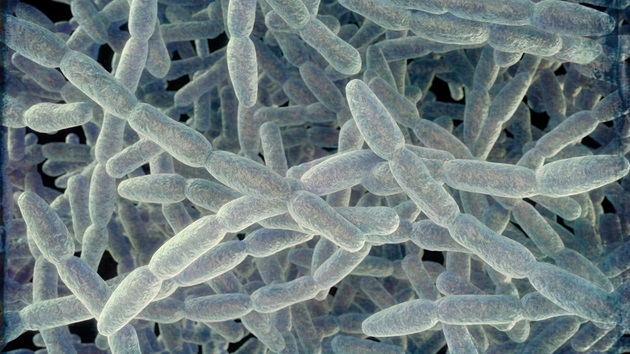
Illustration of Legionella pneumophila bacteria, the cause of Legionnaires’ disease. ( ROGER HARRIS/SCIENCE PHOTO LIBRARY/Getty Images)

(NEW YORK) — A Legionnaires’ disease cluster in New York City is growing, with 36 cases now confirmed, according to health officials.

As of Wednesday, there have been at least 22 hospitalizations and no deaths, according to the New York City Department of Health (NYC Health).

The cluster has affected the Upper East Side neighborhoods of Carnegie Hill and Yorkville, the department said.

In an earlier notice to the two neighborhoods, NYC Health said it believes the likely source of the bacteria is a cooling tower in the area, which sprays a mist that contains the bacteria. All area cooling towers were being tested for the bacteria, NYC Health said then.

There is no issue with any building’s plumbing system and residents in the affected areas can continue to drink tap water, bathe, shower, cook and use their air conditioners, NYC Health further said in the notice.

On Tuesday, New York Mayor Zohran Mamdani said his administration was implementing measures to publicly identify the specific buildings suspected as being sources of Legionella bacteria and require owners to clean cooling towers quickly.

Legionnaires’ disease is a severe form of pneumonia caused by inhaling the Legionella bacteria in small droplets of water mixed in the air or by contaminated water otherwise entering the lungs.

The bacteria are found naturally in fresh water but in amounts that generally don’t lead to disease. The bacteria typically grow best in warm water and in warm to hot temperatures, according to the Centers for Disease Control and Prevention (CDC).

The disease does not generally spread from person to person but infections can occur if the bacteria get into a building’s water supply, including in shower heads, sink faucets, hot water tanks, heaters, cooling towers and other plumbing systems.

Legionnaires’ disease has increased in prevalence over the last decade, reaching a peak in the U.S. of 2.71 cases per 100,000 in 2018, the CDC said. Cases declined during the first year of the COVID-19 pandemic and then rebounded in 2021.

Although most people recover from Legionnaires’ disease with antibiotics, certain patients – including those who are immunocompromised or who suffer from chronic lung diseases – can develop complications that can be fatal.

About one out of every 10 people who develop Legionnaires’ disease will die due to complications, according to the CDC. Among those who develop Legionnaires’ disease at a healthcare facility, about one of every four people will die, the CDC says.

Copyright © 2026, ABC Audio. All rights reserved.

Two people in Pennsylvania have died from measles

(CNN) — Two people have died due to measles in Pennsylvania, the state Department of Health said Tuesday. Both individuals were unvaccinated.These are the first US deaths from measles reported in 2026 and the first in Pennsylvania in 35 years.“My deepest sympathies are with the loved ones who are facing this unimaginable loss,” Secretary of Health Dr. Debra Bogen said in a statement.“As a physician, I want to make sure that people understand that the MMR vaccine is safe and provides the best protection we have against measles.”Both people who died were residents of Lancaster County. Pennsylvania health officials said they will not release any additional details about them.Pennsylvania has confirmed 393 measles cases in 28 counties so far in 2026.The highly contagious virus has continued its historic resurgence in the US this year, with a second record-breaking year in a row. The country has recorded more cases than 2,700 cases so far this year, more than any other year since 1991 – surpassing a grim milestone that was just topped last year.The disease was declared eliminated in the US in 2000, but more cases have been recorded in the past year and a half than there have been in the previous 25 years combined. Experts expect the US will lose its elimination status, or the recognition by the World Health Organization that measles is no longer transmitting regularly within a country.Early symptoms of measles include fever, cough, runny nose,and red, watery eyes, Pennsylvania health officials said, and the measles rash follows a few days later, starting on the head and spreading downward. Symptoms can start seven to 21 days after exposure.Measles can spread when an infected person breathes, coughs or sneezes, and the virus remains infectious in the air and on surfaces for up to two hours after the person with infection leaves the area.Measles can cause serious short- and long-term health problems, including pneumonia and brain swelling. Death related to measles are rare, but occur in 1 to 3 patients per 1,000 cases.Two doses of the combined measles-mumps-rubella vaccine are 97% effective against measles. Pennsylvania health officials are recommending early or catch-up MMR doses for people as young as 6 months who aren’t fully protected.“These deaths are entirely preventable,” said Dr. Paul Offit, director of the Vaccine Education Center and an infectious disease physician at Children’s Hospital of Philadelphia.Last year, the US reported its first measles deaths in decades, including two unvaccinated children in Texas.This is a developing story and will be updated.The-CNN-Wire™ & © 2026 Cable News Network, Inc., a Warner Bros. Discovery Company. All rights reserved.
Read Next Story