
Legionnaires’ disease cluster in New York City grows to 36 cases

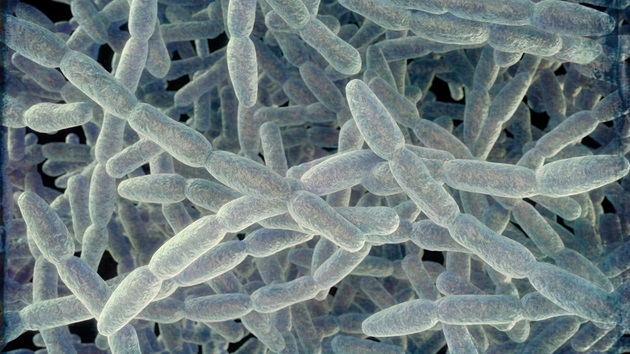
Illustration of Legionella pneumophila bacteria, the cause of Legionnaires’ disease. ( ROGER HARRIS/SCIENCE PHOTO LIBRARY/Getty Images)

(NEW YORK) — A Legionnaires’ disease cluster in New York City is growing, with 36 cases now confirmed, according to health officials.

As of Wednesday, there have been at least 22 hospitalizations and no deaths, according to the New York City Department of Health (NYC Health).

The cluster has affected the Upper East Side neighborhoods of Carnegie Hill and Yorkville, the department said.

In an earlier notice to the two neighborhoods, NYC Health said it believes the likely source of the bacteria is a cooling tower in the area, which sprays a mist that contains the bacteria. All area cooling towers were being tested for the bacteria, NYC Health said then.

There is no issue with any building’s plumbing system and residents in the affected areas can continue to drink tap water, bathe, shower, cook and use their air conditioners, NYC Health further said in the notice.

On Tuesday, New York Mayor Zohran Mamdani said his administration was implementing measures to publicly identify the specific buildings suspected as being sources of Legionella bacteria and require owners to clean cooling towers quickly.

Legionnaires’ disease is a severe form of pneumonia caused by inhaling the Legionella bacteria in small droplets of water mixed in the air or by contaminated water otherwise entering the lungs.

The bacteria are found naturally in fresh water but in amounts that generally don’t lead to disease. The bacteria typically grow best in warm water and in warm to hot temperatures, according to the Centers for Disease Control and Prevention (CDC).

The disease does not generally spread from person to person but infections can occur if the bacteria get into a building’s water supply, including in shower heads, sink faucets, hot water tanks, heaters, cooling towers and other plumbing systems.

Legionnaires’ disease has increased in prevalence over the last decade, reaching a peak in the U.S. of 2.71 cases per 100,000 in 2018, the CDC said. Cases declined during the first year of the COVID-19 pandemic and then rebounded in 2021.

Although most people recover from Legionnaires’ disease with antibiotics, certain patients – including those who are immunocompromised or who suffer from chronic lung diseases – can develop complications that can be fatal.

About one out of every 10 people who develop Legionnaires’ disease will die due to complications, according to the CDC. Among those who develop Legionnaires’ disease at a healthcare facility, about one of every four people will die, the CDC says.

Copyright © 2026, ABC Audio. All rights reserved.
Ayatollah Seyyed Ali Khamenei Fast Facts

(CNN) — Here is a look at the life of the former Iranian Supreme Leader Ayatollah Seyyed Ali Khamenei.PersonalBirth date: July 17, 1939Death date: February 28, 2026Birth place: Mashhad, IranBirth name: Seyyed Ali KhameneiFather: Ayatollah Sayyid Jawad Husaini KhameneiMother: Name unavailable publiclyMarriage: Married in 1964Children: Mostafa, Mojtaba, Massoud, Meysam, Hoda and BoshraEducation: Studied under the future Ayatollah Khomeini at the Islamic seminary in Qom, IranReligion: Islamic, Shiite MuslimOther FactsAlso known as the Supreme Leader.Timeline1962 - Along with Khomeini, begins his involvement with protests, opposing the policies of the Shah of Iran, Mohammad Reza Pahlavi. 1977 - Along with other clerics, forms the Combatant Clerics Association, which becomes the Islamic Republic Party.1980-1987 - Secretary-general and member of the central command of the Islamic Republic Party.June 1981 - Injured when a bomb placed in a tape recorder explodes at a press conference.October 13, 1981-August 3, 1989 - President of Iran.March 1985 - Survives when a suicide bomb detonates nearby. June 4, 1989 - Is provisionally elected supreme leader of the Islamic Republic of Iran after the death of Khomeini.July 28, 1989 - A referendum makes his election official, and a group of religious leaders later confirm his election as supreme leader.May 2011 - Khamenei becomes locked in a public power struggle with Iranian President Mahmoud Ahmadinejad. February 2012 - Issues a statement that Iran will back any nation or group fighting against Israel.March 2012 - Reacts to tensions involving Iran’s nuclear program and welcomes US President Barack Obama’s comment that “it is in the best interest of the United States, Israel and the world” to peacefully resolve Iran’s nuclear crisis.March 2012 - Khamenei’s allies win about 75% of seats in parliamentary elections against rival Ahmadinejad’s opposition movement. March 21, 2013 - Khamenei, in a televised speech, threatens Tel Aviv and Haifa by stating “at times the officials of the Zionist regime (Israel) threaten to launch a military invasion but they themselves know that if they make the slightest mistake the Islamic Republic will raze Tel Aviv and Haifa to the ground.”January 2015 - Khamenei publishes an open letter to his website, directed at Western youths, asking them not to judge Islam based on the Charlie Hebdo terror attacks.October 21, 2015 - Khamenei conditionally approves the nuclear deal signed between his country and six world powers in July. February 7, 2017 - According to his website, Khamenei tells a gathering of Iran’s air force commanders in Tehran, “We however thank this new guy in the White House, since he largely did the job we had been trying to do in the past decades: to divulge the true face of the US. We had been working to show the world the depth of corruption in US government and ranks and files of the ruling elite; [US President Donald] Trump did it in few days after coming to the White House.”January 9, 2018 - Speaking on the anniversary of the Iranian revolution that began in 1978, Khamenei says that Iranians have a right to protest. But he also blames the United States and Israel for the most recent civil unrest.August 13, 2018 - In a speech published on his website, Khamenei says there would be “no war, nor will we negotiate with the United States,” following the Trump administration’s first wave of sanctions reimposed on Iran after the United States announced its withdrawal from the Iran nuclear deal in May. Khamenei seems to contradict Iranian President Hassan Rouhani who previously said that Iran was willing to hold talks with the United States to resolve the matter – something Trump’s national security adviser John Bolton dismissed as possible “propaganda.”June 24, 2019 - Trump announces new sanctions against Iran in part to retaliate after the downing of a US drone, with the punitive measures set to target Khamenei, military officials and Iran’s top diplomat.January 5, 2020 - Following the killing of Gen. Qasem Soleimani in a US drone strike in Baghdad, Khamenei’s military adviser, Hassan Dehghan, says that his country’s “response for sure will be military and against military sites.”January 17, 2020 - For the first time in eight years, Khamenei leads Friday prayers in Tehran, calling US officials “American clowns” in his defiant sermon.November 28, 2020 - A day after the apparent assassination of Iran’s top nuclear scientist Mohsen Fakhrizadeh, Khamenei vows revenge for his killing. Iran has blamed Israel for the attack and said the operation bore the hallmarks of Israel’s foreign intelligence agency, the Mossad. January 8, 2021 - Khamenei bans the import of Covid-19 vaccines from the United States and Britain to Iran. In a state-run television appearance, he calls the vaccines untrustworthy.June 25, 2021 - Iran state television reports that Khamenei has received his first dose of the Iranian-developed Covid-19 vaccine, known as the CovIran Barekat vaccine. It was approved for use mid-June, according to Iranian authorities.March 1, 2022 - In a televised speech, Khamenei accuses the US of causing the conflict in Ukraine, comparing the US government to a “mafia-like regime.”February 9, 2024 - Meta confirms to CNN that Khamenei’s Facebook and Instagram accounts were removed for “repeatedly violating our Dangerous Organizations & Individuals policy.” Though Meta did not give a specific reason, the policy does not allow organizations or individuals that proclaim a violent mission or are engaged in violence to have a presence on Meta.June 26, 2025 - In his first comments since the Iran-Israel conflict that began on June 13 ended in a ceasefire, Khamenei congratulates “the great nation of Iran” for its “victory over the fake Zionist regime.”January 17, 2026 – Khamenei acknowledges that thousands of Iranians were killed during more than two weeks of anti-government protests that broke out in late December 2025 — deaths he blames on Trump, who he says, “openly encouraged” the protesters by promising them US “military support.”March 1, 2026 – Multiple Iranian state media outlets confirm Khamenei’s death, hours after US and Israeli officials declared he had been killed in their joint strikes targeting his regime.July 3-9, 2026 – Iran holds a weeklong funeral for Khamenei, with a procession stretching across five cities in Iran and Iraq.The-CNN-Wire™ & © 2026 Cable News Network, Inc., a Warner Bros. Discovery Company. All rights reserved.
Read Next Story