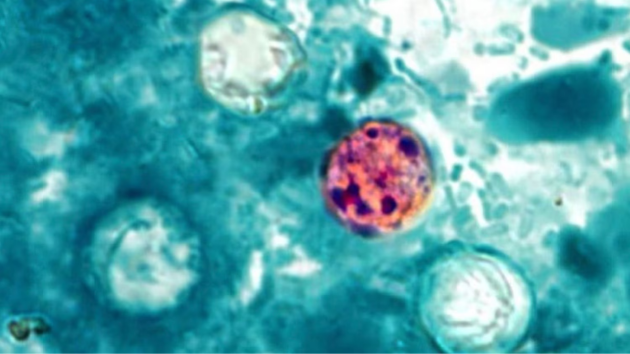
(MICHIGAN) — A “large and growing” outbreak of a parasitic infection is spreading in Michigan, health officials warned this week.
As of Thursday, more than 300 cases of cyclosporiasis, an intestinal infection, have been confirmed, the Michigan Department of Health and Human Services (MDHHS) told ABC News. Typically, the state only sees about 50 cases per year, according to MDHHS.
The parasite usually spreads through food or water contaminated with feces, according to the Centers for Disease Control and Prevention (CDC).
“We are working closely with our state and local partners to identify the source of this outbreak that is making so many people ill as quickly as possible,” Lynn Sutfin, public information officer for MDHHS, told ABC News.
The outbreak comes as the CDC reports 145 cases have been infected in 17 states, excluding Michigan, as of June 15, with at least 20 people hospitalized.
The CDC, the Food and Drug Administration, state and local authorities are investigating several clusters of cyclosporiasis cases in multiple states.
Doctors told ABC News that cases usually start in May, so the Michigan outbreak occurred during the time or year when public health specialists typically would see a rise in cases. However, the number of cases in Michigan is particularly high, doctors said.
Dr. Peter Chin-Hong, an infectious diseases specialist and associate dean for regional campuses at the University of California, San Francisco, told ABC News that in years past, the U.S. used to see many cases cyclosporiasis acquired outside of the U.S, or from imported vegetables and fruits.
“But now we’re starting to have more domestic cases as well,” Chin-Hong said.
Foodborne outbreaks of cyclosporiasis have been linked to various types of imported fresh produce, such as raspberries, basil, snow peas, mesclun lettuce and cilantro, according to the CDC. The agency further said it takes about one week from the time of infection to become symptomatic, but that time can range from two days to two weeks.
Some patients do not experience any symptoms but, for those who do, the most common symptom is “explosive watery diarrhea,” Dr. Zoe Weiss, director of clinical microbiology at Tufts Medical Center, told ABC News.
Other symptoms can include cramping, bloating, low-grade fever, nausea and vomiting, Weiss said.
“Though in most cases this illness causes discomfort from cramping, bloating and watery diarrhea, we are concerned about individuals who may be immunocompromised due to cancer treatment or an organ transplant as the effects may be more severe,” Sutfin from MDHHS said.
Weiss said the infection is very unlikely to spread from person-to-person “because the parasite is passed in the stool, and then it requires days to weeks of formulation in the environment before it can become infectious.”
Chin-Hong said that oftentimes people dismiss watery diarrhea, but it is important to get a diagnosis to get treatment as soon as possible.
Cyclosporiasis is treated with the oral antibiotic trimethoprim-sulfamethoxazole (TMP-SMX), commonly sold as Bactrim, Septra and Cotrim, taken for 10 days, according to the CDC.
Doctors told ABC News that people can prevent infection by thoroughly washing produce, cutting away bruised or damaged parts of fruits and vegetables, and refrigerating pre-prepared or pre-cut produce.
“If you’re in an area that’s been affected and you have sudden ongoing watery diarrhea, you should definitely seek a physician and get treatment,” Weiss said.
Copyright © 2026, ABC Audio. All rights reserved.