(WASHINGTON) — The House on Wednesday passed a bill that would ban members of Congress from trading individual stocks as well as mandate that voters provide photo identification “as a condition of casting a ballot” by a 232-198 vote.
Thirteen Democrats voted with all Republicans in favor of the bill.
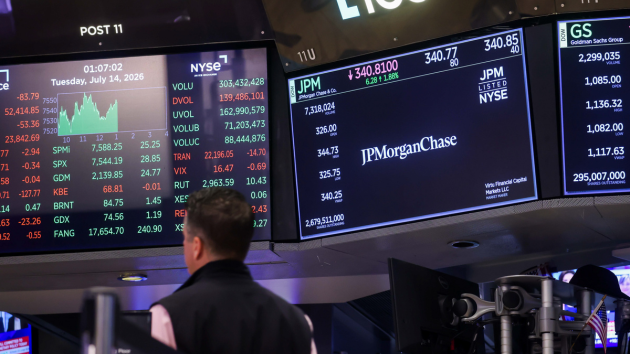
The Stop Insider Trading Act, championed by House Administration Committee Chairman Bryan Steil of Wisconsin, would prohibit members of Congress, their spouses and their dependent children from buying new stocks. The bill would, however, allow lawmakers to keep the stocks they already own.
“This is the first congressional stock trading ban to receive a vote on the floor of the House,” Steil said on the floor. “If you want to day trade, there is a place for that on Wall Street.”
Administration Committee ranking Democrat Joe Morelle of New York called the bill a “sham” because it “allows members of Congress to continue owning and trading stocks.”
Rep. Teresa Leger Fernandez of New Mexico, the chair of the Democratic Women’s Caucus, told ABC News that the bill wouldn’t prevent a member from selling stock they already hold.
“It doesn’t ban stock trading because you could still acquire stocks, sell stocks, use information that you have that you garner here in Congress to make a profit. And stock trading involves purchase and sales, and it does not prohibit sales,” she said.
Some Democrats opposed the bill in part because they contend it doesn’t go far enough to rein in stock trading for the executive branch, including the president and vice president.
“The biggest glaring absence is that the president and vice president can continue to stock trade,” Leger Fernandez said.
President Donald Trump’s recent financial disclosure report shows his investment advisers made more than 21,000 trades on his behalf last year, many involving companies with business before, or regulated by, his administration.
Republican Rep. Chip Roy of Texas also expressed regret that GOP leadership made the vote a “partisan exercise” by attaching voter ID to the ban and agreed with Democrats who argue the scope of legislation should address all three branches of government.
“It should apply to everybody. That was my preference, and always had been,” Roy said. “We stuck on focusing on Congress because you know, get your own house in order, and then you know you can kind of start pointing fingers elsewhere, but I would like it to apply to everybody in the executive branch, judiciary branch, and here.”
Other Democrats opposed the bill because it combined the stock ban bill with the voter ID provision as Trump continues to push Republicans in both chambers to pass the SAVE America Act, which Democrats oppose because they say it would disenfranchise some voters.
According to the bill text, that provision requires voters to show a valid physical photo identification when casting a ballot for federal office. Mail-in and absentee voters can attach a photocopy of their ID to their ballot. If an eligible voter forgets to bring their ID to vote, they can cast a provisional ballot.
“They’ve added provisions that have absolutely nothing to do with stock trading and everything to do with their obsession, their obsession with the 2020 election,” Morelle said of the voter ID provision.
Leger Fernandez said the bill amounted to a “Trojan Horse” for the Save America Act.
Rep. Alexandra Ocasio-Cortez of New York called it a “bait-and-switch” bill.
“They attached these voter suppression provisions specifically because they knew it would kill a stock trading ban. I proudly voted no because we are not going to sabotage mail-in voting in this country, and we’re not going to fall for, kind of, their bait-and-switch tactic here.”
Because of the voter ID language in the bill, the bill faces a rocky path in the Senate. Trump has pushed Republicans in the upper chamber to eliminate or modify the filibuster to pass his election legislation, though Majority Leader John Thune has repeatedly said Republicans don’t have the votes to do that.
Copyright © 2026, ABC Audio. All rights reserved.