
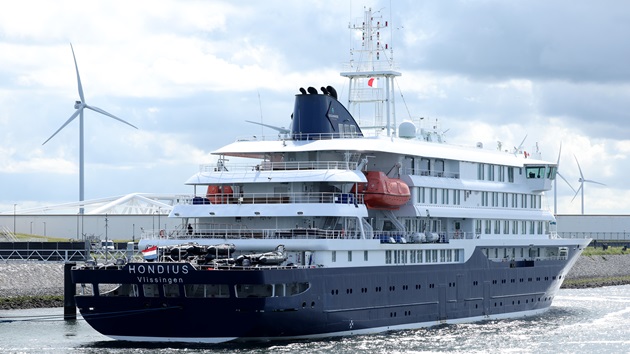
Hantavirus outbreak linked to cruise ship over after last contact completes quarantine: WHO

The cruise ship MV Hondius docks in the Port of Rotterdam to be disinfected following the recent hantavirus outbreak, on May 18, 2026 in Rotterdam, Netherlands. (Omar Havana/Getty Images)

(GENEVA) — The World Health Organization (WHO) said on Thursday that the hantavirus outbreak linked to a cruise ship is over.

It came after the final contact of a person exposed to the virus on the cruise ship completed their quarantine period, according to WHO Director-General Dr. Tedros Adhanom Ghebreyesus. The recommended quarantine and monitoring period for hantavirus exposure is 42 days.

The individual tested negative and returned home. No further cases have been reported since May 25, Tedros said during a media briefing.

As of Thursday, there have been a total of 13 cases of hantavirus — 12 confirmed and one probable — and three deaths, of which at least two have been confirmed, according to the WHO. All cases have been passengers or crew members on the ship.

Tedros said more than 650 contacts were identified and followed up by health authorities in 33 countries and territories. 

“Although the outbreak is over, WHO will continue working with governments and partners to advance our understanding of this outbreak and of hantavirus more generally,” Tedros said. “We are also coordinating a study involving 21 countries to understand how the disease develops, which will support the development of diagnostics, therapeutics and vaccines for future outbreaks.”

Last week, quarantine ended for the 18 Americans who were cruise ship passengers on the MV Hondius and exposed to hantavirus.

The WHO said it received notification on May 2 of a cluster of “severe acute respiratory illness” aboard the MV Hondius, including two deaths and one critically ill passenger

The working hypothesis behind the cluster is that the first case was infected with hantavirus while on land, before boarding the cruise ship, according to the WHO.

At least 11 confirmed cases tested positive for Andes virus, a rare strain of hantavirus, and the only one that is known to transmit between people, according to the Centers for Disease Control and Prevention.

Copyright © 2026, ABC Audio. All rights reserved.

Vance, Caine raised munitions stockpile concern, source says, as US pauses consecutive nights of strikes in Iran

(CNN) — Vice President JD Vance and Chairman of the Joint Chiefs of Staff Gen. Dan Caine both raised concerns about the US munitions stockpile to President Donald Trump as he weighed potentially escalating the war with Iran during a White House meeting on Friday, a US official told CNN.On Friday night, the US appeared to pause its bombing campaign on Iran after nearly two weeks of consecutive nights of strikes. Operations are “on a hold,” a Department of Defense source told CNN on Saturday.It’s currently unclear if the stockpile concern was the primary reason why the US paused consecutive nights of strikes or whether it will continue to do so.“President Trump has always been consistent in saying he prefers a diplomatic solution, but he continues to retain all options if Iran continues terrorist activities in the (Strait) of Hormuz or against allies,” White House Communications Director Steven Cheung said in a statement.“Combined with successful sanctions that have crippled Iran’s economy and 13 straight days of strikes against military targets in response to their repeated aggression, it would be wise for Iran to work towards a negotiated deal. Otherwise, they know what will happen.”CNN has also reached out to Vance’s office for comment.This comes as key US weapons stockpiles remain significantly depleted and could come under more pressure if strikes on Iran continue, as CNN has previously reported.Speaking to reporters after the Friday meeting with Cabinet members and top advisors, Trump stressed that the US officials were actively negotiating with Iran, though he also said it was possible the military could continue its bombing campaign or “make it a heavier dose.” He claimed Iran seemed to be getting “more serious” in ongoing talks.As of Friday afternoon, the Trump administration was still deliberating over what a potential escalation would look like, according to a source familiar. Gulf countries have urged restraint in recent conversations with administration officials but acknowledged the US has unique capabilities it could use to escalate the conflict if it chooses to do so, the source said.Even after Trump said he was considering a massive attack against Iran this week, he had privately directed his negotiators to “keep talking,” according to a source familiar with the matter, underscoring how the president has been grappling with the reality of limited escalatory military operations short of putting US troops on the ground.Few within Trump’s inner circle, or inside the Pentagon, believed the president’s options for escalating would yield the results he was looking for, according to multiple sources.CNN has also reported that before the war began, Caine and other military leaders had warned Trump that a protracted military campaign could impact US weapons stockpiles.“America’s military is the most powerful in the world and has everything it needs to execute at the time and place of the President’s choosing,” Chief Pentagon Spokesman Sean Parnell said in a statement to CNN.“We have executed multiple successful operations across combatant commands while ensuring the U.S. military possesses a deep arsenal of capabilities to protect our people and our interests.”The-CNN-Wire™ & © 2026 Cable News Network, Inc., a Warner Bros. Discovery Company. All rights reserved.
Read Next Story