(WASHINGTON) — The Iranian American Legal Defense Fund filed a motion Wednesday asking for a stay and a preliminary injunction barring the U.S. government from “sharing the confidential information of Iranian asylum seekers with the Iranian Government” while the issue is adjudicated in court.
The filing came a week after the organization sued the Trump administration over those allegations.
According to that complaint, many Iranian asylum seekers are pro-democracy protesters, members of religious minorities, or members of the LGBTQ community who have sought refuge in the U.S. — and that disclosing their confidential information to the Iranian government puts them “at risk of persecution, torture, and death” should they be deported back to Iran.
Wednesday’s motion also asks the government “to take the necessary steps to prevent the removal of any detained individuals whose confidential information has already been shared with the Iranian Government,” according to the filing.
In the filing, the IALDF alleges that the sharing of information was started in March of 2025, and that since late September 2025, at least three deportation flights have taken place, returning more than 100 Iranian nationals to Iran.
The filing includes 11 declarations by Iranian detainees in the U.S., more than half of which describe interactions, while in detention, with Iranian officials who knew details about their asylum claims.
“It’s shocking to think that at the same time the United States is engaged in hostilities with Iran, that the United States is handing over immigration files from ICE to the Iranian Interest Section in Washington, DC,” said Michael Kirkpatrick, an attorney for Public Citizen who filed the case on behalf of IALDF. “These files are full of extremely confidential and sensitive information.”
“It basically spells out all the reasons somebody in the United States fears being returned to Iran and that could be because they participated in pro-democracy demonstrations; it could be because they have converted to a minority religion like Christianity; it could be that they’re part of the LGBTQ community,” Kirkpatrick said. “That kind of information is exactly the kind of information that they — that would result in their persecution if they went back to Iran.”
“They are terrified,” said Ali Rahnama, the interim executive director of IALDF, saying they’re scared not only for themselves but for family and friends back in Iran. “I want everyone to know these are not statistics; these are human beings who trusted the U.S. government and our laws,” he said.
The documents in the filing also relate details about an alleged phone call and meeting between IALDF board member Cyril Mehri and a senior Iranian official with the Iranian Interest Section in the United States. “According to the Senior Official, ICE has provided the Iranian Government with immigration documents related to each detainee, including asylum applications and related case files,” the filing said.
The IALDF argues that the government’s actions in sharing information without the consent of the detained individuals are unlawful.
The Department of Homeland Security has denied sharing information with the Iranian government, writing in a social media post, “These allegations that ICE shared asylum application records with the Iranian government are FALSE. ICE meets and works to get travel documents for detainees with every country. ICE is committed to ensuring that illegal aliens are informed of their right to communicate with their consular representatives.”
“Consistent with established protocols, ICE provides illegal aliens the opportunity to contact their consular post and facilitates consular access to detained individuals, in accordance with applicable laws, regulations, and agency policy,” the DHS post said. “We will continue to use all lawful options to deport illegal aliens including murderers, rapists, pedophiles, gang members, and terrorists from American communities.”
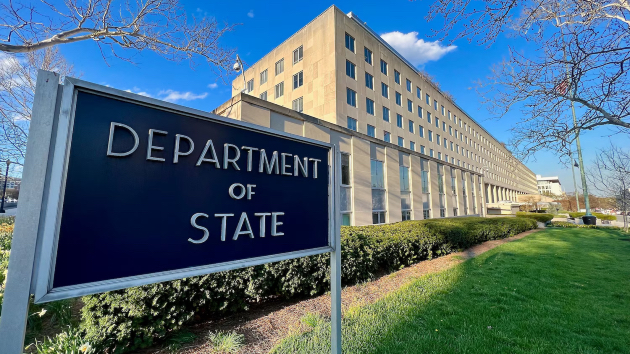
A State Department spokesperson, following the filing of the lawsuit last week, said that the department, as a general matter, does not comment on pending or ongoing litigation, or on private diplomatic discussions.
Copyright © 2026, ABC Audio. All rights reserved.