▶ Watch Video: Gracie Abrams: Now center stage
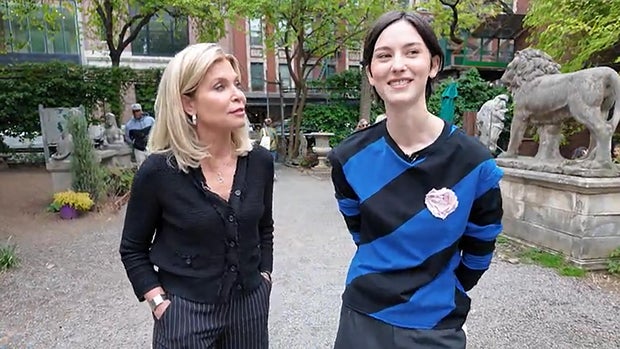
In the middle of New York City is a spot that Gracie Abrams calls a secret garden: a park where she says she can hang out unnoticed (when TV cameras aren’t around, that is). It’s a respite from a life where she’s very much front-and-center.
At 26, Abrams is a reigning queen of so-called whisper pop – her witty, intimate style praised by critics and millions of fans around the world. She’s graced the top of Billboard charts, Chanel ads, and the most recent cover of Vogue.
Backstage on tour last summer, she told us she still seemed stunned by it all: “I’m constantly pinching myself,” she said. “And I don’t know at what point you could get to where you’re not doing that.”
CBS News
Being center-stage didn’t come naturally to Abrams. Born and raised in Los Angeles, she always had a passion for songwriting, but not necessarily performing. She says she felt fear from the idea of sharing her songs: “Like, just really physical fear … in the pit of your stomach. I felt that when I would hear footsteps coming down the hall, and I would stop playing.”
She eventually got up the nerve to post a few songs online, such as “Minor.”
“I don’t know what my goal was,” Abrams said. “I think it was probably that naïve kind of concept of the internet that it’s not real – you know what I mean? I’m like, ‘Okay.’ It was easier to hide behind.”
The gamble paid off. By 2019 Abrams had her first record deal. And thanks in part to COVID, she did her first tour on Zoom from her bedroom. “It was such a gift, because I was vomiting at the thought of performing!” she laughed. “And then I got to do it in the comfort of my own space. And it felt like this baby step.”
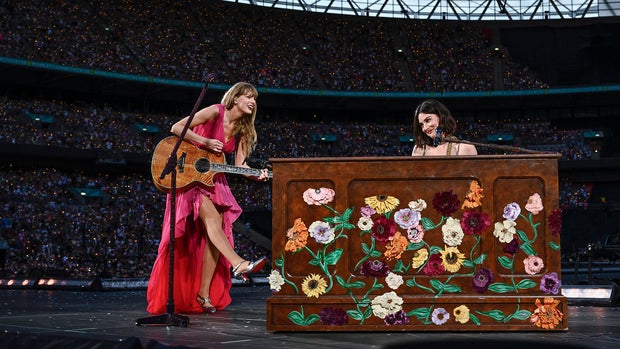
That baby step turned into a running leap onto the world’s largest stages. By 2022, Abrams was opening for some of the brightest stars in music: Olivia Rodrigo, and then Taylor Swift. Stepping out onto stage on Swift’s Eras Tour, Abrams said, “felt like being in some kind of, like, alternate universe. It was just the best thing.”
Gareth Cattermole/TAS24 via Getty Images
Asked what advice she took from Swift, Abrams said, “The first thing that comes to mind when you ask that is, like, the encouragement to just never stop writing. For me, any time I had a feeling where I was like, ‘I would rather just cry about this for a while,’ [instead], just pick it up and write it down. And it serves you every time to do that.”
And now, Abrams is selling out arenas on her own – with audiences singing her words back to her. “It just doesn’t feel like it’s remotely about me,” she said. “I love it, but it feels like even though they might be my words, they’ve adopted them and made them their own.”
Still, Abrams has had to deal with accusations of nepotism. Her mom, Katie McGrath, is an entertainment executive, and dad J.J. Abrams created hit TV shows and directed a couple of “Star Wars” films. Being blessed with successful parents means she has also heard the term “nepo baby.”
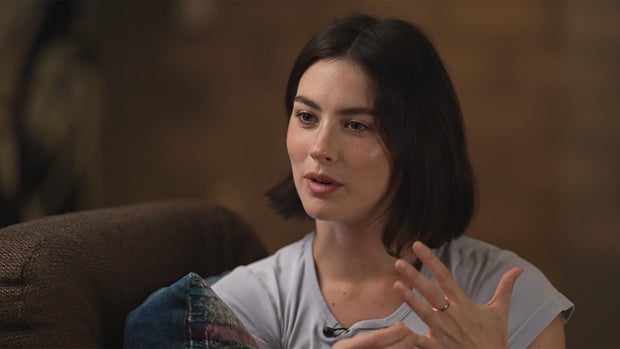
“My parents have both worked in the entertainment industry since before I was born,” she said. “And I think there is no question there are a million visible and invisible ways in which I have benefited as a result of my proximity. I am the luckiest person in the world to have grown up learning from the two of them in all of the ways. It’s been everything, of course.”
CBS News
In fact, instead of avoiding talking about her parents, Abrams has leaned in. Her latest album, out Friday, is called “Daughter From Hell.” Its title track is a love song for her mom, one Abrams calls “very overdue.”
“I sent it to my mom, I was like, ‘So sorry it took me 26 years to write one that wasn’t laced with, you know, some kind of angsty anger,'” she laughed. “I’m like, ‘I want to be you now, Mom!'”
Her mother’s reaction? Abrams said it “got” her – and talking about it “got” Abrams, too: “I want more than ever to say thank you to the people that made me who I am, and who have given every ounce of love that they have. So … I’m like, it’s so weird to get emotional with my … ! But it is true.”
The first single released from the album was the emotional anthem “Hit the Wall.”
And when she goes on tour later this year, some of the lyrics fans will be screaming were written in the quiet little garden in Manhattan’s Lower East Side. “I feel very, yeah, grateful to this particular stretch of land,” Abrams said.
She is also well aware of the fleeting and fickle nature of fame. In fact, she wrote a song about it, “Look At My Life.”
How long have I got
In the hot light till the shine rusts? …
But oh well, look at my life
Bet you can’t tell but it’s kind of a bad time
A new spiral every night
Bawling my eyes out, no, but I’m so fine
Yeah, I might just shut up and drive
Hope I don’t crash and blow out the headlights
My nightmare actualized
Got what I wanted, it doesn’t sit right
Asked about the line “How long have I got in the hot light?” Abrams said, “There’s always the next girl, there’s always the next shiny object, there’s always the next great show. My hope is longevity, not like white-hot moment, you know? So, I want to do this thing for as long as, you know, the people will have me. And when they don’t want to have me anymore, I will still be hopefully here, making stuff!”
WEB EXCLUSIVE: Watch an extended interview with Gracie Abrams and producer Aaron Dessner (Video)
Extended interview: Gracie Abrams, Aaron Dessner
20:38
For more info:
- Pre-order Gracie Abrams’ latest album, “Daughter From Hell,” to be released July 17 (Interscope Records)
- gracieabrams.com
Thanks to:
- Elizabeth Street Garden, New York City
- Apple Music
- Electric Lady Studios, New York City
Story produced by Julie Kracov and Sara Kugel. Editor: Steven Tyler.