
Federal health officials have investigated 5 different clusters of cyclosporiasis cases, FDA says

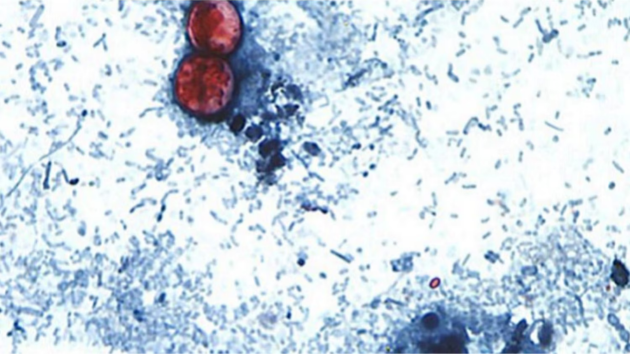
Cyclospora cayetanensis is a unicellular parasite that causes an intestinal infection called cyclosporiasis. (CDC)

(WASHINGTON) — Federal health officials have been investigating five different clusters of cyclosporiasis cases since the start of parasite season in May, the Food and Drug Administration (FDA) said during a press conference on Monday.

Three of those clusters are considered over, acting FDA Commissioner Kyle Diamantas said. Meanwhile, the largest cluster, linked to shredded iceberg lettuce served at Taco Bell locations in five states, has seen cases as recently as last week.

The majority of cases have been reported in Michigan, where there are now 6,148 cases, according to an update Monday morning from the Michigan Department of Health and Human Services (MDHHS). This is an increase of more than 1,000 cases since Friday.

“I want to stress that our investigation continues, including into other potential sources and commodities for other clusters of illnesses,” Diamantas said during Monday’s press conference. 

So far, the CDC has confirmed 1,644 infections linked to the outbreak in Indiana, Kentucky, Michigan, Ohio and West Virginia, and has advised the public not to eat shredded iceberg lettuce served at Taco Bell locations in those five states.

The agency said the true number of cases in the outbreak is “likely much higher than the number reported” because many people recover from the illness without medical care and are not tested for the Cyclospora parasite.

Diamantas also addressed a false positive test result over the weekend from a sample of iceberg lettuce from Taylor Farms de Mexico. 

Last week, Taylor Farms de Mexico issued a voluntary recall of all iceberg lettuce sourced from central Mexico, with the recall affecting 27 states. The recalled products were distributed from June 29 through July 16 and have a best-by dates up to Aug. 3.

Taco Bell said Friday that it is no longer using lettuce from Taylor Farms de Mexico at any of its restaurants.

Over the weekend, the FDA said a sample of shredded iceberg lettuce supplied by Taylor Farms, which was not part of the recall, tested positive.

However, the agency later clarified that during a re-review of the sample results, it determined the result was a false positive. Taylor Farms issued a statement on Sunday, saying “we were informed that FDA made a mistake.”

“To be clear, at this moment, FDA has not identified a single positive product test result for Cyclospora,” Taylor Farms wrote in its statement Sunday.

“Based on initial information provided by health officials, in an abundance of caution, we completed a voluntary recall of iceberg lettuce from central Mexico. Recalled product was limited to iceberg lettuce grown and processed in central Mexico,” the Taylor Farms statement continued. “All other Taylor Farms products, including all Taylor Farms brand products available for purchase, are not involved in the recall.”

Diamantas said Monday that the false positive did not change the FDA’s findings that linked cases to shredded lettuce from Taylor Farms. 

“I also want to be clear that our weakened communications around a false positive test result do not change the basis for FDA’s ongoing outbreak investigation or the epidemiological data supporting the current voluntary recall by Taylor Farms,” Diamantas said. 

The FDA similarly shared a post on X Monday afternoon, saying that the epidemiological data supporting the Taylor Farms lettuce recall was “overwhelming.”

“FDA’s traceback investigation and outbreak data continue to converge on shredded iceberg lettuce from Taylor Farms locations in central Mexico,” the FDA’s post read, in part. “FDA will continue to work with federal and state partners to investigate this multistate outbreak and ensure products implicated in this outbreak have been removed from the market.” 

The CDC said it’s also investigating other cyclosporiasis outbreaks and illnesses unrelated to the larger outbreak. At least 29 other states have confirmed domestically acquired cases since May 1, the CDC reports.

Additionally, 440 cases in 35 states have been confirmed among people who ate or drank food or water that made them sick while traveling outside the U.S. in the days before they came ill, according to the CDC.

Copyright © 2026, ABC Audio. All rights reserved.

How the spike in global bond yields creates more risk for the stock market

New York (CNN) — Never doubt the power of the $30 trillion US Treasury market. It was robust enough to push back on the Treasury Department’s recent intervention while captivating Wall Street. Now investors are wondering whether the bond market’s unease is strong enough to disturb a booming stock market.Bond yields have climbed this year, driven by concerns about government deficits and an increase in supply of corporate bonds to fund the AI buildout. Investors are demanding more compensation to continue funding government spending and companies’ plans for AI.A rise in yields pushes up interest rates across the economy, raising borrowing costs for consumers and the government alike. It matters for stocks, too: Higher yields can affect calculations for companies’ future earnings and stocks’ value. Higher yields on trustworthy government bonds can also draw investors away from riskier assets like stocks.A “disorderly rise in bond yields” is the second biggest risk for stocks after the AI bubble, according to a survey of fund managers conducted by Bank of America this month.Investors are increasingly nervous about the stock market’s over-concentration in artificial intelligence. And a sharp, sustained rise in yields is another risk that could help deflate a bubble.Bond yields are not certain to derail stocks, but it creates a more complicated outlook. After global bond yields hit multi-year highs last week, the S&P 500 ended the week lower and snapped a three-week winning streak.Yields dropped at the start of this week, giving a boost to stocks. But the 30-year yield remains near its highest level in almost two decades. The 10-year US Treasury yield is trading close to its highest level in over a year.Ultimately, the impact on stocks depends on just how fast yields rise, how far they rise and why they are rising.Why stocks are resilientThe S&P 500 is up about 12% this year, on course for its fourth straight year of double-digit gains. Stocks rebounded from an Iran war-related slump in March before clinching a series of all-time highs, putting it at 27 record highs so far this year.Strong corporate earnings, waves of enthusiasm about artificial intelligence and a buy-the-dip mentality led by retail investors contributed to the market’s resilience.Stocks dropped last week as global bond yields hit multi-year highs, but the S&P 500 remains close to all-time highs – down less than 2% since its last record high two weeks ago. The tech-heavy Nasdaq Composite is down less than 4% since its last record high in early June.A strong corporate earnings season has helped keep the stock market afloat. There’s been some volatility for individual stocks, but overall, it’s been another quarter of stellar earnings.The earnings growth rate for companies in the S&P 500 is set be the strongest since 2021, according to FactSet data. The rise in bond yields hasn’t been sharp enough to shake stocks while earnings roll in.Since hitting a record high on August 13, the S&P 500 hasn’t had an up or down of more than 1% on a given day. Wall Street’s fear gauge, the VIX, is trading at 15, well below the 20-point threshold that signals volatility in markets.“We are cautious that the low level of volatility is luring market participants into a false sense of security,” Melissa Brown, global head of investment decision research at SimCorp, told CNN.Why yields could pose trouble for stocksYields matter for investors’ assessment of stocks’ value. A sharp rise in yields or intense volatility in the bond market can irk the stock market. When President Donald Trump announced sweeping tariffs in April 2025, the 10-year yield spiked and the S&P 500 dropped more than 10% in two days.What’s different this time? Bond yields have steadily climbed across the year. Stocks are near record highs. The steady rise in yields may be limiting the impact on stocks, analysts say, but a sustained push higher or bouts of volatility could begin to create more issues for investors.The key threshold is 5% for the 10-year yield, which would be the highest level since October 2023. That’s the psychological “line in the sand” when things become more worrying for stock market investors, said Sam Stovall, chief investment strategist at CFRA Research.“The real question is how long will interest rates be rising, and how far will they go?” Stovall said.The-CNN-Wire™ & © 2026 Cable News Network, Inc., a Warner Bros. Discovery Company. All rights reserved.
Read Next Story