
Fauci diaries, released by Sen. Paul, touch on COVID origins, Trump

▶ Watch Video: Doctor discusses potential COVID origin after Dr. Anthony Fauci’s diary release

Washington — Republican Sen. Rand Paul of Kentucky has released more than a thousand pages of journal entries from Dr. Anthony Fauci, teeing up what is likely to be a contentious hearing with the nation’s former top infectious disease expert on Wednesday about the origins of the COVID-19 pandemic

Paul, who heads the Senate Homeland Security Committee, subpoenaed Fauci to appear before the committee as part of the panel’s investigation into the origins of the coronavirus. Paul, who has pushed the theory that the virus emerged from a leak at the Wuhan Institute of Virology in China rather than spilling over from animals to humans naturally, has long accused Fauci and other government officials of misleading the public and Congress about the source of the outbreak

The journal entries date from December 2019, in the days leading up to the U.S. declaring a public health emergency, until December 2022, when Fauci stepped down as the director of the National Institute of Allergy and Infectious Diseases, a position he held for nearly four decades.

Fauci declined to comment to CBS News about the release. 

Paul’s office did not respond to a request for comment about how they obtained Fauci’s journal. Health and Human Services Secretary Robert F. Kennedy Jr. told Fox News the entries were retrieved from government computer servers in recent months.

COVID origins controversy

Many scientists believe the evidence suggests that the virus emerged naturally from infected bats before it circulated to other species and spread to humans who were handling those animals at a market in Wuhan, where the first human cases appeared in late 2019. But the FBI has assessed the coronavirus “most likely” emerged in a “lab incident in Wuhan.” In January 2025, the CIA issued a new assessment that favored the “lab leak” hypothesis, though it said the finding was made with “low confidence.” 

Some of Fauci’s diary entries reflect early uncertainty about the source of the pandemic. In January 2020, he wrote that “we know the market was not the source, it was the amplifier,” though he added that “somewhere the virus jumped from animals to humans.” About a week later, he referenced a conference call in which several top infectious disease experts thought the coronavirus might not have originated in nature.

Paul on Monday accused Fauci of saying one thing to “Dear Diary” while telling the public “it’s implausible that it came from the lab, and we’re really convinced it came from these wild animals in the marketplace. But that level of dishonesty is really astounding.”

In an entry dated May 26, 2021, Fauci wrote, “The situation continues to get ‘out of control’ with regard to the press reports concerning my ‘flip flopping’ concerning the theory of the origin of the virus. I had always said that the very highly likelihood is that the virus originated naturally from an animal reservoir jumping to a human. However, over the past couple of days given the amount of speculation about the possibility of a lab leak I have been saying that no one is 100% certain of the origin including me and so I am calling for a thorough investigation.”

Fame and media coverage

Many of Fauci’s diary entries note his interviews with the media, as well as his interactions with President Trump and other officials. At certain points, Fauci sounded bemused or bewildered by the sudden rush of attention and the “cult hero”-style fandom that he drew in some quarters near the start of the pandemic. 

“The situation with my national and international fame is explosive and really unimaginable. It is not hyoperbole [sic] to say that today I am the most famous and talked about person in the country and one of the most recognizable peson [sic] in the world,” Fauci wrote in a May 21, 2020, entry. “POTUS seems to be enamored of me even though I am taking the spotlight away from him. We are developing a very unique and interesting relationship.” 
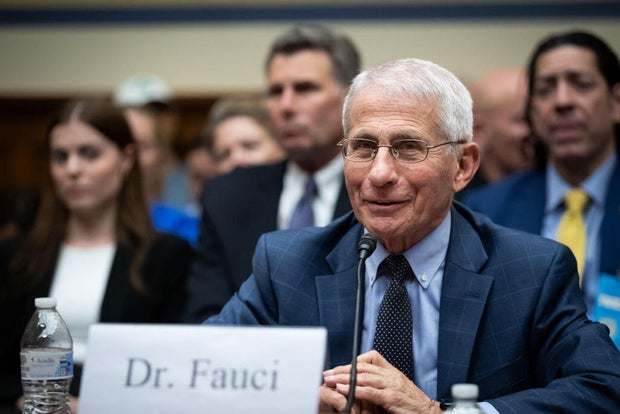
Dr. Anthony Fauci
Dr. Anthony Fauci testifies before the House Select Subcommittee on the Coronavirus Pandemic on June 3, 2024. 

ALLISON BAILEY/AFP via Getty Images

He tracked favorable media coverage, including author Sally Quinn telling Fauci she based a handsome character off of him, Brat Pitt playing him on “Saturday Night Live,” a Billy Crystal spoof, and an email from Barbara Streisand. He posted pictures and downloads of Fauci masks, murals, portraits and bobbleheads. But some diary entries expressed embarrassment and discomfort with his newfound fame.

Fauci also expressed concern about what his heightened public profile could mean for his personal security.

Relationship with Trump

Fauci described some positive interactions between himself and the president in the pandemic’s early months, and appeared uncomfortable with press coverage that suggested he and Mr. Trump were feuding. He wrote that a viral image that made it look like he was facepalming while Mr. Trump spoke to the press was “not my intention.”

At other points, he vented about Mr. Trump’s “painfully rambling” and “laborious” news conferences, or described arguments in which Mr. Trump accused Fauci of undermining him.

Ahead of a May 2020 event to announce the Operation Warp Speed vaccine initiative, Fauci wrote that Mr. Trump pulled him aside and said: “Tony, you are losing me trillions of f***ing dollars,” before later saying “you and I are OK” and confirming that he respected Fauci. Mr. Trump then argued officials shouldn’t wear masks at the event, saying it “sends the wrong signal,” but Fauci pushed back.

“Tony, we are good, right?” the president asked Fauci after the conversation, according to Fauci’s notes.

He said he replied: “We are good Mr. President.”

By August 2020, as the president’s public stance toward Fauci grew more adversarial, Fauci wrote that Mr. Trump was acting “erratically” and expressed frustration about the president’s public criticisms, even referring to Mr. Trump as an “idiot” for posting inaccurate figures on COVID-19 deaths.

CBS News has reached out to the White House for comment.

COVID-19 restrictions

As the federal government’s top infectious disease expert, Fauci didn’t have any direct power to impose COVID-19 restrictions, but his words carried a lot of weight with the federal, state and local officials charged with deciding whether to close schools and businesses or require masks.

In mid-March 2020, Fauci describes a conversation with New York City Mayor Bill de Blasio in which he “convinced him … to close the NYC schools” — a decision Fauci said de Blasio had already made based on Fauci’s public statements. He said he “had a similar call” with an official in the office of California Gov. Gavin Newsom, who planned to close schools and restaurants.

By August 2020, amid debates over when schools should reopen, Fauci wrote that “one size does not fit all and decisions should be based on the level of infection in the community.” He also said the “default position” should be an “intention to reopen schools.” At the same time, he chafed at some Trump administration officials who wanted all schools to reopen immediately.

The following year, Fauci expressed support for loosening COVID-19 guidelines. He wrote about his worries that the Centers for Disease Control and Prevention would lose credibility if it didn’t loosen up on its mask-wearing advice.

“I really do have a problem defending the ultra-conservative approach of the CDC regarding the wearing of masks outdoors,” he wrote on May 5, 2021. When the policy did change about a week later, he wrote, “The radical right-wing maniacs who blamed me for the rigidity of the CDC recommendations will probably not realize at all that it was me that triggered this change.”

History of conflict with Sen. Paul

Some of Fauci’s entries noted his combative relationship with Paul. On April 20, 2021, Fauci wrote that Paul was among those spreading conspiracy theories “to try and connect me with the virus from WUHAN.” Fauci added that one of his advisers, David Morens — who has since been indicted on federal charges alleging he conspired to hide his communications related to the pandemic research grants — “has heard that these people are trying to ‘bring me down.'” 

A couple of months later, Fauci cited reporting on the release of his emails from the early days of the pandemic. 

“They show that I never criticize president trump and that I am always very courteous and measured in my responses. Even with that the crazies such as senator Rand Paul are saying things like ‘I told you so,’ implying that my emails are validating what they have been saying about me. Total nut cakes!” he wrote. 

In a July 20, 2021, entry, Fauci recounted his appearance before a Senate committee in which he clashed with Paul over whether the National Institutes of Health funded gain-of-function research at the lab. Paul accused Fauci of lying about it in previous congressional testimony. Fauci countered that the research Paul was referring to did not constitute gain of function. 

“I finished by looking him in the eye and telling him that if anybody is lying here it is he,” Fauci wrote. 

Fauci wrote an Oct. 12, 2021, entry that the senator “continues his assault on me.” 

El presidente más longevo del mundo viajó a Europa para una “breve estancia” y no ha regresado en dos meses

Cuando Paul Biya ganó su primera elección presidencial en Camerún en 1984, Nformi Bime tenía 23 años y todavía era estudiante.Bime ahora tiene 65 años y está retirado de la docencia. Biya tiene 93 y sigue siendo presidente. El año pasado, ganó un disputado octavo mandato que podría mantenerlo en el cargo hasta que tenga casi 100.“Lo mejor está por venir”, dijo Biya antes de las elecciones, calificadas de fraudulentas y marcadas por enfrentamientos mortales entre manifestantes y agentes de policía.Sin embargo, durante los últimos dos meses, el hombre que ha gobernado Camerún desde 1982, cuando como primer ministro asumió el poder tras la renuncia del presidente en funciones, ha estado a miles de kilómetros de distancia. Se fue el 7 de junio para lo que su oficina llamó una “breve estancia privada en Europa”. Esta es ya su ausencia ininterrumpida más larga de la nación centroafricana en años.La semana pasada, el portavoz del Gobierno, René Emmanuel Sadi, dijo a la radio francesa RFI que Biya estaba en Ginebra, Suiza, y que no estaba hospitalizado, pero no dio más detalles sobre su paradero.Biya es el segundo presidente de Camerún desde la independencia en 1960 y uno de los líderes con más tiempo en el poder en el mundo. Ganó por primera vez el cargo en 1984 bajo un sistema de partido único, y luego ganó seis elecciones más después de que se introdujera el multipartidismo.A lo largo de su presidencia, ha pasado largos periodos en el extranjero. No obstante, su ausencia más reciente ha reavivado las dudas sobre su estado de salud y sobre quién dirige el país mientras él está fuera.Los rumores sobre la salud y el paradero de Biya han sido durante mucho tiempo parte de la vida pública en Camerún, donde rara vez se le ve en público. Su oficina ha tenido que rechazar repetidamente las especulaciones de que estaba gravemente enfermo o había muerto. En 2024, el Gobierno prohibió las discusiones en los medios sobre su salud y calificó el asunto como un asunto de seguridad nacional.El largo mandato de Biya también refleja un contraste más amplio en África. El continente tiene la población más joven del mundo, pero varios países aún son liderados por dirigentes envejecidos cuyas carreras políticas comenzaron hace decenas de años, incluidos antiguos líderes de liberación que ahora gobiernan en una época diferente.Para millones de cameruneses, Biya es el único presidente que han conocido.Entre ellos se encuentran los hijos de Bime: el mayor tiene 32 años y el menor, 18.Abit Riassai Acha, estudiante de doctorado y líder juvenil comunitario de 26 años en la Universidad de Yaundé II, pertenece a la misma generación.“Al crecer, el presidente Biya fue el único presidente que conocí, así que su presidencia ha sido parte de toda mi experiencia de Camerún”, dijo Acha, quien votó por primera vez en las elecciones presidenciales del año pasado y apoyó al joven candidato opositor Samuel Hiram Iyodi, de 38 años.Tras más de cuatro décadas bajo el mismo presidente, no han hecho más que aumentar los interrogantes sobre su liderazgo.“Como esto ha sucedido repetidamente a lo largo de los años, muchos cameruneses se han acostumbrado”, comentó Acha sobre las prolongadas ausencias de Biya. “Pero acostumbrarse a algo no significa necesariamente que la gente deba dejar de cuestionar cómo se gobierna el país”.Iyodi —que quedó octavo en las elecciones presidenciales del año pasado, en las que se impidió participar a varios candidatos, incluido uno de los principales rivales de Biya— instó al Parlamento a solicitar al Consejo Constitucional de Camerún que determine si la ausencia de Biya equivale a una vacante en la presidencia. Sin embargo, es poco probable que tal iniciativa prospere, dada la hegemonía del partido gobernante de Biya, el Movimiento Democrático del Pueblo Camerunés.A pesar de estar fuera, Biya aún toma decisiones clave desde el extranjero, incluido un importante reajuste militar anunciado a principios de este mes. No obstante, las preguntas sobre su prolongada estancia en el extranjero han llevado a funcionarios a asegurar públicamente a los cameruneses que su presidente sigue vivo.El portavoz del Gobierno, Sadi, restó importancia a la preocupación por un vacío de poder y declaró a RFI que “el presidente Paul Biya está vivo” y “regresará pronto”.Bime tiene edad suficiente para recordar cuando Biya representaba el cambio. Escuchó hablar por primera vez de Biya en la década de 1970, cuando se desempeñó como secretario general de la presidencia bajo el mandato de Ahmadou Ahidjo, el primer presidente de Camerún tras la independencia. Tras la dimisión de Ahidjo en 1982, Biya asumió el poder.Cuando Biya apareció por primera vez en las papeletas electorales dos años más tarde, Bime lo veía como una “representación de la esperanza”, declaró. “Creíamos que era joven y dinámico; también atractivo. Significaba mucho para los cameruneses”.Pocos imaginaban que el hombre al que consideraban un nuevo comienzo permanecería en el poder durante décadas. Para sus críticos, la decepción no radica únicamente en el tiempo que Biya lleva en el cargo, sino en lo que perciben como su fracaso para mejorar la vida de los cameruneses de a pie.El analista político Collins Molua Ikome, un camerunés radicado en Alemania, dijo que vio de primera mano algunos de los problemas del país cuando visitó Camerún en abril.“Las carreteras en Camerún están extremadamente mal. Incluso fui testigo de un accidente mortal”, declaró a CNN.Ikome también señaló los frecuentes cortes de electricidad, la corrupción y la falta de empleos para los jóvenes.Wilson Tamfuh, profesor de derecho público e internacional en la Universidad de Dschang, en el oeste de Camerún, afirmó que el país cuenta con instituciones capaces de mantener el funcionamiento del Gobierno cuando el presidente delega responsabilidades. Según señaló, funciones clave pueden ser desempeñadas por el primer ministro, el secretario general de la presidencia y los ministros.Sin embargo, la cuestión de fondo, apuntó Tamfuh, es si el Gobierno resuelve los problemas de larga data del país.“La gente quiere que se resuelva la crisis anglófona, que mejore el nivel de vida, que haya más carreteras en buen estado, menos titulados universitarios sin empleo y más oportunidades”, declaró a CNN, en referencia al conflicto separatista que dura ya años en las regiones de habla inglesa de Camerún.Cuando Biya finalmente deje el cargo, su sucesor heredará un país que también enfrenta ataques de militantes de Boko Haram en el norte y una profunda frustración económica entre los jóvenes.La atención sanitaria es otra preocupación. Ikome dijo que el acceso a una atención sanitaria de calidad sigue fuera del alcance de muchos cameruneses.“La esperanza de vida en el país está por debajo de los 70 años. Sin embargo, Biya ha vivido mucho más que eso debido al acceso a atención médica en el extranjero, a la que el camerunés común no puede acceder debido a la pobreza”, dijo Ikome.La brecha no es exclusiva de Camerún. En toda África, las élites políticas a menudo han buscado atención sanitaria o mantenido viviendas en el extranjero, incluso mientras los servicios públicos en casa tienen dificultades.Para Bime, la cuestión es más personal: ¿vivirá para ver a otro presidente?Tras décadas en espera de un cambio, le preocupa no llegar a verlo, y que Biya sobreviva tanto a él como a muchas otras personas ajenas a la élite del país.“En cuanto tienen un resfriado, viajan al extranjero para recibir atención, mientras que el resto de los cameruneses mueren por falta de asistencia médica”, lamentó.The-CNN-Wire™ & © 2026 Cable News Network, Inc., a Warner Bros. Discovery Company. All rights reserved.
Read Next Story