
Father of Apalachee High School shooter sentenced to 15 years in prison

▶ Watch Video: Father of Apalachee High School shooter sentenced to 15 years in prison

A judge sentenced Colin Gray to 15 years in prison Thursday, following emotional testimony from victims’ families during his sentencing hearing in Georgia’s Apalachee High School shooting case.

The sentence came after victims’ families urged Judge Nicholas Primm to impose the maximum punishment, while defense attorneys argued Gray had sought mental health treatment for his son and asked for a lesser sentence. 

Judge Primm imposed a 15-year prison sentence after ordering most of Gray’s sentences on the various convictions to be served concurrently, meaning they will overlap instead of being added together. Prosecutors sought an 80-year prison term.

“It is clear you failed as a parent,” Primm said. “You didn’t get him mental health counseling when it was obvious he needed some. None of those failures helped your case, but those aren’t why you were convicted. You were convicted because the warning lights were flashing brighter and brighter and you didn’t get him help.”
Georgia High School Shooting
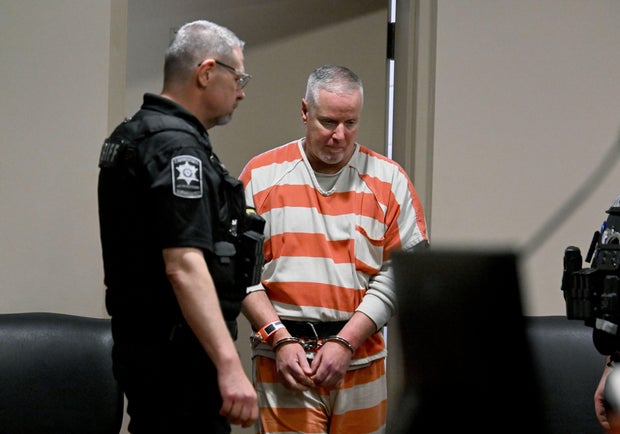
Colin Gray, father of the Apalachee High School shooter Colt Gray, enters the courtroom during his sentencing hearing at Barrow County Superior Court on Thursday, July 30, 2026, in Winder, Ga. 

Hyosub Shin

Gray entered the Barrow County courtroom shortly after 9 a.m. wearing an orange-and-white striped Barrow County Detention Center uniform. 

His hearing was held a couple of days after his son, 16-year-old Colt Gray, was sentenced to life in prison without the possibility of parole after pleading guilty to 55 charges, including murder, in the school shooting that killed two students and two teachers.

In March, a jury convicted Colin Gray on 27 charges, including second-degree murder, involuntary manslaughter and cruelty to children. Prosecutors argued he provided the rifle used in the shooting despite repeated warning signs about his son’s declining mental health.

Victims’ families describe lasting pain from Apalachee High School shooting

The hearing opened with emotional testimony from victims’ families.

Shayna Aspinwall, the wife of teacher and football coach Richard “Ricky” Aspinwall, described the lasting impact of her husband’s death.

“To the world, Ricky was a math teacher and a football coach. To the players he coached, he was a mentor. To me, he was my best friend, my partner and the person I expected to grow old with,” she told the court.

Aspinwall said she now lives with post-traumatic stress disorder and can no longer teach because of her fear of another school shooting.

“He was a single parent by choice. I am now because of his decisions,” she said, referring to Colin Gray. “Colin couldn’t take his kid to therapy. Now I have to take mine.”
Georgia High School Shooting
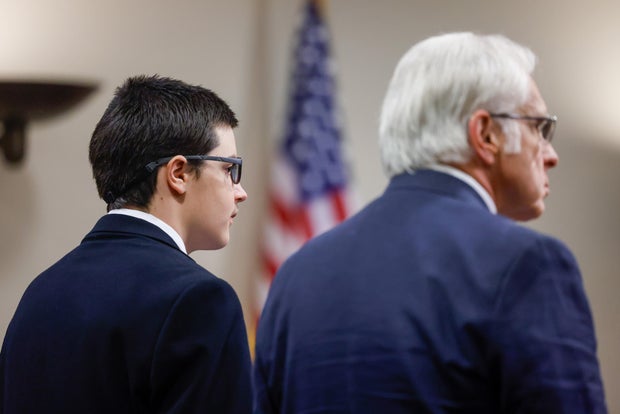
Colt Gray, left, the 16-year-old Apalachee High School shooting suspect, stands next to his attorney Charlton Allen and pleads guilty at Barrow County Superior Court in Winder, Ga., on Friday, July 24, 2026.

Arvin Temkar

Richard Aspinwall’s stepfather, Rick Aspinwall, told Gray he was responsible for the devastation caused by the shooting.

“Through your ineptitude and lack of situational awareness, you are responsible for all that’s happened,” he said. “I hope to God that you sit and remember everything that you’re responsible for.”

Breanna Schermerhorn, the mother of 14-year-old Mason Schermerhorn, rejected describing the shooting as a tragedy.

“People keep calling us a tragedy. But tragedies are unavoidable. This was preventable,” she said.

She added that parenting “requires responsibility, sacrifice and showing up even when it’s hard.”

Mason’s older sister, Alana Schermerhorn, said her family never had the opportunity to stop what happened.

“Parents are supposed to protect their children,” she said. “Mr. Gray had opportunities to make different choices. My family didn’t have an opportunity.” 

Schermerhorn asked Judge Nicholas Primm to impose the maximum sentence.

“I ask for the maximum sentence not out of revenge, but because the consequences of these failures were irreversible,” she said.
Georgia High School Shooting
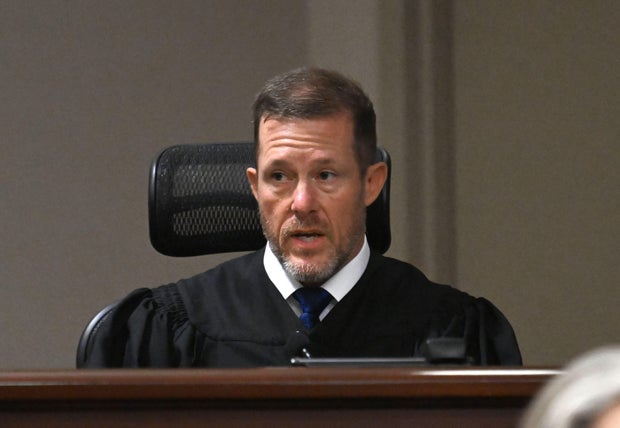
Judge Nicholas Primm speaks during the sentencing hearing of Colin Gray, father of Apalachee High School shooter Colt Gray, at Barrow County Superior Court on Thursday, July 30, 2026, in Winder, Ga. 

Hyosub Shin

Defense seeks 20-year sentence; prosecutors ask for 80 years

After victim impact statements concluded, defense attorneys argued Colin Gray should receive a 20-year sentence with 10 years to serve in prison, with the sentence running concurrently.

Defense attorneys said Gray has been in custody for 22 months and argued the evidence showed he had been trying to seek mental health treatment for Colt Gray. They also pointed to evidence they said reflected Colt Gray’s hostility toward his father and argued the court never heard testimony from Colt Gray himself.

During closing arguments, prosecutors said the defense was conflating the timeline and evidence presented during Colt Gray’s criminal case with the evidence introduced during Colin Gray’s trial.

Prosecutor Brad Smith told the court Colin Gray was convicted “for what he did know,” arguing the jury found he ignored a substantial and unjustifiable risk.

Smith displayed posters investigators found in Colt Gray’s bedroom, telling the judge, “This is the risk that stared him in the face.”

He also argued that after Colin Gray’s daughter texted him on the day of the shooting that three people had been killed at Apalachee High School, he never attempted to call his son. The state asked Judge Primm to sentence Colin Gray to a total of 80 years in prison.

Un observatorio de la NASA probablemente reingresará a la atmósfera terrestre este año tras fracasar un intento de rescate

Un satélite llamado LINK, lanzado recientemente para elevar la órbita de un observatorio espacial en descenso, no podrá llevar a cabo su audaz misión de rescate.El observatorio Neil Gehrels Swift de la NASA, con décadas de antigüedad, está perdiendo altitud de manera constante y corre el riesgo de reingresar a la atmósfera terrestre. Diseñado por Katalyst Space Technologies, con sede en Arizona, para salvar al observatorio, el satélite LINK comenzó a presentar dificultades a finales de julio. Apenas unas semanas después de que LINK despegara el 3 de julio, comenzó a girar fuera de control.Katalyst logró recuperar el control del satélite, pero la compañía reconoció que el problema le hizo perder tiempo, lo que retrasaría aproximadamente un mes el encuentro de LINK con Swift. No obstante, ese aplazamiento, al menos inicialmente, no parecía ser un impedimento para la misión.Ahora, la NASA y Katalyst anunciaron que la misión de LINK no capturará ni elevará a Swift a una órbita más alta “debido a problemas persistentes de control de orientación”, según comunicados emitidos el miércoles.La misión científica de Swift llegará a su fin cuando el observatorio probablemente se desintegre al entrar en la atmósfera terrestre a finales de este año, de acuerdo con la NASA.“La NASA debe estar dispuesta a actuar rápidamente y asumir riesgos inteligentes cuando el posible beneficio lo justifica, y eso es exactamente lo que hicimos con esta misión”, dijo el administrador de la NASA, Jared Isaacman, en un comunicado.“Este no es el resultado por el que estábamos trabajando, pero no cambia la razón por la que valía la pena intentar esta misión. El equipo actuó con una rapidez extraordinaria para darle a Swift la oportunidad de realizar más ciencia, mientras desarrollaba capacidades que Estados Unidos necesitará para el mantenimiento de satélites en el futuro”.Pero el viaje de LINK todavía no ha terminado y las lecciones aprendidas podrían ser fundamentales para futuras operaciones de mantenimiento en el espacio.El equipo de la misión seguirá adelante con su plan para que LINK se encuentre con Swift, pero como una demostración y no como un rescate.“Vamos a aprender todo lo que podamos del intento de encuentro de LINK y utilizaremos esas lecciones en las misiones que sigan”, dijo Isaacman.Originalmente, se esperaba que LINK realizara un reconocimiento de Swift para determinar los mejores puntos de sujeción en el observatorio, un paso que probablemente formará parte del encuentro previsto del satélite, aunque por ahora no está claro cuándo se llevará a cabo esta prueba.Swift no fue diseñado para recibir mantenimiento en el espacio, lo que significa que los conocimientos obtenidos de la demostración podrían utilizarse en futuras misiones.“Katalyst diseñó, desarrolló y lanzó una nave espacial experimental para llevar a cabo una misión ambiciosa en un plazo muy exigente”, dijo Ghonhee Lee, director ejecutivo de Katalyst Space Technologies, en un comunicado. “Aceptamos este desafío de alto riesgo y alta recompensa y estamos orgullosos de los hitos que alcanzamos en el camino. Ya hemos aprendido muchísimo y ahora nuestro trabajo es convertir esas lecciones en algo duradero: desarrollar un manual de procedimientos repetible que sirva de referencia para futuras operaciones de encuentro, proximidad y mantenimiento de satélites”.El observatorio Swift, que no tiene un reemplazo de observación establecido a la espera, ha funcionado como una herramienta multipropósito de astrofísica en la órbita terrestre baja desde su lanzamiento hace casi 22 años, cambiando rápidamente de objetivo para observar objetos celestes y fenómenos cósmicos.Pero la resistencia atmosférica, intensificada por la actividad solar, ejerció fuerzas sobre el observatorio, lo que llevó a la NASA a predecir que Swift reingresará a la atmósfera terrestre una vez que descienda por debajo de una altitud óptima de aproximadamente 185 millas (300 kilómetros) sobre la Tierra.Katalyst diseñó, construyó, probó y lanzó LINK en nueve meses. El satélite robótico despegó a bordo de un cohete Pegasus XL de Northrop Grumman, que fue lanzado desde el aire por el avión L-1011 modificado de la compañía, Stargazer.Antes del lanzamiento del satélite, miembros de los equipos de Swift y LINK reconocieron que el camino para elevar la órbita del observatorio estaba lleno de riesgos que podían causar el fracaso de la misión.“Todos esperábamos obtener más ciencia de Swift”, dijo Shawn Domagal-Goldman, director de la División de Astrofísica de la sede de la NASA en Washington. “Pero sabíamos que las conclusiones de esta misión serían valiosas de cualquier manera, y hemos aprendido muchísimo a través de la serie de logros alcanzados hasta este momento”.La agencia dependerá del resto de su flota de observatorios activos para cubrir el vacío que dejará Swift y “seguirá dando prioridad a encontrar nuevas opciones para responder rápidamente a los fenómenos cósmicos”, de acuerdo con la NASA.“Construir, probar y operar esta misión ya ha fortalecido la cadena de suministro de la industria espacial estadounidense y ha impulsado las capacidades de mantenimiento en el espacio de maneras completamente nuevas”, dijo Domagal-Goldman. “La NASA está comprometida con apoyar a sus proveedores comerciales mientras asumen tareas difíciles junto con la agencia, para ampliar los límites de lo posible”.The-CNN-Wire™ & © 2026 Cable News Network, Inc., a Warner Bros. Discovery Company. All rights reserved.
Read Next Story