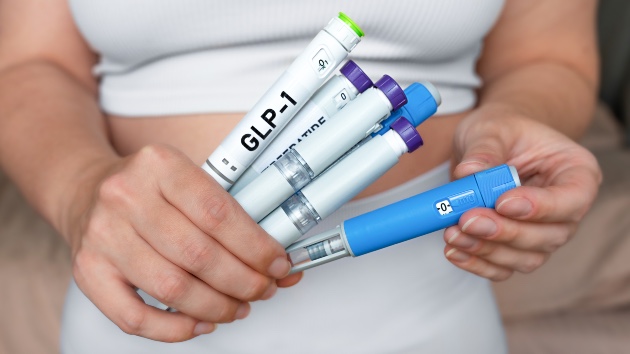
(NEW YORK) — For the first time, Medicare will cover GLP-1s for obesity-related weight loss, without any other medical conditions.
Starting Wednesday, eligible Medicare beneficiaries can receive GLP-1s for obesity for $50 per month by prescription. Medicare is the primary federal health insurance program in the U.S. for individuals 65 and older.
Federal rules ban Medicare Part D — which helps cover prescription drug costs — from covering drugs solely to treat obesity, but a new federal pilot bridge program approved by Health and Human Services Secretary Robert F. Kennedy Jr. will be in effect until Dec. 31, 2027.
This move could dramatically expand access to Eli Lilly’s Foundayo and Zepbound and Novo Nordisk’s Wegovy for seniors 65 and older as well as other eligible Medicare enrollees.
Foundayo and Wegovy Pill are daily tablets. Wegovy and Zepbound are weekly injections that require refrigeration.
A month supply of Wegovy will come in four pre-filled pens while Zepbound will be delivered in a KwikPen, which holds four weekly doses in a single device.
Single-dose Zepbound pens and Zepbound vials will not be covered by the bridge program.
“These treatments are a major medical advancement, but too many seniors are currently unable to access them due to high cost,” Dr. Mehmet Oz, administrator of the Centers for Medicare and Medicaid, said in a statement last month. “The Medicare GLP-1 Bridge changes that by making these medications more affordable and accessible, while advancing our broader goal of helping Americans live healthier lives.”
An estimated 3.8 million beneficiaries could be eligible for the program, according to a KFF analysis of 2023 Part D enrollment data that was published Monday.
The government negotiated with the manufacturers to reduce the price the government will pay to $250 for a month’s supply and in return the companies will have access to the larger patient population. Each patient will pay a $50 copay towards the cost of the medication, but that co-pay will not go toward an individual’s annual deductible.
Patients will first need prior authorization — prescribing clinicians will submit documentation proving the patient meets strict body mass index (BMI) and health condition requirements. That means patients will need to wait for the prescription to be approved before it can be filled.
Patients must have Body Mass Index (BMI) of 35 or higher. If their BMI is 30-35, they must have certain types of heart failure, hard to control blood or chronic kidney disease.
If their BMI is 27-30, they must have prediabetes, history of heart attack or stroke or blocked arteries in the arms or legs.
These requirements are more restrictive than the FDA approval language or what private insurance companies require, which is a BMI of 30 or over.
Patients must also not have type 2 diabetes, moderate-to-severe sleep apnea, or fatty liver disease because their Medicare plan may already cover GLP-1s.
“GLP-1s can be life-changing for patients managing obesity and related conditions,” Chris Klomp, director of Medicare and chief counselor at the U.S. Department of Health and Human Services, said in a statement last month.
“This demonstration is designed to make accessing those medications simpler, more predictable, and more consistent across the Medicare program, which means better quality of life for seniors and better value across the health care system,” the statement continued.
Individuals will be able to fill their pre-approved prescriptions at local retail pharmacies and directly through Novo Nordisk or Ely Lilly’s direct to consumer mail order pharmacies.
Copyright © 2026, ABC Audio. All rights reserved.