
Dr. Erica Schwartz appears before Senate committee for confirmation hearing as next CDC director

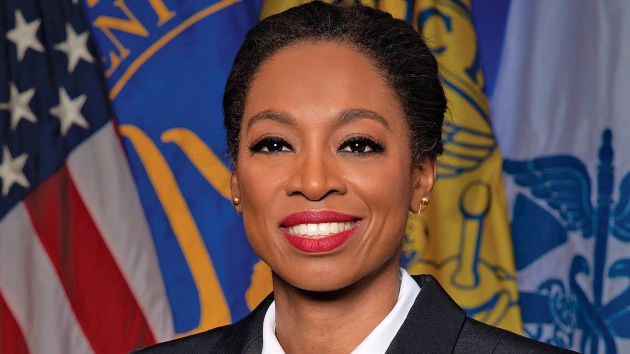
President Donald Trump has nominated Dr. Erica Schwartz, to be the Director of the CDC, April 16, 2026. (Department of Health and Human Services)

(WASHINGTON) — A confirmation hearing began on Wednesday for Dr. Erica Schwartz to be the next director of the Centers for Disease Control and Prevention (CDC).

Schwartz, a formal deputy surgeon general, was nominated by President Donald Trump in April. Trump made the announcement in a post on Truth Social, describing Schwartz as “incredibly talented.”

Schwartz is the fourth person named or nominated as head of the CDC since last summer. If confirmed by the Senate, Schwartz will replace Dr. Jay Bhattacharya, director of the National Institutes of Health, who took over as acting CDC director in February.

Schwartz earned a medical degree from Brown University and served in the U.S. Navy until 2005.

She served in the U.S. Public Health Service Commissioned Corps, as the Coast Guard Chief Medical Officer and as Deputy Surgeon General from 2019 to early 2021, during the first Trump administration.

“I was very pleased to see Dr. Schwartz nominated to be the next director of the CDC,” Dr. Richard Besser, former acting director of the CDC during the Obama administration, told ABC News. “What struck me is how refreshing it felt to see someone nominated for this job who actually has deep experience in public health and has the credentials necessary to lead a complex public health organization.”

Besser expressed concern about whether Schwartz, if confirmed, will have the independence from Health and Human Services Secretary Robert F. Kennedy Jr. to make public health recommendations, referencing a previous CDC director: Susan Monarez.

Monarez was confirmed as CDC director in July 2025, but she held the post for less than a month. Monarez was fired by Kennedy for reportedly not rubber-stamping the health secretary’s vaccine agenda or firing high-ranking CDC leaders whom he opposed.

The turmoil led to both Kennedy and Monarez appearing in front of Senate committees to address the ousting.

At a Senate hearing, Kennedy denied telling Monarez to accept vaccine recommendations without scientific evidence and claimed she was fired in part because she told him she was untrustworthy.

Besser said he expects that Schwartz will be asked by members of the Senate Committee on Health, Education, Labor and Pensions (HELP) about her perspectives on vaccinations, the Ebola outbreak in the Democratic Republic of the Congo and the rise of measles in the U.S.

“Those are some of the critical areas I think she’ll be asked about. There are so many other areas that are of concern to those who have relied on the CDC to prevent illness and promote health,” he said.

Sean Kaufman is also appearing before the Senate HELP Committee for his confirmation hearing on Wednesday. Kaufman was nominated to lead the Administration for Strategic Preparedness and Response, which was recently absorbed under CDC as part of an HHS reorganization in 2025.

Kaufman has claimed without evidence that the COVID-19 vaccine caused “excessive death and injury … in the United States and globally.” Health officials have said COVID-19 vaccines are safe and effective following clinical trials that involved tens of thousands of people and have since helped save millions of lives.

“What concerns me about Mr. Kaufman is that he has expressed very strong anti-vaccine views, and the ASPR is responsible for the strategic national stockpile,” Besser said. “So, I hope that the committee asks him questions to fully understand the approach that he would take in that role.”

Copyright © 2026, ABC Audio. All rights reserved.

Trump’s top general is ‘looking for an off-ramp’ from Iran war as US military options remain limited, sources say

(CNN) — Over the last few weeks, Chairman of the Joint Chiefs Gen. Dan Caine has privately made clear to other top Trump advisers that the US needs to find an off-ramp from the war with Iran — because the military options on the table to escalate the conflict could backfire and airpower alone is unlikely to achieve President Donald Trump’s stated objectives, according to three sources familiar with the matter.“Caine is looking for an off ramp,” one of the sources said bluntly.Caine is not alone in his view that the war has reached a crossroads. He has discussed concerns about the military options for escalating the conflict and raised the prospect of finding an off-ramp from the war with other key Cabinet officials, including CIA Director John Ratcliffe, Secretary of State Marco Rubio and Vice President JD Vance, two of the sources said.The top US general has recently side-barred with some of those key, like-minded Trump advisers in an effort to facilitate interagency coordination and ensure they are on the same page ahead of meetings with the president. The aim has been to make clear the limitations and pitfalls of the available military options, including those that do not involve putting US boots on the ground, the sources said.“I think it is just his way of protecting the military,” one of the sources told CNN, referring to Caine’s discussions with other top national security officials within Trump’s cabinet about the Iran war.Trump has consistently appeared averse to the idea of deploying ground troops in Iran, instead signaling he believes that air bombing can force them to agree to a deal on his terms. Caine and others in Trump’s cabinet privately view that outcome as unlikely and instead have sought to develop other options that fit within the president’s own parameters, according to multiple sources familiar with recent discussions.Nearly six months into a conflict which opened with weeks of claims that Iran’s military capabilities had been decimated, and which remains defined by the president’s pledge of preventing Tehran from obtaining a nuclear weapon, it is highly significant that Trump’s most senior general is privately arguing there is no easy military solution to end a war the president chose to enter.In response to CNN’s request for comment on this story, Caine’s spokesperson Joseph Holstead said: “We do not discuss the Chairman’s confidential conversations with the President, the Secretary, or other senior leaders, nor do we comment on anonymous, agenda-driven characterizations of those conversations by sources who were not privy to them.”CNN asked the White House for comment and the State Department and CIA declined to comment.‘Airpower has its limits’The war has reached a point where many of Trump’s top national security officials, bolstered by military doctrine, assessments from the US intelligence community and common sense, believe what Caine himself told lawmakers during a public hearing late last month — “airpower has its limits.”For those reasons, Caine and other Trump officials were wary of the latest plan late in July to launch new, more aggressive strikes due to concerns about the likely fallout that could come from escalating the conflict, even as the president appeared ready to initially greenlight what he described as a “massive” operation, one of the sources said, declining to elaborate on the operational details.“The only ones in favor of the operation were elements of CENTCOM,” the source added, noting Israel also broadly supported an operation to escalate the conflict.Trump ultimately decided to back off after talking with Middle East allies, who told him they were afraid of Iranian retaliation, specifically retaliatory attacks on their energy infrastructure, a senior administration official told CNN, adding that the president is not taking the planned strikes off the table for a future date.But dwindling US stockpiles of key munitions were also a factor, CNN has reported, as multiple sources said it was a concern that has been raised not only by Caine but also by Gulf officials, who have recently conveyed to administration officials how a shortage of high-end American air defense systems could impact their ability to ward off potential Iranian retaliation if Trump decides to escalate the conflict.Trump has repeatedly threatened to strike Iran’s energy infrastructure, a move sources said is unlikely to force Iran to capitulate — as Caine himself has alluded to publicly — and almost certainly prompt retaliatory attacks targeting energy infrastructure of Gulf countries. Doing so would also likely further alienate the Iranian population, rather than fuel blame toward the regime, several sources said.Trump has also considered bombing bridges, but doing so is similarly unlikely to yield productive results, per a second source. “There really isn’t much else to hit since it is whack-a-mole with drone and missile sites. Bombing powerplants would be publicly a lot more significant.”Handling Trump carefullyBut while Caine has raised concerns, he has also been mindful of preserving his relationship with Trump and been careful in how he conveys the potential downsides of military options when presenting them directly to the president, the sources said.He has worked hard in his time as chairman to make sure he has Trump’s ear, at one point even trying to secure an office at the White House so he could brief the president more regularly and have a highly secure space to work from when he’s there, according to people familiar with the matter.Caine was “doing his job” by recently raising potential downsides of military options for escalating the conflict — including concerns about the already depleted US munitions stockpile — during a White House meeting with Trump and other top officials late last month, two sources familiar with the discussion said.But during the same discussion, Caine also made clear to the president that if he wanted to go forward with those operations, “we could absolutely wreck them,” one of the sources familiar with that recent White House meeting told CNN about the chairman’s message.Privately, however, Caine has been more direct in acknowledging the limits of air power and reiterating his view that bombing alone is unlikely to achieve Trump’s stated objectives, at this stage of the war, according to a third source familiar with the matter.Some say Caine hasn’t been assertive enough with Trump. “He’s definitely pulling punches,” a source familiar with Caine’s interactions with Trump told CNN earlier this year, when comparing his White House conversations with his private discussions with military leaders about potentially launching the war.Caine appears to have become more vocal about the potential second and third order effects of potential US escalation in recent weeks. CNN previously reported that he specifically raised concerns about the depleted US munitions stockpile during at least two recent meetings with Trump where options for escalating were discussed.But at the same time, Caine has reiterated during those meetings that the US military can inflict massive damage on Iran if Trump ultimately decides to go forward with an operation that would escalate the war, according to a source familiar with one of those discussions.It’s part of Caine’s delicate balancing act, telling people privately that he wants to restore trust in his position as the country’s top general and in the military more broadly even as Trump has politicized both.Pre-war warnings about weapon stockpilesBefore the war began, Caine and other military leaders similarly warned Trump that a protracted military campaign could impact US weapons stockpiles — particularly those that support Israel and Ukraine. But now, senior US military commanders believe the munitions stockpile is “dangerously low,” a source previously told CNN, and Trump has become increasingly frustrated by how the issue appears to undermine his ability to credibly project strength in negotiations with Iran.Caine has raised concerns about the dwindling US munitions stockpile during at least two recent meetings with Trump where potential options for escalating the conflict were discussed, CNN has reported. Trump, meanwhile, appears more frustrated by the fact that the war’s impact of US munitions has been reported publicly — airing those grievances during a meeting with his Cabinet at Camp David last week.The munitions shortage is also one reason the Pentagon and US Central Command have recently begun to reevaluate the US’ military strategy, CNN has reported. For example, a senior military official at CENTCOM recently sent a crowdsourcing email seeking new creative and unconventional ways to pressure and punish Iran, sources previously told CNN.While soliciting fresh ideas is not necessarily a bad idea, particularly given the current state of the war, sources noted that doing so six months after the war started amounts to tacit acknowledgment things are not going well.“It is rough when you are looking at those options in the middle of the war instead of before it starts,” one of the sources familiar with the planning discussions said.As chairman of the Joint Chiefs, Caine is responsible for drafting military options for striking Iran, but even in pre-war meetings at the Pentagon with other senior officials, Trump’s top general was vocal about the potential downsides of launching a major operation — even then raising concerns about the scale, complexity and potential for US casualties of such a mission, according to sources familiar with his advice.But at the same time, Trump specifically invoked Caine by name in a pre-war post claiming his top military adviser believed the now-months long conflict with Iran “will be something easily won.”As the war approaches the six-month mark, tempered criticism about Caine’s approach to the job is being revived and questions about his relative lack of experience managing an extended conflict are beginning to emerge.“He is out of his depth on this one,” a source familiar with how Caine is navigating the current crisis — both strategically and in managing his relationship with Trump.But Caine is not an outlier, many within the administration as well as outside analysts agree that the only way to decisively defeat Iran would be through a major operation involving ground troops, a commitment that could potentially cost thousands of American lives. The Pentagon considers all scenarios, so those plans exist, but as of now no one in the administration is arguing for such drastic action.Therefore, as Caine and others continue to make sure Trump is aware that less drastic escalatory military actions could lead to negative results, the focus is on finding the off-ramp that offers the president a “symbolic” win — at minimum — he can try to sell to the American people without preventing a potential diplomatic breakthrough, starting with an agreement to reopen the Strait of Hormuz.CNN’s Haley Britzky and Alayna Treene contributed reporting.The-CNN-Wire™ & © 2026 Cable News Network, Inc., a Warner Bros. Discovery Company. All rights reserved.
Read Next Story