A German palliative care doctor accused of killing 15 patients and described by prosecutors as having “a lust for murder” was convicted Wednesday and sentenced to life in prison.
The 41-year-old Berlin doctor, identified only as Johannes M., allegedly killed 12 women and three men between September 2021 and July 2024 using deadly cocktails of sedatives.
On at least five occasions, he allegedly set fire to the victims’ apartments to cover up the killings.
Presiding judge Sylvia Busch said the conviction for 15 murders may well be only a glimpse of his many crimes.
Prosecutors said during the proceedings that he was suspected of having killed more than 70 other people.
The doctor allegedly “administered an anesthetic and a muscle relaxant to his patients without their knowledge or consent,” the Berlin prosecutor’s office said in a statement. “The latter paralyzed the respiratory muscles, leading to respiratory arrest and death within minutes.”
Prosecutors previously demanded a life sentence, additional steps to make early release less likely and a lifetime ban from practicing medicine.
On Monday Johannes M. confessed that he had “killed people” and told the court that “I despair at myself.”
He said he only now understood “the extent of the suffering” he had caused, the Frankfurter Allgemeine Zeitung daily reported.
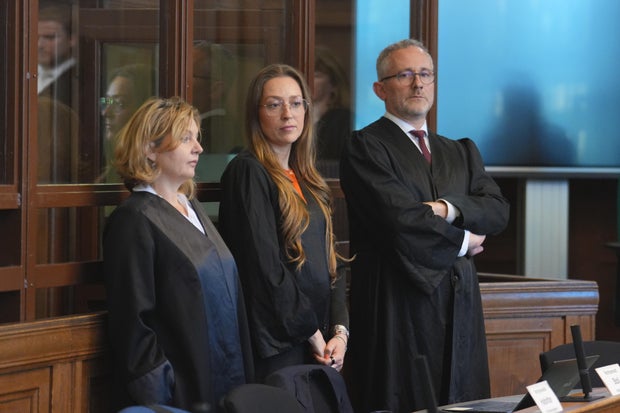
Soeren Stache/picture alliance via Getty Images
Prosecutors and police previously said that the accused is said to have had no motive beyond killing, and that the suspect’s acts meet the legal definition of “lust for murder.”
The victims, who were all receiving care at the time, were aged between 25 and 94 years old.
“Why do people kill?”
On one occasion, the suspect is accused of having killed two patients on the same day.
On the morning of July 8, 2024, he is alleged to have killed a 75-year-old man at his home in the central Berlin district of Kreuzberg.
A few hours later he allegedly struck again, killing a 76-year-old woman in the neighboring Neukoelln district.
The suspect’s alleged attempt to incinerate the crime scene failed when the fire did not catch, prosecutors said.
Suspicions over Johannes M.’s activities were initially raised by care services, leading to a police investigation. He was remanded in custody in August 2024.
Investigators looked into four cases, but the number of suspicious deaths continued to grow, with further cases still being looked into.
“The accused appears to have had no motive for killing the people other than the act of killing itself,” prosecutors said last year.
According to German media, Johannes M. wrote his doctoral thesis on homicides and started the paper with the words, “Why do people kill?”
The case recalls that of the German nurse Niels Hoegel, who was jailed for life in 2019 for murdering 85 patients. Hoegel, believed to be modern Germany’s most prolific serial killer, murdered hospital patients with lethal injections between 2000 and 2005, before he was eventually caught in the act.
In another case, a palliative care nurse was sentenced to life in jail in November for the murder of 10 patients and attempted murder of 27 others with lethal injections.
Last year, German police revealed they were investigating another doctor suspected of killing several mainly elderly patients.