Devastation, agony and hope: What we saw in Venezuela after the earthquakes

▶ Watch Video: Rescue workers save security guard from Venezuela rubble

The stench in the coastal Venezuelan community of La Guaira is an impossible one to forget, even nearly a week after returning to the United States. It was an overwhelming combination of debris, smoke and death.

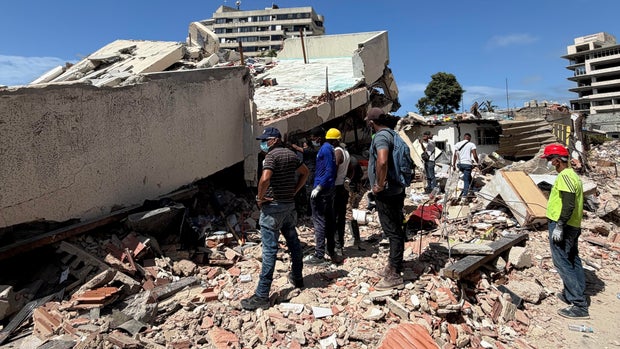
The twin earthquakes that rocked Venezuela within a minute late last month led to catastrophic levels of destruction, leveling entire areas in La Guaira, a city once known for its port and beaches but that resembled a war zone during our visits. The quakes also caused tremendous human loss, killing and injuring thousands of Venezuelans, leading to tens of thousands of reported disappearances and displacing many others.

We saw residents of La Guaira use their hands to lift debris and materials in apartment buildings that had pancaked down, trapping many inside. Alongside rescue workers, they desperately searched for any signs of life. The noise from shovels, jackhammers and other machinery was interrupted sporadically when rescuers asked for silence in the hopes of detecting tapping or movements by those trapped in the rubble.

To this day, an unknown number of bodies remain buried in the piles of rubble scattered across La Guaira, where the destruction caused by the quakes was concentrated. The official death tally, which stands at nearly 4,000 people, will almost certainly continue climbing. At one point, the United Nations estimated more than 50,000 Venezuelans were missing. The search-and-rescue operation we saw, undertaken by rescuers from across the globe, including U.S. teams, has largely given way to recovery efforts.

CBS News was the first American broadcast network to report from La Guaira, starting our coverage there two days after the June 24 quakes. We had to fly to Panama City, where we boarded a flight to a small airport in Valencia, Venezuela’s third-largest city, because the country’s main airport near Caracas was badly damaged by the quakes.
img-5181.jpg
A toppled building in the Venezuelan city of La Guaira.

Camilo Montoya-Galvez

During the weeklong reporting trip, we drove to La Guaira nearly every single day. In normal times, the drive there from Caracas takes roughly half an hour. But our first trip to La Guaira took hours, as Venezuelans flooded the highway to deliver water, food and other supplies to those affected by the earthquakes. We barely made it in time to file our report for “CBS Evening News” that Friday. The following trips were shorter and less chaotic, after Venezuelan authorities restricted entry into La Guaira. To our surprise, we were never barred from traveling there to report on the devastation.

The potent smell in La Guaira is not the only thing that is difficult to forget. Etched in my mind is the incalculable human suffering we witnessed there. We met and spoke to Venezuelans who had lost their children, siblings and other relatives, including a mother who miraculously survived her building’s collapse. Her 12-year-old son did not.

Outside a hospital in Caracas, where we saw desperate families scouring patient lists in search of their loved ones, we met a woman who was bringing soup to her 6-year-old nephew, who had been hospitalized. While he survived, his mother, the woman’s sister, did not. In the outskirts of La Guaira, we interviewed a Venezuelan firefighter who, lacking heavy machinery, was unable to retrieve bodies from a collapsed building so the victims’ loved ones could bury them. 

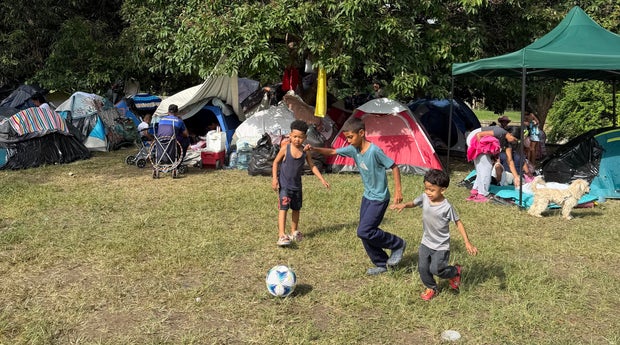
In a camp for people displaced by the earthquakes, we met a grandmother and mother who had lost her home in La Guaira. Inside the tent where she slept with her son, she begged for help and a permanent home, calling her situation a “nightmare.” We saw scores of tents inside the camp, a relatively organized operation inside a public park in Caracas.

But amid the utter devastation, mass destruction and suffocating despair, we also saw glimpses of hope. In the tent camp, we saw children playing soccer, seemingly detached from the tragic circumstances that had displaced their families.
img-5356.jpg
Children play soccer in a tent camp in Caracas that housed families who were displaced by the earthquakes.

Camilo Montoya-Galvez

Outside what used to be a McDonald’s restaurant in La Guaira, volunteer veterinarians set up a makeshift animal clinic for dogs, cats and other pets injured or left ownerless by the back-to-back earthquakes. With few tools but an admirable drive to save animals, they described their work as “war medicine.”
img-5312.jpg
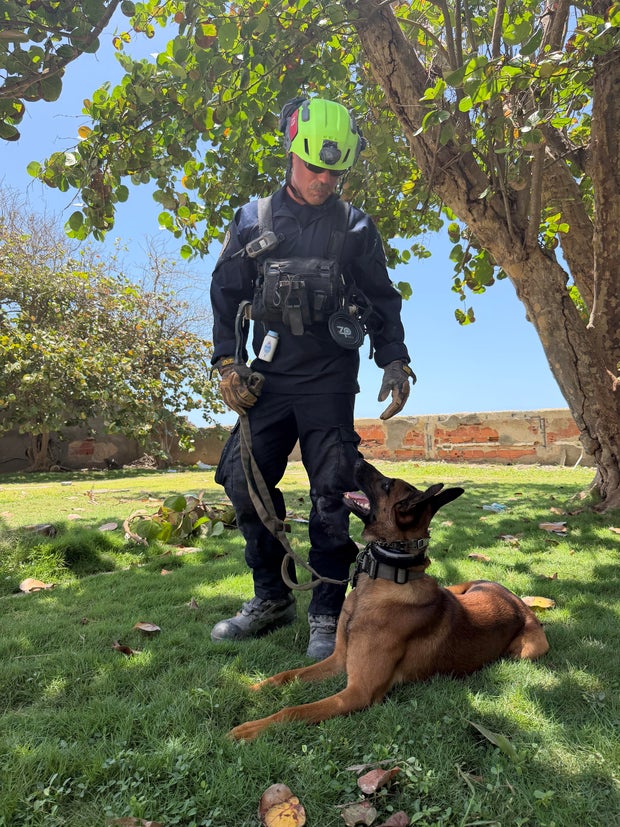
Canine rescuer Zilla with his handler, Dustin Reynolds, a member of U.S. rescue team Virginia Task Force One.

Camilo Montoya-Galvez

Despite the Venezuelan government’s efforts to vilify the U.S. in recent decades, we found Venezuelans who welcomed — and in some cases, desperately asked for – American assistance. The earthquakes occurred roughly six months after the American military seized Venezuelan President Nicolás Maduro so he could face criminal charges in the U.S., leaving in place his vice president, who has since worked closely with the Trump administration. 

The U.S. search and rescue team included three-year-old Zilla, one of 23 highly trained American canines deployed to Venezuela. We saw him scour buildings, sniffing for signs of life, a few days after he found a family of three trapped in the rubble. The father had died, but his wife and their young son were rescued alive.

We also saw rescue teams from several dozen other countries on the ground in Venezuela, both official delegations and volunteer groups. We met rescuers from Chile, Costa Rica, El Salvador, France, Mexico, Portugal, Vietnam and other nations. We saw them work alongside residents of La Guaira to look for their neighbors and loved ones.

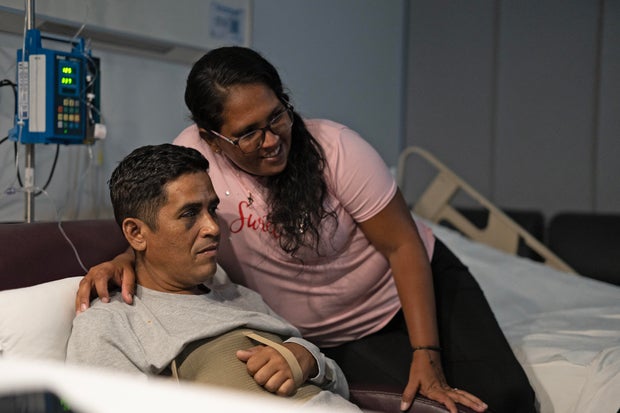
In fact, it was a team of rescuers from several countries, mainly El Salvador, Chile, Costa Rica, Portugal and the U.S., who saved Hernan Gil Flores, a security guard who was trapped inside a building, beneath tons of concrete, for eight days.

“It’s a total miracle,” his wife told us outside of that building. “It is something inexplicable.”
VENEZUELA-EARTHQUAKE-AFTERMATH
Hernan Gil, who survived for nearly eight days beneath the rubble of a building on the verge of collapse in Catia La Mar, remains admitted in the Hospital de Clinicas in Caracas, accompanied by his partner Rubesmal Gonzalez, on July 5, 2026.

Rosali Hernandez /AFP via Getty Images
Why Karoline Leavitt might be impossible for Trump to replace

(CNN) — Donald Trump hardly needs anyone else to serve as his mouthpiece.The most clamorous president in modern history always gets his message out — in a daily riot of online posts, interviews and rancor with reporters.The departure of a press secretary therefore might seem like a trifle to the messenger in chief. But the exit of Karoline Leavitt, announced Wednesday, represents a significant personal and political loss. The vacuum she’ll leave will emphasize her role as a vital member of the president’s brain trust.But she is far more than a spokesperson. Leavitt understands the Trump id. She’s been a leader in his second-term assault on Washington institutions of accountability — in this case, the Beltway press. Just like the boss, she broke the mold of her position. And with relentless trolling of reporters, she’s exposed the fractures of traditional journalism in the social media age.Leavitt said on social media on Wednesday that since the birth of her second child, a daughter, on May 1, she’d realized she couldn’t be the mom her kids deserve while devoting the “constant time, energy, and attention,” her job requires. Trump, perhaps softening the blow to himself of the departure of a 28-year-old he praised as one of his “most trusted aides” announced that Leavitt will continue to serve as an outside adviser.A Herculean assignmentBeing Trump’s press secretary is no easy ride. The term “message discipline” is an oxymoron in this administration. No one, including himself, knows what the president will say from one minute to the next. He changes policy on a dime, contradicting his top officials and himself.And Trump is a master media manipulator. He’s demonized, flattered and played reporters for decades. He relished the role of 1980s New York tabloid villain as he built his brand as a real estate tycoon and celebrity. He intuits the media’s craving for constantly evolving headlines and uses it as a tool of distraction.Trump’s zeal for conflict, disdain for etiquette and willingness to say outrageous things forged alchemy when his political ascent coincided with the explosion of social media. He used the new technology to inject his volcanic personality into the nation’s political bloodstream, bypassing the traditional media used as a conduit by his predecessors.So maybe he doesn’t even need another press secretary.He’ll struggle to replace Leavitt’s combination of skills. She speaks MAGA more fluently on camera than anyone but the president. Her briefings are less attempts to explain policy or to deliver coded messages to foreign leaders than demonstrations of Trumpian defiance.The president’s supporters dearly love Leavitt. Her blasts at famous reporters recall the rebel yells of Trump’s first campaign. She rarely answers a question straight — preferring to attack the motives or mindsets of reporters thrust into the role of extras in the Trump show.Last month, Leavitt sat by the president’s side at the White House Correspondents’ Association Dinner that was rescheduled after a gunman tried to rush into the annual event in April. That evening, which Trump spent insulting journalists in vicious and personal terms, will now serve as a valedictory metaphor for her tenure.It’s also somehow fitting that Leavitt announced her resignation in the middle of a storm over whether the White House used reporters on Air Force One as a decoy during the president’s secret flight from Turkey during a security scare last month.Grave questions about press freedomsLeavitt’s tenure will be remembered as devastating to the quaint notion that the press has a vital role in holding presidents to account.Her operation took over control of the pool system long administered by the independent correspondents’ association. She decided who got into presidential events and flew on Air Force One. She added streaming services, local conservative radio hosts, and podcasters and MAGA personalities to the permanent press corps.Critics saw an attempt to introduce propagandists who’d go soft on Trump. His supporters cheered what they saw as an overdue dilution of what they regard as the liberal elite media.In one enormous controversy epitomizing the administration’s contempt for regular media, Leavitt — under Trump’s direction — banned the Associated Press from certain White House press events, and an agency reporter was excluded from Air Force One. AP, which has thousands of clients in the US and worldwide, had declined to change its style guide to mirror Trump’s executive order renaming the Gulf of Mexico to the “Gulf of America.”Leavitt’s briefings soon made the “alternative facts” pioneered by Trump’s first-term media team appear tame by comparison. She opened briefings with highly torqued monologues hyperbolically lauding Trump’s achievements. The performances were reminiscent of prime time shows on conservative TV — a world in which she’d surely find a lucrative future once her kids grow up.Tensions develop between every administration and the media. Relations between President George W. Bush’s team and reporters were often brittle. Acrimony between reporters and President Barack Obama’s aides belied conservative notions that journalists were in the tank. And President Joe Biden’s press shop was especially prickly. But Trump has threatened the constitutional role of the press in the republic as never before.Democratic Rep. James Walkinshaw said on CNN’s “The Arena” on Wednesday that he didn’t doubt Leavitt’s sincerity in citing family reasons for her departure. But he added: “It’s a tough job. It’s a job where, to be Donald Trump’s spokesman, you have to willfully deny reality on a daily basis.” The Virginia lawmaker added: “I think her legacy will be one of further degrading the relationship between the White House and the press.”While Leavitt’s briefings are made-for-TV showdowns, she’s often more collegial with media members away from the cameras. She’s usually available to reporters, and her bond of trust with Trump means she’s in the room with the commander in chief at pivotal moments. This privilege is important to journalists and builds credibility for top spokespeople. And there are fears that with Leavitt gone, they will find it even more difficult to report on the decision-making of an erratic and nearly unchecked president.Unless the president picks a replacement who is already deep in his inner circle, Leavitt’s successor may lack the authenticity that made her an authoritative voice for the administration. Most White Houses groom one or more deputy press secretaries for the top job, which typically grinds down incumbents within a few years. The lack of a visible succession plan for Leavitt will fuel speculation that Trump may just take on the entire task himself.Leavitt will always be a heroine to Trump’s base. And her influence may outlast the second Trump administration, since West Wing teams often build on the techniques of those who came before. A future president, Democratic or Republican, might balk at voluntarily handing back power to the press.In his second term, Trump often looks like he’s wielding power to ensure nothing can ever be the same again.He had a loyal and effective partner in Leavitt.The-CNN-Wire™ & © 2026 Cable News Network, Inc., a Warner Bros. Discovery Company. All rights reserved.
Read Next Story