
D4vd murder case: Dayslong preliminary hearing set to begin in Los Angeles

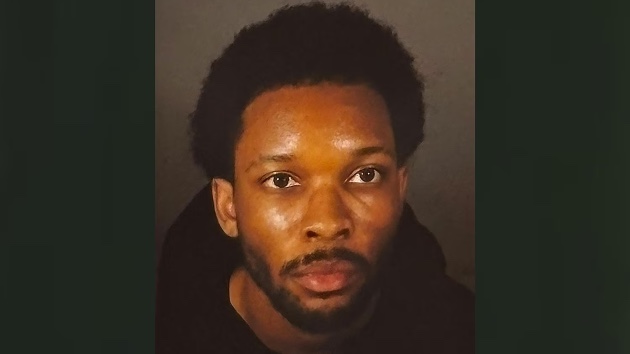
The booking photo for the singer D4vd — whose real name is David Burke — is shown during a press briefing in Los Angeles on April 20, 2026. (LAPD)

(LOS ANGELES) — A highly anticipated dayslong preliminary hearing in the murder case against the singer D4vd is set to get underway in Los Angeles on Tuesday, with evidence and testimony to be presented in court for the first time.

D4vd — whose legal name is David Burke — was arrested and charged in April with the murder of Celeste Rivas Hernandez following a monthslong investigation. He has pleaded not guilty to charges that include first-degree murder, sexual abuse of a child and unlawful mutilation of human remains.

The preliminary hearing is expected to last three to seven days, with prosecutors seeking to establish probable cause to move forward with a trial.

Prosecutors allege that D4vd and Rivas Hernandez began a sexual relationship in 2023, when he was 18 and she was 13, and that she was threatening to expose their illegal relationship and ruin his career if he would not be exclusive to her.

Just as tickets for his world tour were set to go on sale, it is alleged that the “Romantic Homicide” singer ordered an Uber that brought Rivas Hernandez to his Hollywood Hills home on April 23, 2025, prosecutors said in a nine-page brief filed days after D4vd’s arrest. That was the last time she was seen alive, according to prosecutors.  

Prosecutors allege that D4vd stabbed the teen multiple times, watching her bleed out, and then undertook a series of events to dismember her body, including ordering two chainsaws on Amazon.

“In order to distance himself from the victim, he amputated her left ring and pinky fingers because her ring finger contained a tattoo of his name,” prosecutors wrote in their brief, noting that her fingers have not been found.

Her badly decomposed remains were found in two body bags in the front trunk of D4vd’s Tesla four months later, in September 2025, according to prosecutors.

The brief was filed to “assist the court in understanding the scope and relevance of evidence the prosecution intends to present at the preliminary hearing,” prosecutors wrote.

During his arraignment in April, D4vd’s attorney, Blair Berk, asked for a preliminary hearing as soon as possible, saying she believes the evidence will show that he did not murder Rivas Hernandez and that they would “like to be able to have the evidence come into the light of day at the earliest opportunity.”

D4vd has been held on no bail since his arrest.

His attorneys said they plan to “vigorously defend David’s innocence.”

“The actual evidence in this case will show that David Burke did not murder Celeste Rivas Hernandez and he was not the cause of her death,” his attorneys — Berk, as well as Marilyn Bednarski and Regina Peter — said in a statement following his arrest.

An attorney for Rivas Hernandez’s family said in April that the family has decided not to make any future statements “in light of the gruesome details emerging almost daily.”

“There are no words to express the indescribable pain the family is experiencing right now,” the attorney, Patrick Steinfeld, said in a statement. “They still have bills to pay and jobs they go to every day. All they want is time to grieve and heal.”

Copyright © 2026, ABC Audio. All rights reserved.

Trump declines to rule out declaring a national security emergency to control the 2026 election

(CNN) — President Donald Trump in a new interview declined to rule out declaring a national security emergency as a means to try to assert more control over the 2026 midterm elections.It’s merely the latest warning sign that Trump could try to mess with the election not just by baselessly claiming voter fraud and challenging the results afterward — as he did in 2020, leading to a violent riot at the US Capitol — but by trying to unilaterally take control before votes are cast.In the interview, Wayne Allyn Root of Real America’s Voice pitched such a scenario to Trump. He suggested it as an alternative, given the Senate has failed to pass Trump’s coveted elections bill, known as the “SAVE America Act.”“If they never get the SAVE America Act done, you have the right to declare a national security emergency for elections,” Root said. He added that “if you declare a national security emergency as the president of the United States, they can’t challenge it. It can only be overturned by a two-thirds vote by both houses of Congress. So if you do this in the next month, we will get photo ID, proof of citizenship (for voter registration) and a limit to mail-in ballots.”It’s at this point that Trump cut Root off and coyly suggested such an option was indeed in play.“Let me just say that stranger things have happened, OK?” Trump said. “I’ll leave it at that.”Despite Root’s comments, it’s far from clear such a gambit would even work. And CNN has asked the White House for more detail on what the president meant.Trump often responds to hypotheticals by declining to rule them out — no matter how extreme the proposal might be. So it’s possible to read too much into this.But as CNN’s Jake Tapper has noted, there are plenty of signals that Trump at least aspires to try to exert more control over elections. And these methods often appear transparently geared toward helping Republicans.A major one is the administration’s threat to have the US Postal Service not deliver mail ballots for states that don’t comply with its demand that they hand over their voter lists. This is a request that even many red states have rejected, citing privacy concerns.Democrats are much more likely to use mail ballots, which Trump has baselessly connected to widespread fraud. So curtailing them could greatly help Republicans.(Federal courts have blocked this Trump executive order, and the administration recently appealed to the Supreme Court.)Trump has also gone to great lengths to try to substantiate his still-baseless claims of widespread fraud. That includes the administration seizing 2020 ballots in Fulton County, Georgia, and Trump’s recent primetime address about election security that some read as a statement of intent — a pretext for more direct federal involvement in elections, which are run by states.Ty Cobb, who served as White House counsel in Trump’s first term, said he interpreted the speech last month as a “predicate that he needs to declare an emergency.”And Trump has occasionally said things, like he did in the new interview, suggesting he would like to take control of US elections.Back in February, he urged his party to “take over the voting in at least 15 places,” adding: “The Republicans ought to nationalize the voting.”The Washington Post also reported in March that pro-Trump activists were circulating a potential executive order that claimed Chinese interference in the 2020 election gave Trump emergency authorities over the 2026 election. And Trump’s primetime address focused on China, despite the tenuous evidence.Trump’s intense focus on the “SAVE America Act,” which has never appeared to have a chance to pass but Trump has said is vital, could also be read as part of building the case for more drastic action.But whether Trump could take over elections himself, as Root posits, is far from certain.As CNN’s Marshall Cohen and Michael Williams reported in February, the Constitution makes it difficult for Trump to truly “nationalize” elections. Courts have overwhelmingly upheld the principle that states are in charge of elections.Presidents generally have more authority to act unilaterally when national security is involved — hence the significance of invoking China — but some experts are skeptical that Trump’s effort would pass legal muster.The-CNN-Wire™ & © 2026 Cable News Network, Inc., a Warner Bros. Discovery Company. All rights reserved.
Read Next Story