Cyclosporiasis cases top 1,200 in Michigan, health officials say

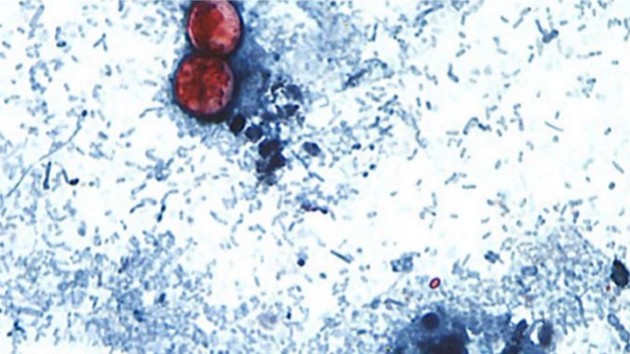
Cyclospora cayetanensis is a unicellular parasite that causes an intestinal infection called cyclosporiasis. (CDC)

(LANSING, Mich.) — Reported cases of cyclosporiasis, an intestinal illness caused by a parasite, have topped 1,200 in Michigan, local health officials said Thursday.

Since June 22, at least 1,251 cases have been confirmed, according to the Michigan Department of Health and Human Services (MDHHS) . At least 36 people have been hospitalized.

Typically, the state sees about 50 cases per year.

Dr. Natasha Bagdasarian, an infectious disease physician, epidemiologist and the chief medical executive for the state of Michigan, told ABC News earlier this week that the department’s working hypothesis is the outbreak is linked to contaminated produce.

The parasite usually spreads through food or water contaminated with feces, according to the Centers for Disease Control and Prevention (CDC).

Foodborne outbreaks of cyclosporiasis have been linked to various types of imported fresh produce, such as raspberries, basil, snow peas, mesclun lettuce and cilantro, according to the CDC.

The MDHHS spokesperson said on Wednesday that no specific produce, grower, supplier or type of produce has been identified as the source.

Michigan is not the only state reporting cases. The CDC said there have been 145 cases detected in 17 states since May 1, excluding Michigan. No deaths have been reported.

The CDC said patients’ ages cases ranged from 5 through 86 and 61% were female.

Some patients do not experience any symptoms but, for those who do, the most common symptom is “explosive watery diarrhea,” doctors previously told ABC News. Other symptoms can include cramping, bloating, low-grade fever, nausea and vomiting, the doctors said.

The CDC says it takes about one week from the time of infection to become symptomatic, but that time can range from two days to two weeks.

Because cyclosporiasis symptoms can resemble other illnesses, it may be hard for a patient to determine the cause.

“Anyone experiencing gastrointestinal illness, such as sudden and ongoing diarrhea, should contact their health care provider and their local health department,” the MDHHS spokesperson told ABC News in an email.

Copyright © 2026, ABC Audio. All rights reserved.

Trump administration’s antisemitism lawsuit against Harvard dismissed

A federal judge in Massachusetts on Thursday dismissed a Trump administration lawsuit against Harvard University that accused the school of failing to protect Jewish and Israeli students, finding the instances of alleged discrimination cited by the government were "too isolated and episodic" to support federal civil rights violations. U.S. District Judge Richard Stearns in Massachusetts issued a four-page order granting Harvard's motion to dismiss the suit."Without diminishing any concern arising from these occurrences, the court finds them, singly and collectively, to be too isolated and episodic to support a plausible inference that any institutionalized noncompliance with Title VI persists at Harvard to this day," Stearns wrote. Stearns wrote that the government's complaint was "devoid of any factual allegations" that occurred after the Trump administration notified Harvard that it believed it had failed to comply with federal civil rights law, as is required before any legal action can be taken, and the other three instances in the complaint occurred between 2023 and 2024. In March, the Justice Department filed a federal civil rights lawsuit against the university, alleging that it violated the law by failing to protect the students after the Oct. 7, 2023, terror attack by Hamas, claiming Harvard's "intentional conduct and its deliberate indifference to discriminatory harassment of Jewish and Israeli students and creation of a hostile educational environment." The administration sought to recover billions of dollars in taxpayer money that Harvard has received from federal agencies. In its lawsuit, the Justice Department alleged that Harvard defied federal law by discriminating against the students "without remorse" and the students were subjected to "severe, pervasive and objectively offensive harassment" on campus, including during protests against Israel, because of their race or national origin. The government alleged that Harvard knew about the harassment against the Jewish and Israeli students but did not stop it.The lawsuit was one of many steps against the university that the Trump administration has taken since President Trump's return to office, in addition to attempting to cancel billions of dollars in federal funding. Harvard, the White House and the Justice Department did not immediately respond to requests for comment. Melissa Quinn contributed reporting.
Read Next Story