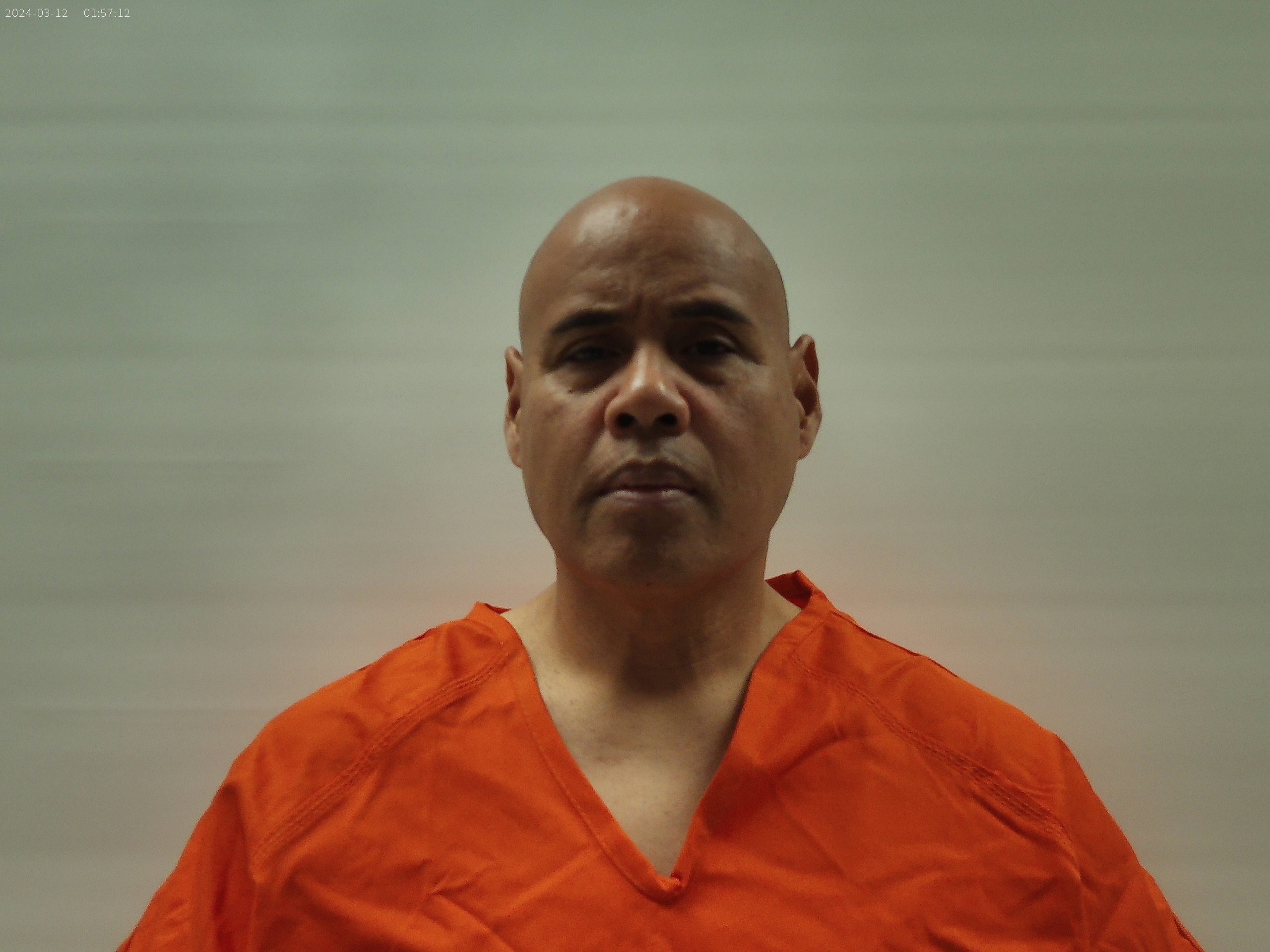
Bryan Kohberger challenges conviction in Idaho murders

▶ Watch Video: Bryan Kohberger files petition to take back guilty plea in Idaho murders

Bryan Kohberger, the man serving multiple life sentences for the murders of four University of Idaho students, is challenging his conviction.  

Kohberger, a former criminal justice doctoral student, filed a petition for post-conviction relief Monday, court records show. CBS News has requested a copy of the petition. Kohberger is representing himself.

Kohberger first revealed he had filed the petition in an interview with The New York Times, which reported that Kohberger is claiming he was misled into confessing. 

Kohberger pleaded guilty last July to the 2022 stabbing deaths of Ethan Chapin, Xana Kernodle, Madison Mogen and Kaylee Goncalves in an off-campus home in Moscow, Idaho. He was sentenced to four life sentences without the possibility of parole. 

The murders and search for the suspect drew national attention in November 2022. Kohberger’s arrest in Albrightsville, Pennsylvania, was announced more than a month after the murders. 

Kohberger’s guilty plea was part of a deal that spared him from the death penalty. At a hearing in July 2025, Kohberger answered “Yes” when Judge Steven Hippler asked if he murdered Chapin, Kernodle, Mogen and Goncalves. When Hippler asked, “Are you pleading guilty because you are guilty?” Kohberger said, “Yes.” 

The evidence prosecutors said they would have brought against Kohberger if the case had gone to trial included DNA linking him to a knife sheath found at the crime scene. The weapon has never been recovered. 

Prosecutors also said they planned to show surveillance video of Kohberger’s car and cellphone data placing him in the vicinity of the killings.

Kohberger’s motive remains unknown.

During a sentencing hearing weeks after his guilty plea, Kohberger showed no emotion as loved ones of the victims read statements. 

In a statement Monday, the Goncalves family said Kohberger “received exactly what he asked for: a deal that spared his life.”

“He chose not to leave his fate—or the facts of the case—to a jury,” their statement said. “He never cried foul, never claimed he was uninformed or pressured, and never suggested there were problems with the discovery materials he and his counsel had reviewed for two years that should have been challenged.”

The family condemned the attention given to Kohberger.

“The real tragedy is this: if even a fraction of the energy spent trying to free a guilty man were directed toward honoring the victims, there would be statues of them on every corner, parks bearing their names, and days set aside to remember the lives they lost at the hands of a narcissist,” they said. 

Tracking measles cases in the United States

(CNN) — Recent outbreaks of measles in the United States are driving up case counts and threatening the country’s elimination status, especially as vaccination rates among children lag.Cases have now broken a record for two years in a row. Just over halfway through 2026, the country has recorded more cases than in any other year since the disease was declared eliminated in the US a quarter-century ago. It’s the worst year for measles cases since 1991.At least two people have died in 2026, after three measles deaths in 2025 — the first reported in the United States since 2015.CNN is monitoring these cases and updating this page each week as new national data is released by the US Centers for Disease Control and Prevention.A large outbreak in West Texas accounted for at least a third of all national cases in 2025, with multiple states reporting cases with links back to Texas. State officials declared that outbreak over in mid-August, but other outbreaks continue to grow.South Carolina has reported more measles cases in 2026 than any other state. An outbreak started raging across Spartanburg County in October; it would go on to become the largest the largest the US has seen in decades, with nearly 1,000 cases, before ending in April this year.National data compiled by the CDC lags behind reports collected by state health agencies. Here’s the latest national snapshot of which states have reported cases in 2026.Measles is a highly contagious airborne disease. It can cause serious health consequences or death, especially for young and unvaccinated children. Most of the cases involve people younger than 20.General symptoms may include fever, cough, runny nose, watery eyes and a rash of red spots. About 1 in 5 unvaccinated people in the United States who get measles will be hospitalized, according to the CDC.About 1 in every 20 children will develop pneumonia, and others may develop a dangerous swelling in the brain called encephalitis. Up to 3 of every 1,000 children who become infected with measles may die from respiratory and neurologic complications.Measles is preventable, thanks to a highly effective vaccine. Experts recommend that children get the measles, mumps and rubella, or MMR, vaccine in two doses: the first between 12 months and 15 months of age, and a second between 4 and 6 years old. One dose is about 93% effective at preventing measles infection; two doses are about 97% effective.The vast majority of measles cases in the US are among unvaccinated people.Measles was eliminated in the United States in 2000. Imported cases are expected, but when vaccination rates are high, the risk of spread remains low and outbreaks are rare. Outbreaks in 2019, particularly two in underimmunized Orthodox Jewish communities in New York, also threatened US measles elimination status.Ongoing outbreaks in multiple parts of the country are now jeopardizing the country’s measles elimination status again, and the Pan American Health Organization could decide to revoke that status when it meets in November.“If a measles outbreak continues for a year or more, the United States could lose its measles elimination status,” according to the CDC.Because measles is so contagious, a high level of vaccination coverage is key to minimizing spread. The United States has set a target vaccination rate of 95%, but coverage among kindergarteners has dipped below that in recent years.MMR vaccine series completion among kindergarteners fell from 95.2% during the 2019-20 school year to 92.5% in the 2024-25 school year, leaving about 286,000 at risk, according to the CDC.Coverage varies widely by state.The-CNN-Wire™ & © 2026 Cable News Network, Inc., a Warner Bros. Discovery Company. All rights reserved.
Read Next Story