The suspect in the Berlin LGBTQ+ Pride parade attack, who officials said was known to have ties to ISIS, was about to be disqualified from a deradicalization program after staff saw red flags, one of the program’s leaders told CBS News on Monday.
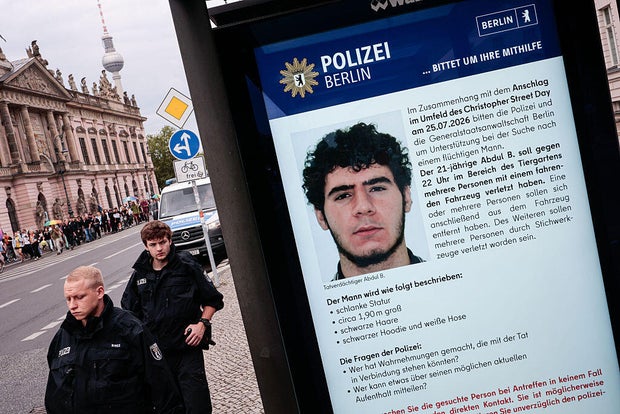
Officials said Abdul Ballout, a 21-year-old German-born citizen with Lebanese roots, plowed a vehicle into celebrants at one of Europe’s largest Pride events on Saturday night before apparently cutting others with a machete. One woman was killed, and at least 29 others were injured in the attack.
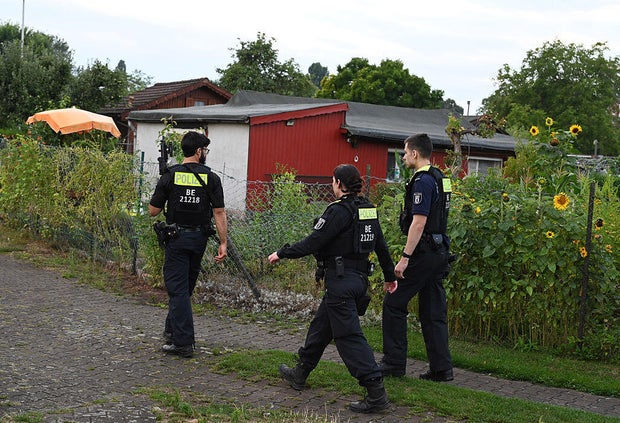
Ballout was shot and killed in a Berlin suburb on Sunday in a confrontation with police, ending a 24-hour manhunt.
He had recently been sent to a deradicalization program for screening, but the group said it was planning to tell authorities that his cooperation appeared “fake.”
“Why didn’t authorities start this process very much earlier? He was known for being a radical for a long time,” Cornelia Lotthammer, the organization’s communications director, said in an interview with CBS News.
German Chancellor Friedrich Merz on Monday told reporters he wanted to know how the attack could have been prevented.
“We must do everything to protect people in Germany as best possible from such criminals, from dangerous people who for whatever reason can’t be taken into custody,” he said.
Police said they believe Ballout rented the vehicle used in the attack.
The woman who died in the attack was a Polish national, the foreign ministry in Warsaw said Monday.
Volodymyr Sindieiev/Anadolu via Getty Images
Suspect’s ties to Islamist extremism
Authorities said Ballout was born in Germany and that his mother was naturalized in 2002, three years before he was born. They also said Ballout was known to police after multiple incidents, including back in 2019 when he was found guilty of assaulting a victim in the schoolyard of a Berlin high school. Two years later, in 2022, Ballout was also convicted in juvenile court for assault and extortion with the intent to rob.
However, the first signs of extremism were in 2024 when Ballout shared two posts of ISIS propaganda on his Instagram page, according to information provided to CBS News by Berlin prosecutors.
The following year, he traveled to Lebanon “with the intention of proceeding from there to Syria to join ISIS,” the prosecutors’ office said. However, Ballout was arrested and jailed in Lebanon. He returned to Germany in November 2025 after completing his sentence and was arrested at the Berlin airport.
Vasily Krestyaninov/SOPA Images/LightRocket via Getty Images
In May, a juvenile court in Berlin convicted Ballout for “preparing a serious act of subversive violence,” publishing ISIS propaganda on Instagram and other charges, prosecutors said. He was sentenced to a year and 10 months in jail.
Despite appeals, Ballout was given a suspended sentence, partially in recognition of the time he had spent in jail in Lebanon and pre-trial detention, and partially because he admitted to the crimes and distanced himself from ISIS, prosecutors said.
Separately, on July 3, just over three weeks before Saturday’s attack, police searched Ballout’s home in Berlin-Schöneberg, prompted by an initial suspicion of a violation of Germany’s Weapons Act, according to information provided to CBS News by Berlin prosecutors. They left after only a toy gun was found during the search and the case was subsequently dismissed.
Intelligence sources told CBS News preliminary information does not suggest any nexus between the alleged attacker and the United States.
Deradicalization program saw red flags
After his release, the court ordered Ballout to attend a deradicalization program for high-risk offenders. He was evaluated twice by the Berlin-based Violence Prevention Network, which works with people at risk from right-wing extremism and Islamism. A third and final evaluation was scheduled for Monday.
Cornelisa Lotthammer, the organization’s communications director, told CBS News on Monday that the staff had a “strong impression” that Ballout was not apt for their program because “he was very radicalized and for a long time.”
She said staff determined that there was “fake cooperation” from Ballout throughout the screenings.
“Our colleagues could tell that he wasn’t very interested in a real deradicalization process,” Lotthammer said.
“He gave the answers they wanted to hear. But of course, our colleagues noticed this,” she said, adding, “One red flag is when you notice that the answers are answers he thinks you want to hear.”
Ballout did not show any signs he was planning an imminent attack, Lotthammer said, adding that if staff had any hint of danger, they would have called the police.
She declined to comment on who had the responsibility for the suspect being free, saying it was a question for authorities.
“We did what we were supposed to do,” Lotthammer said.
She explained that the group works with people who have detached themselves from extremist ideology and started “thinking [for] themselves.” “We help them with a flat and with a job. We have to make sure that this person gets totally integrated into society,” she said.
She also pushed back on criticism of such deradicalization efforts, saying that many people they have worked with didn’t commit any attacks afterward.
“They also count,” she added.
Berlin reels from the violence
The attack occurred a few hundred yards from the Brandenburg Gate during a celebration that was supposed to close out the city’s Pride festival.
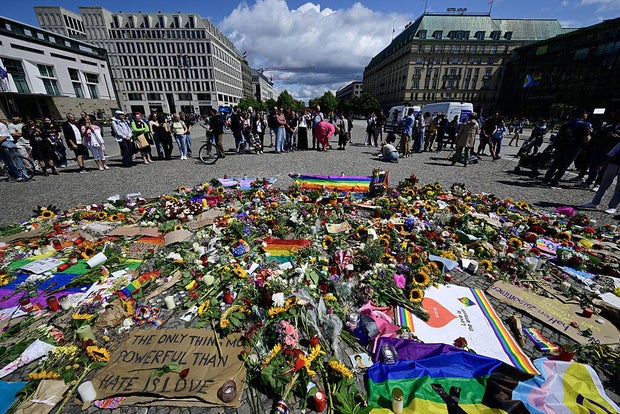
In the hours after, hundreds of mourners gathered at a makeshift memorial at the iconic gate. They hugged each other and laid down flowers, candles, rainbow flags and homemade signs.
John MACDOUGALL /AFP via Getty Images
“This is not normal; those are just people; they should not be judged or killed for their choice of love,” one woman at the memorial told CBS News on Monday.
“It’s not normal that someone we know can be dangerous; we don’t do anything about it… of course, I’m mad,” another mourner added.
Julian Miething, who had attended the event, told the AP on Sunday that it was a “dark day for the community.”
Rise in ramming attacks
The attack is the latest in a series that have left the country grappling with concerns about public safety.
Six people were killed and hundreds injured when a car plowed into a Christmas market in Magdeburg in December 2024. Two months later, a car drove into trade union demonstrators in Munich, killing a woman and her 2-year-old daughter. Two more people were killed in March 2025 when a car rammed into a crowd in Mannheim.
The attacks have different alleged motives, but together have kept immigration, security and extremism at the center of German politics. The debates have also fueled support for the far-right Alternative for Germany party, or AfD, and put pressure on Merz and Germany’s mainstream political parties as they try to convince voters they can keep the country safe.