
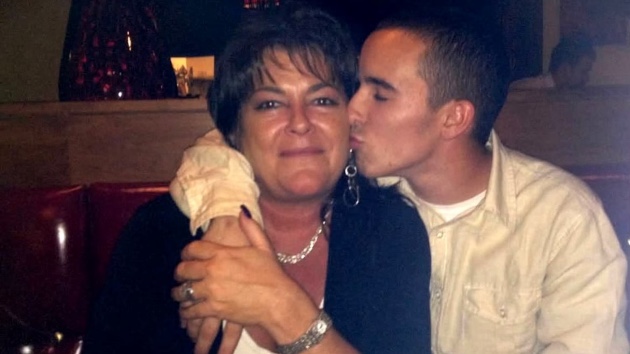
‘Beloved’ mom’s body recovered after boat capsized near Alcatraz Island in San Francisco Bay

An undated photo of Tondra Madruga who died when a boat capsized in San Francisco Bay on July 14, 2026. (Madruga Family)

(SAN FRANCISCO) — The body of a 58-year-old woman has been recovered after a boat capsized and sank near Alcatraz Island in San Francisco Bay, marking the second person confirmed dead from the incident.

The San Francisco Medical Examiner’s Office identified the second victim as Tondra Madruga. Two people remain missing.

Madruga’s relatives said in a statement that they’re “heartbroken by the loss of our beloved mother, daughter, sister, and aunt.”

“Our hearts remain with every family impacted, and we sincerely appreciate your kindness and understanding,” the family said. “We extend our heartfelt thanks to the U.S. Coast Guard, the San Francisco Fire Department, the San Francisco Police Department, all of the first responders, and the civilian boaters and community members who selflessly assisted in the search and rescue efforts. Your dedication and support mean more to our family than words can express.”

Authorities said they believe 20 people were aboard the Volare, a 50-foot cabin cruiser based out of Stockton, California, when it was hit by a wave Tuesday evening, causing it to capsize.

One man who was aboard was taken to the shore severely injured and, despite CPR being administered, was pronounced dead, officials said. He was identified by the Office of the Chief Medical Examiner as 79-year-old Clifford Joseph Boisa.

A dog also died, San Francisco Fire Chief Dean Crispen said.

Three people were taken to the hospital and later released, Crispen said.

Crispen told reporters that authorities believe there was a memorial service that the 20 passengers, all adults and mostly comprised of family members, were taking part in on the vessel when it capsized. One survivor said it was a memorial for her sister, ABC San Francisco station KGO reported.

The Coast Guard announced Wednesday that it suspended search operations

Jarod Toczko, commander for U.S. Coast Guard Sector San Francisco, said the decision to suspend the search was not easy, but his teams swept through 950 square nautical miles and hadn’t found the missing people or the boat.

Toczko said there was a “high possibility that individuals could have been trapped in the vessel.”

Rescuer Justin Marceline told KGO that some passengers were “banging on the windows, trying to get out” of the boat.

“It was pretty wild, seeing that, honestly,” Marceline said, adding that conditions in the water were “really bad.”

“The people that were bobbing in the water, we pulled them out first,” Marceline said. “The people in the water were elderly folks, they were conscious, but people were too tired and worn out.”

Toczko praised those who jumped to save the passengers.

“No question, no doubt…those people saved lives,” he said.

ABC News’ Emily Shapiro and Jennifer Watts contributed to this report.

Copyright © 2026, ABC Audio. All rights reserved.

How OJ Simpson’s infamous Bronco chase captured a changing era of US sports coverage in the 1990s

(CNN) — Editor’s note: Watch CNN Original Series “Decades in Sports” on the CNN app. Across six episodes, the series explores the defining moments, athletes and cultural shifts that shaped sports over the past six decades, from the television revolution and Civil Rights Movement of the 1960s, right up to the impact of social media on today’s biggest stars.It was Jun 17, 1994, and Madison Square Garden was packed for Game 5 of the NBA Finals between the New York Knicks and Houston Rockets.The series was hanging in the balance tied at two games apiece. The winner would move within one victory of lifting the Larry O’Brien Trophy that Michael Jordan and the Chicago Bulls had a stranglehold over for the previous three years.It should have been one of the biggest sporting nights of the year, and it was – but not because of the game.As Ian O’Connor, columnist at The Athletic, highlights in the series, “You have to understand (that) the Knicks hadn’t won a championship in more than two decades.“And here they are, about to take a 3-2 lead in the NBA Finals over the Houston Rockets… and nobody is watching the game.”That was because on the other side of the country, former NFL star running back OJ Simpson and his former teammate Al Cowlings, were being pursued by police in a slow-speed chase across Los Angeles.Simpson had failed to turn himself into the Los Angeles Police Department earlier that day after being named a suspect in the murders of his ex-wife, Nicole Brown Simpson, and her friend, Ronald Goldman, who had been found stabbed to death outside Brown Simpson’s home five days earlier.What followed was a surreal 90-minute pursuit that became one of the most-watched television events in American history.Simpson had once rushed for more than 2,000 yards in a single 14-game season, but this was by far the most-watched run of his life.Thousands lined up on highway overpasses to catch a glimpse of the white Bronco, while television networks across the country interrupted their regular programming to broadcast the pursuit - NBC even partially interrupted its coverage of the NBA Finals, showing the chase alongside the game via split-screen.In a way, they had no choice, as all eyes were now on the West Coast.Stories beyond the scoreboardThe NBA Finals wasn’t the only major sporting event that took a backseat to the events in Los Angeles.Ken Griffey Jr. was chasing Babe Ruth’s home run record, Arnold Palmer was playing his final round at the US Open, and the 1994 FIFA World Cup kicked off for the first time on US soil.Yet, it was the images of a white Bronco trundling down a California freeway that captured the eyes of the nation.As CNN Contributor Timothy Naftali says, “What we see in the 90s is tabloid television (and) a hunger for stories that we would describe as… the other side of the human experience.”Americans were now becoming increasingly interested in seeing beyond the scoreboard - the personalities, controversies and scandals surrounding the biggest sports stars were beginning to spark almost as much interest and intrigue as their performances.The attack on US figure skater Nancy Kerrigan in January 1994 – which led to record viewership for the Winter Olympics a month later – and Mike Tyson’s infamous ear bite on Evander Holyfield in June 1997 that triggered a global news frenzy were further examples of this.Journalist John Heilemann describes the period as “wacky” in the series, as “sports is getting so big and so all-enveloping,” highlighting that “the glare of the media is so much brighter by the time you get to that timeframe that things start to get a little twisted in the 90s.”It was an era where the lines between sports, celebrity and scandal became blurred, and the cameras were there to catch it all. It was an “explosive era of media coverage,” says Van Lathan, journalist and podcaster at The Ringer.The celebrity athleteThe 1990s was also a decade which saw the explosion of 24-hour sports television, meaning athletes were being platformed in a way they had never been before, and their popularity skyrocketed.The biggest sports stars were shifting into almost mainstream celebrities - and no one embodied this shift more than Simpson.He was a Heisman Trophy winner, an NFL MVP who earned several All-Pro and Pro Bowl selections, before going on to star in several films and commercials, all while becoming one of the most recognizable media personalities in the country.Long before the Bronco chase, his impact had been felt far beyond the football field.As sports journalist and broadcaster Seth Davies highlights, what defined the 90s was the “growth of the entertainment media infrastructure around sports,” as “we were starting to get to know these athletes on a personal level, and we were thinking of these athletes as celebrities.”Up until that point, Simpson was affectionately christened “the Juice.” LAPD detective Tom Lange even called him by that nickname during the Bronco chase while pleading with him to throw the gun he had in his possession out of the car.But detective Lange was not alone, as during the broadcast handmade signs displaying messages of “Save the Juice” and “Go, OJ, Go!” – a reference to a famous Hertz commercial he had starred in years prior – were being displayed by hundreds of fans on the freeway overpasses.And bear in mind, this was a man who had been officially declared a fugitive several hours earlier by the LAPD.However, as Heilemann explains in the series, “the glorification of the athletes” at the time led to almost “parasocial relationships,” as fans were beginning to “have an unhealthy degree of connection to their stars.”Those 90 minutes on the LA County freeway in June 1994 was one of the most powerful illustrations of that – 95 million Americans watched it all unfold with no scoreboard or idea when the final whistle would be blown.But despite this, sports had never been bigger.The-CNN-Wire™ & © 2026 Cable News Network, Inc., a Warner Bros. Discovery Company. All rights reserved.
Read Next Story