‘Beloved’ mom’s body recovered after boat capsized near Alcatraz Island in San Francisco Bay

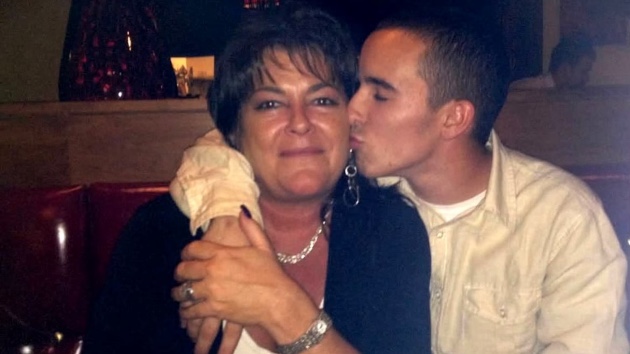
An undated photo of Tondra Madruga who died when a boat capsized in San Francisco Bay on July 14, 2026. (Madruga Family)

(SAN FRANCISCO) — The body of a 58-year-old woman has been recovered after a boat capsized and sank near Alcatraz Island in San Francisco Bay, marking the second person confirmed dead from the incident.

The San Francisco Medical Examiner’s Office identified the second victim as Tondra Madruga. Two people remain missing.

Madruga’s relatives said in a statement that they’re “heartbroken by the loss of our beloved mother, daughter, sister, and aunt.”

“Our hearts remain with every family impacted, and we sincerely appreciate your kindness and understanding,” the family said. “We extend our heartfelt thanks to the U.S. Coast Guard, the San Francisco Fire Department, the San Francisco Police Department, all of the first responders, and the civilian boaters and community members who selflessly assisted in the search and rescue efforts. Your dedication and support mean more to our family than words can express.”

Authorities said they believe 20 people were aboard the Volare, a 50-foot cabin cruiser based out of Stockton, California, when it was hit by a wave Tuesday evening, causing it to capsize.

One man who was aboard was taken to the shore severely injured and, despite CPR being administered, was pronounced dead, officials said. He was identified by the Office of the Chief Medical Examiner as 79-year-old Clifford Joseph Boisa.

A dog also died, San Francisco Fire Chief Dean Crispen said.

Three people were taken to the hospital and later released, Crispen said.

Crispen told reporters that authorities believe there was a memorial service that the 20 passengers, all adults and mostly comprised of family members, were taking part in on the vessel when it capsized. One survivor said it was a memorial for her sister, ABC San Francisco station KGO reported.

The Coast Guard announced Wednesday that it suspended search operations

Jarod Toczko, commander for U.S. Coast Guard Sector San Francisco, said the decision to suspend the search was not easy, but his teams swept through 950 square nautical miles and hadn’t found the missing people or the boat.

Toczko said there was a “high possibility that individuals could have been trapped in the vessel.”

Rescuer Justin Marceline told KGO that some passengers were “banging on the windows, trying to get out” of the boat.

“It was pretty wild, seeing that, honestly,” Marceline said, adding that conditions in the water were “really bad.”

“The people that were bobbing in the water, we pulled them out first,” Marceline said. “The people in the water were elderly folks, they were conscious, but people were too tired and worn out.”

Toczko praised those who jumped to save the passengers.

“No question, no doubt…those people saved lives,” he said.

ABC News’ Emily Shapiro and Jennifer Watts contributed to this report.

Copyright © 2026, ABC Audio. All rights reserved.
Bill Gates proposes major limits on AI development

(CNN) — Microsoft co-founder Bill Gates argued on Wednesday that artificial intelligence needs significant limits or else the harm to humans will outweigh any potential good.“AI will either be the greatest equalizer ever invented, or the worst source of injustice,” he said in a 6,000-word essay, entitled “The turbulent AI era is here. The choices we make now are critical.”Gates isn’t the first tech leader to raise concerns about rapid advancements in AI. But his essay adds to growing worries about the actions of some AI models and potential job losses, even as the AI companies and Wall Street press full speed ahead on the technology.Gates became one of the richest people on the planet as a key player during last century’s personal computer revolution. However, he wrote that he believes the next technology revolution – AI – will be far more disruptive to society.“Even under the best circumstances, the transition to this new AI era will be one of the most turbulent times in human history,” he said, adding that “I don’t see evidence that leaders, experts, and communities are confronting the challenges adequately. There is no plan to ease the entry into the AI era.”AI can provide great benefits in field like agriculture and medicine, he argued, such as breakthroughs in preventing and treating diseases.But he also noted that the transition carries big risks, like widespread unemployment, harming the educational and social development of children, or making it easier for criminals and bad actors – or AI itself – to cause deliberate harm.“As the models become more powerful, they could begin to act against our interests and we could lose control,” he warned.These significant risks must be controlled quickly, Gates said.“If someone had a credible plan for slowing down AI advances globally, I would likely support it,” he wrote. “However, I don’t think that’s going to happen. The geopolitical and economic incentives are pushing too hard to go full speed ahead.”In an interview with CNN’s Anderson Cooper that will air on Wednesday evening, Gates said AI models have gotten dramatically more powerful at a rate faster than he expected.“They’re now capable of causing cyberattack risk, bioterrorism risk, psychosocial risk,” he said. “I have to say I’m kind of shocked that the exact criteria that we review these models with, and the actions we take to minimize the harms, are really completely missing.”In his essay, Gates proposed taxing AI or robots the way you would pay a human employee’s payroll tax in order to slow the shift away from using human labor. He also wants to set aside some work to be done by humans only.“My message to leaders is: You have a chance to act now, before unemployment rises sharply, communities are hurting, and public trust has eroded,” he said. “You can make sure AI benefits everyone. And you can work with other governments to meet this national and global challenge.”The-CNN-Wire™ & © 2026 Cable News Network, Inc., a Warner Bros. Discovery Company. All rights reserved.
Read Next Story