
Appeals court temporarily blocks DOJ release of Biden tapes with biographer

Washington — A federal appeals court temporarily blocked the Justice Department from turning over to a conservative think tank redacted transcripts and audio recordings of conversations former President Joe Biden had with his biographer roughly a decade ago.

A panel of three judges on the U.S. Court of Appeals for the District of Columbia Circuit agreed to issue an administrative injunction that stops the release of the material to the Heritage Foundation for 10 days. 

The court said in a brief unsigned order that the purpose of its injunction, which expires at 11:59 p.m. on July 20, is to “give the court sufficient opportunity to consider the emergency motion for an injunction pending appeal and should not be construed in any way as a ruling on the merits of that motion.”

The recordings at issue in the legal fight date back to 2016 and 2017, when Biden sat down with his biographer, Mark Zwonitzer, for his memoir, “Promise Me, Dad.” But they gained interest from the Heritage Foundation several years later following an investigation by former special counsel Robert Hur into Biden’s handling of sensitive government records after his vice presidency, which ended in 2017. The former president was not charged with any crimes stemming from Hur’s investigation.

The special counsel’s report, released in 2024, included passages that referenced Biden’s conversations with Zwonitzer. The special counsel wrote the recordings showed the former president’s “diminished faculties and faulty memory,” and said his conversations with Zwonitzer were “painfully slow, with Mr. Biden struggling to remember events and straining at times to read and relay his own notebook entries.”

Soon after Hur’s report was released, the Heritage Foundation filed a public records request for material the special counsel relied on to write specific portions of the report, including the excerpts that referred to Zwonitzer’s recorded conversations with Biden.

The Justice Department initially withheld the audio tapes and most of the written transcripts, citing certain exemptions under the Freedom of Information Act. But once President Trump returned to the White House, the department said it intended to provide the material to Congress and the Heritage Foundation.

Biden moved to intervene in a lawsuit the Heritage Foundation had filed in 2024 to force the release of the transcripts and tapes. But last month, a federal judge initially rejected a request from the former president to block the disclosure.

Shortly after she issued her decision, the judge, Dabney Friedrich, agreed to stop the Trump administration from releasing the information for three weeks to give the D.C. Circuit time to decide whether to take action itself. That order was set to expire at 5 p.m. Friday.

Biden’s lawyers had argued to the D.C. Circuit that disseminating his discussions with Zwonitzer would be harmful and likened their disclosure to the public release of diary entries or private text messages. 

“The private conversations at issue were never intended to be shared with a wider audience, and the Department has them only because it collected the recordings as part of a criminal investigation that resulted in no charges,” they argued in a filing.

Biden’s legal team also said there is no immediate need for the Heritage Foundation to access the material.

“This FOIA action has been pending for nearly two and a half years, and there is no meaningful public interest — let alone one that must be satisfied in the immediate days or weeks — in the disclosure of decade-old conversations of a former President who is now a private citizen, and who neither holds nor is seeking public office,” they said.

But the Justice Department said the public has an interest in seeing the information that Hur relied on during the course of his investigation.

“Releasing the materials will allow the public to assess the persuasiveness of Hur’s determinations,” department lawyers told the D.C. Circuit in court papers.
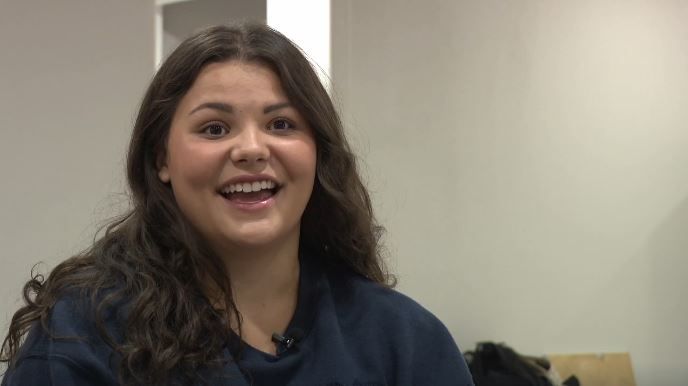
Doctor convicted of attempted manslaughter of his wife wants a new trial, saying jurors may have been confused

(CNN) — Along the steep Pali Puka trail last spring, the verdant beauty of Oahu spilled out to the Pacific Ocean from the scenic path where Gerhardt and Arielle Konig stood. On that high ridge, they fought for their lives – emotionally, then physically – each later would testify.A trip intended to celebrate Arielle’s birthday – and maybe salvage their troubled marriage – ended with the couple, who share two young children, on the ground attacking each other. He bashed her in the face with a rock. She bit him and squeezed his testicles.Who started the melee became the question at the heart of an attempted second-degree murder charge filed against Gerhardt Konig.Prosecutors said the defendant wanted to kill his spouse and tried to push her off the cliff. But after an emotional, 10-day trial a year later that saw husband, wife and one of Gerhardt Konig’s children from a prior marriage on the stand, the jury found him guilty of the lesser charge of attempted manslaughter.At Konig’s request, a judge on Friday heard arguments on whether a new jury should hear the case because of what two jurors in news interviews revealed soon after issuing the verdict that could send Konig to prison for up to 20 years, along with concern one juror may have communicated about the case outside the jury room during deliberations.“Jury irregularities call into serious question the integrity of this verdict,” defense attorney Thomas Otake wrote in an appeal filed in May.At Friday’s hearing, Judge Paul Wong said the court would question jurors about any outside communications during deliberations before deciding whether to grant a new trial. The court will revisit the matter on September 11.“The court must ascertain the extent of the influence,” Wong said.Whether defendant intended to kill is at issueFinding insufficient evidence to convict Konig of attempted murder, the jury found him guilty of attempted manslaughter, with his actions – even if extremely dangerous – motivated by “extreme mental or emotional disturbance.”Ruling out an attempted murder charge was a relief to Konig’s legal team and left open the possibility Konig could be sentenced to probation, with no jail time at all.“We are thankful that they did not convict him of attempted murder, which would have been life in prison,” Otake told reporters shortly after the verdict was announced.Still, the defense attorney immediately promised an appeal based on unspecified concerns about the judge’s rulings during the trial. When his motion dropped a month later, however, it wasn’t the judge Otake took issue with:The request for a new trial was based on what jurors said after the verdict.“Somebody was definitely hurt; it was a bodily injury to the head that could result in serious bodily injury,” foreperson Makalapua Atkins told CNN affiliate East Idaho News about jurors’ state of mind in deliberations.“The intent to kill is improbable to us based on the evidence presented,” Atkins said in an interview after the verdict with True Crime AZ, adding, “The only people who know what happened on that cliff are the two that were involved.”But under Hawaii law, Konig’s defense team has argued, even a conviction for attempted manslaughter would require the jury to find the defendant was trying to kill the victim – and the foreperson said they didn’t.“The jury did not unanimously believe that Dr. Konig had an intent to kill his wife,” Atkins confirmed in a sworn statement to the defense attorney accompanying his appeal. Prosecutors also asked Atkins to sit down with them for an interview, but she declined, their response to the request for appeal states. CNN could not reach Atkins for comment.Another juror, identified publicly only as Juror #3, also said he had not been convinced Gerhardt Konig intended to take Arielle’s life that day.“I don’t know if he was trying to kill his wife, personally,” he told Honolulu TV station KHON in an on-camera interview. “I do know that it was the capacity to kill his wife, personally. That how I felt about it.”If jurors didn’t understand what was required for conviction, Konig’s attorneys argued, it opens the door to a new trial.“Conduct that could result in death or has the capacity to kill may be reckless, but it is not necessarily intentional, and Hawaiʻi does not recognize attempted reckless manslaughter,” Konig’s defense attorneys said, with the emphasis, in a court filing.Did the jury understand the law?“The jurors’ public remarks raise a serious concern that the verdict may rest upon findings inconsistent with the convicted offense,” Konig’s defense attorneys said in a motion for a new trial.The judge’s instructions – 33 in all – were a lot to digest. They laid out a menu of five possible charges – from second-degree attempted murder to third-degree assault – explaining the order in which they had to be considered and steps to evaluating each.“If and only if you unanimously find that all the elements of Attempted Murder in the Second Degree have been proven by the prosecution beyond a reasonable doubt, and you unanimously find that the defendant was not acting in Self-Defense, then you must consider the affirmative defense of Extreme Mental or Emotional Disturbance,” one instruction states.In their response to Konig’s request for a new trial, prosecutors did not try to rebut the claim jurors were confused, instead saying it doesn’t matter. The “internal thought process” of the jury, even when revealed voluntarily by jurors, should not be reconsidered by the court after a verdict, prosecutor Joel Garner stated.“Jurors can change their mind, but what matters is whether the verdict was unanimous at the time it was rendered,” the prosecution wrote. “In this case it was, even according to the on-the-record statements of the foreperson – and therefore a later declaration disagreeing with the verdicts is not a sufficient basis to grant a motion for a new trial.”Juror may have revealed their discussions during deliberationKonig’s defense also raises another concern about the jury: that one member may have been communicating about the case to an outsider while deliberations were still underway.“I’ve been texting with one of the juror’s (sic) and they’re going for count 3 attempted manslaughter,” says a message posted to the live chat of trial coverage by the Law&Crime Network.The comment was first spotted by someone – whose name is redacted in the court filing – and emailed to prosecutors, who alerted the judge.“What caught my attention is that this commenter specifically predicted the verdict – that Konig would be convicted of attempted manslaughter – before it was announced,” the person wrote in the email.Whether it was legitimate or a hoax has not been proven, but Konig’s defense attorneys say the fact that it correctly foreshadowed the verdict should give it credibility.“Although the full scope of any such communication remains unknown, these circumstances raise substantial concerns regarding the jury’s exposure to outside influence or extraneous information during deliberations,” the defense team wrote.Prosecutors say even if the comment was authentic, it doesn’t require a new trial unless there is proof that “external influence” swayed the decision of the juror.“A juror disclosing where the jury stands is certainly problematic, but on its own it does not indicate that the other party influenced that juror in any way,” Garner said in their court filing.Could a new trial backfire?If Konig, who is in jail pending his sentencing, is granted a new trial, it could come with a big risk: He could face the attempted murder charge again after beating it in his first trial.Otake is trying to make sure that doesn’t happen.“The jury did not convict Dr. Konig of attempted murder in the second degree,” the defense lawyer wrote, arguing the conviction on the lesser charge amounts to an attempted murder acquittal since the jury could not convict Konig of both.“Any retrial must therefore be limited to offenses consistent with the jury’s verdict and the constitutional protections against double jeopardy,” Otake added.The Department of the Prosecuting Attorney in Honolulu has not said whether it would try to pursue an attempted murder conviction again if a retrial is ordered.Either way, the legal fight between Gerhardt and Arielle Konig will continue, as their divorce is still pending.“The marriage,” Arielle Konig wrote in her divorce petition, “is irretrievably broken.”The-CNN-Wire™ & © 2026 Cable News Network, Inc., a Warner Bros. Discovery Company. All rights reserved.
Read Next Story