
4th person dies from Legionnaires’ disease in New York City: Health officials

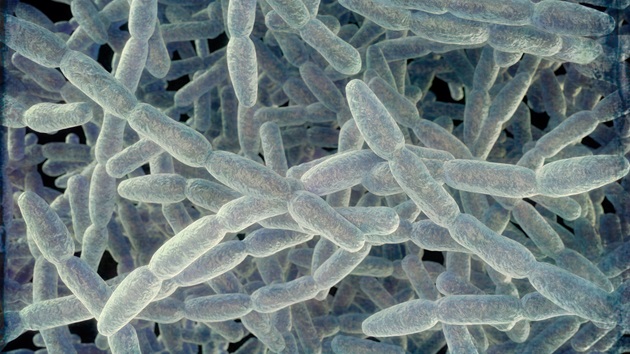
Illustration of Legionella pneumophila bacteria, the cause of Legionnaires’ disease. ( ROGER HARRIS/SCIENCE PHOTO LIBRARY/Getty Images)

(NEW YORK) — A fourth person has died in New York City amid an ongoing cluster of Legionnaires’ disease on the Upper East Side, according to health officials.

At least 76 cases have been identified and seven people remain hospitalized, the New York City Health Department announced.

Since the cluster began, 53 people have been discharged from the hospital, according to the department.

Health officials advised that anyone who has spent time in the affected ZIP codes 10028, 10075, 10128, including Carnegie Hill and Yorkville, should seek medical attention if they develop flu-like symptoms. Legionnaires’ disease symptoms can appear up to 14 days after exposure, according to the health department.

The department previously said it believes the source of the Legionella bacteria has likely been eliminated and that it will continue inspecting every cooling tower that tested positive for the bacteria.

Health officials added there is not an issue with any building’s plumbing system and that residents in the affected ZIP codes can continue to drink tap water, bathe, shower, cook and use an air conditioner at home.

Legionnaires’ disease is a severe form of pneumonia caused by inhaling the Legionella bacteria in small droplets of water mixed in the air or contaminated water accidentally going into the lungs.

The bacteria are found naturally in freshwater, but amounts generally don’t lead to disease. The bacteria typically grow best in warm water and in warm to hot temperatures, according to the Centers for Disease Control and Prevention (CDC).

The disease does not generally spread from person to person, but infections can occur if the bacteria get into a building’s water supply, including in shower heads, sink faucets, hot water tanks, heaters, cooling towers and other plumbing systems.

Legionnaires’ disease has increased in prevalence over the last decade, reaching a peak of 2.71 cases per 100,000 in 2018, the CDC said. Cases dropped during the first year of the COVID-19 pandemic and then rebounded in 2021.

Although most people recover from Legionnaires’ disease with antibiotics, certain patients — including those who are immunocompromised or who suffer from chronic lung diseases — can develop complications that can be fatal.

ABC News’ Youri Benadjaoud contributed to this report.

Copyright © 2026, ABC Audio. All rights reserved.

Woman stung more than 300 times by Africanized bees, rescued by deputy and volunteers

Click here for updates on this story    ARANSAS COUNTY, Texas (KRIS) -- Just 4 months into recovery from a fractured spine, Rockport resident Rachel Kelly-McKee was stung more than 300 times by Africanized bees at a local storage facility.Surveillance video captured by a camera at Goose Island Park Storage on Saturday, Aug. 15, shows Kelly-McKee in her storage unit with her German shepherd, Chelsea. Kelly-McKee says Chelsea loves to come out to the units with her, but right by Chelsea is the tree that over 300 bees came out of. Kelly-McKee says it could have been Chelsea that provoked the bees."She came in and I noticed she had a few, a few bees on her and so I said. You know, I thought they were honeybees. I said, don't bring the bees in here, you know," Kelly-McKee said.But it was more than just a few bees."The minute we cleared that door, I was just absolutely inundated. And so she ran one way and I ran the other way. I ran all around here just swatting and trying to get them off of me and screaming," Kelly-McKee said.An automatic gate at the storage facility stopped Kelly-McKee from being able to get away. The gate could only be activated by a car, not a person. The owner of the storage units opened the gate remotely when he saw what was happening. That is when Deputy Will Newsom of the Aransas County Sheriff's Office and the Lamar Volunteer Fire Department arrived and sprung into action."But my plan was to roll up. And get her into the back compartment of my car, and then extricate her from the scene and move her down to Lamar Fire Station where we could get medical attention. So once I got her there, I got her out of the car and I grabbed the hose and started hosing her down, and so she could start getting the rest of the bees out of there," Newsom said.Without his quick action, the situation could have been fatal."I mean, you know, just, I mean one bee sting can be fatal to some people. She took over 300 stings, which is definitely in the fatal range. So I, I knew that we had a limited amount of time to be able to get her out of the situation, get her to medical care," Newsom said.Kelly-McKee says she is not looking to place blame. She says she just wants people to be aware of how to protect themselves.Please note: This story was provided to CNN Wire by an affiliate and does not contain original CNN reporting. This content carries a strict local market embargo. If you share the same market as the contributor of this article, you may not use it on any platform.
Read Next Story