2nd American infected with Ebola in DRC evacuated to Germany, WHO chief says

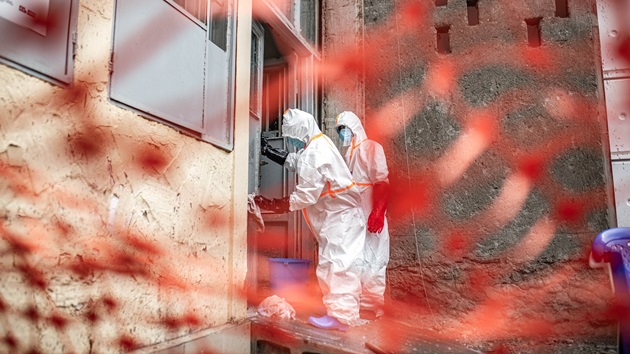
Medical workers disinfect a facility used to treat an Ebola patient at the Heal Africa Hospital on June 4, 2026 in Goma, Democratic Republic of Congo. (Daniel Buuma/Getty Images)

(NEW YORK) — A second American citizen infected with Ebola in the Democratic Republic of the Congo (DRC) has been transferred to Germany for care, the head of the World Health Organization said on Monday.

The Centers for Disease Control and Prevention (CDC) announced over the weekend that the unnamed patient works for a humanitarian aid organization and tested positive for the Bundibugyo virus, the strain of Ebola that is behind the DRC’s outbreak.

In a post on X on Monday, Dr. Tedros Adhanom Ghebreyesus, director-general of the WHO, said the organization “has provided clinical care and close monitoring” for the patient in the Ituri province, where most of the DRC’s cases have been confirmed.

Samaritan’s Purse, which has been responding to the outbreak, confirmed on Monday that one of their staff members is the infected patient.

“We can confirm that one of our Samaritan’s Purse staff members working in Bunia, Democratic Republic of the Congo (DRC), has tested positive for the Ebola virus,” Franklin Graham, president and CEO of Samaritan’s Purse, said in a statement. “This respected and faithful staff member has been a part of our Disaster Assistance Response Team for 15 years and has been serving in a logistics capacity in the DRC over the past month. He was not involved in direct patient care at our two Ebola Treatment Centers.”

Samaritan’s Purse said it immediately contacted the CDC, the State Department and the DRC’s government upon learning of the positive test and that the organization has begun contact tracing.

The first American infected with Ebola was a doctor who contracted the disease while treating patients in the DRC. Dr. Peter Stafford was evacuated to Germany at the time to receive specialty care and was hospitalized at Charité University Hospital in Berlin, according to Serge, the international Christian missionary group that employs him.

His wife, Dr. Rebekah Stafford, and their four children were also evacuated to Germany and moved into a separate space at the hospital as high-risk contacts. Peter Stafford was discharged from the hospital in June, and the family has since returned to the United States.

The outbreak in the DRC has led to more than 1,900 cases and more than 700 deaths, according to the latest figures from the DRC’s Ministry of Health.

“As infections among response personnel are not unexpected in an outbreak of this scale, protecting frontline responders must remain a top priority,” the WHO’s Tedros wrote on X. “We are deeply grateful for the courage and commitment of all health workers working to end this outbreak.”

Copyright © 2026, ABC Audio. All rights reserved.
Luigi Mangione in discussions about possible guilty plea, sources say

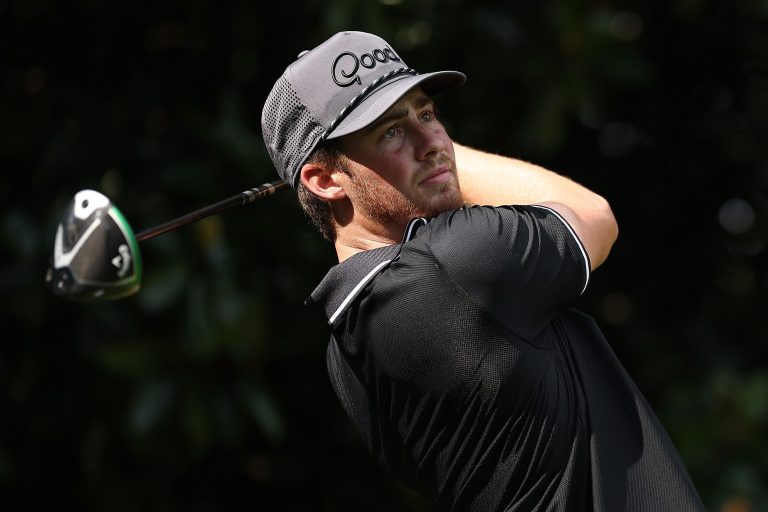
▶ Watch Video: Luigi Mangione could plead guilty in federal case Friday, sources say Luigi Mangione, accused in the 2024 killing of UnitedHealthcare CEO Brian Thompson, is in discussions about a possible plea deal on federal charges ahead of a court appearance Friday in New York City, sources familiar with the matter told CBS News.Mangione, 28, is set to appear at an 11 a.m. conference in U.S. District Court in Manhattan. That meeting is taking place after prosecutors and the defense team sent a letter to federal court Tuesday requesting Friday's conference. CBS News New York's Alice Gainer will be inside the courtroom Friday with the latest developments. Plea discussions between federal prosecutors and defense attorneys have been ongoing and it's unclear if an agreement has been reached, sources told CBS News."I expect plea negotiations to happen in every case, or certainly most cases," legal expert Richard Schoenstein said. Attorneys for Mangione have not responded to CBS News New York's request for comment. A spokesperson for the U.S. Attorney for the Southern District of New York also declined to comment. Mangione faces both federal and state charges in connection with Thompson's death. He has pleaded not guilty in both trials.The federal charges carry a potential maximum life sentence, which Mangione could still face even if a federal plea deal is reached. "In the federal system, you don't agree to a sentence as part of a plea deal. You agree to a plea and the crime, and then it has to go to a sentencing hearing in front of the judge," Schoenstein said."Maybe both parties try to, either by a binding agreement or by a suggestion to the court, say, 'We want some sort of reduced sentence, less than the life in federal prison that was the possibility here,'" CBS News legal contributor Jessica Levinson said.If a plea deal is reached, it could have an impact on his state trial, which is set to begin next month. That's because of potential double jeopardy concerns. Double jeopardy refers to a law which says "a person may not be twice prosecuted for the same offense," although a number of exceptions are listed. "I would expect the defense to make some sort of motion to preclude further prosecution of the state case on the grounds that it is double jeopardy," Schoenstein said. "I think the question of whether or not it would be double jeopardy is open and complicated and subject to debate."That's because the federal charges have to do with stalking and interstate charges, whereas the state charges are for second-degree murder, a weapons charge, and a forged instrument charge."So the weapons and forged instrument charges would not be resolved by the federal plea, and arguably the intentional killing charge would not be resolved. I do think there's a serious question as to whether this would be double jeopardy," Schoenstein said. "In New York state, there's more robust protections for defendants around the double jeopardy laws. And so that could be a real issue here, at least one that would merit litigation, if not dismissal," CBS News legal analyst Caroline Polisi said.Schoenstein said a federal plea deal would "put some pressure on state prosecutors to reach a deal of their own, or to become part of the deal that is being negotiated between the feds and the defendant, and therefore it could resolve the case on a negotiated level."Schoenstein said it could also impact the defense strategy if the state case does go forward, "because if it does go forward he no longer has to worry about a federal trial down the road."Legal experts say the case's national attention and the supporters Mangione has gained could be a factor in the feds wanting to make a deal."You have a raised possibility of what we call juror nullification, wherein a jury gets seated and there's someone in there that just, regardless of hearing any of the evidence, is never going to vote to convict Luigi Mangione," Polisi said.It was unclear what charges Mangione would plead guilty to on Friday, and he could reverse his decision at the last minute.The start of his federal trial, if it moves forward, is set for January.
Read Next Story