
Fewer than half of Americans say they can afford healthcare: Gallup

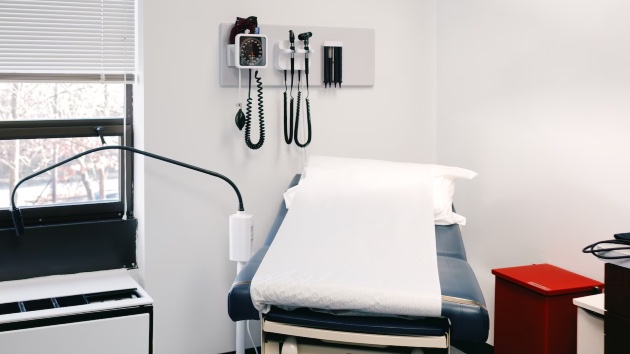
Close-up of examination table in doctor’s office (Grace Cary/Getty Images)

(NEW YORK) — Fewer than 49% of Americans can afford healthcare, the lowest rate since tracking began in 2021, according to Gallup data released Thursday.

In a single year, roughly 2.8 million people no longer identified as being “Cost Secure” meaning they could no longer afford access to quality care or pay for visits and prescriptions, according to the data. Worry about future healthcare costs, including visits and prescriptions, amongst Americans is also at an all-time high of over 40%, according to Gallup.

Gallup developed what it calls the “Healthcare Affordability Index,” which is sponsored by West Health, in 2021 drawing on self‑reported experiences from nationally representative surveys. The latest data comes from a study conducted between October and December of 2025, according to Gallup and West Health.

Healthcare has become a financial burden across income levels, according to the new data. According to the index, one in three upper-middle income households ($120,00 to $180,000) are not cost secure, nor are one in five households earning above $180,000.  

Young adults, aged 18-29, have experienced the sharpest decline in ability to afford healthcare with those identifying as “cost secure” dropping 7 percentage points in a year.

Women continue to trail behind men when it comes to affording healthcare.

Between 2021 and 2024 the difference between men and women being able to afford care was 9% but in 2025 the gap widened to 15%, making it the largest gender gap in healthcare affordability on record.

Healthcare and inflation continue to rise with healthcare spending reaching $5.3 trillion in 2024. This, in part, is due to hospital prices increasing to 3.4% in 2024, the fastest rate increase since 2007, and insurance premiums going up by 20% after the expiration of subsidies under the Affordable Care Act.

With many Americans experiencing significant healthcare-related financial challenges, studies show that this can lead to significant consequences, including delaying or deferring care, leading to worse health overall.

Torie A. Livingston, MD, MPH, is a third-year pediatric resident physician at the University of Chicago and is a medical intern of the ABC News Medical Unit. 

Copyright © 2026, ABC Audio. All rights reserved.

WHO says risk of Ebola in World Cup host countries is low

Workers wearing protective visit a patient in an isolation unit an Ebola treatment center on June 2, 2026 in Monigi, Democratic Republic of Congo. (Daniel Buuma/Getty Images)(GENEVA) -- The World Health Organization said on Thursday that the risk of Ebola transmission in Europe and World Cup host countries is low as the tournament gets ready to kick off across the U.S., Canada and Mexico.Dr Hans Henri P. Kluge, WHO's regional director for Europe, said in a statement that there are currently no Ebola cases in North America or Europe amid an outbreak spreading in the Democratic Republic of Congo.The DRC has recorded 676 confirmed cases as of Thursday morning, according to DRC's minister of health. In Uganda, there are 19 confirmed cases -- many of them travel-related -- and two deaths, the country's health officials said.Kluge made reference to an Ebola patient who was treated in the European Region after being evacuated from the outbreak region.An American physician, Dr. Peter Stafford, tested positive for Ebola after being exposed while treating patients at Nyankunde Hospital. Stafford, a medical missionary with the mission organization Serge, was transferred to Germany and treated at Berlin's Charite University Hospital.His wife, Dr. Rebekah Stafford, and their four children were also transferred to the same hospital, where they were monitored in quarantine for 21 days as high-risk contacts.Last week, the family was released from the hospital after Dr. Peter Stafford had no symptoms for more than 72 hours and a negative result in repeated PCR tests, Serge said."There is no reason to change your plans. Travel as normal, stay informed and enjoy the tournament," Kluge said.Kluge said there are several reasons why the risk is low in other countries: most cases are in remote areas of the DRC, Ebola is not an airborne illness and it is spread through direct contact with the bodily fluids of a sick person.Additionally, screening is in place before travel is allowed from affected regions and people are only infectious once visibly ill, according to Kluge.The CDC has temporarily restricted entry to the U.S. for certain travelers who were recently in the DRC, Uganda or South Sudan. Currently, U.S. citizens and nationals may still enter but will undergo enhanced public health screenings.Kludge said the WHO does not recommend travel restrictions, "though if you don't have to travel to the affected areas in the Democratic Republic of the Congo or Uganda, it is safer not to."He added that it's important to challenge the stigma associated with Ebola patients and those from affected regions or African communities."The spread of Ebola is not determined by nationality or ethnicity," he said. "Stigma discourages people from seeking care and can make outbreaks harder to control. Stay informed, rely on trusted sources and treat others with understanding. With common sense and compassion, we can keep both people and the game safe."Copyright © 2026, ABC Audio. All rights reserved.
Read Next Story