
American doctor previously infected with Ebola in DRC returns to US

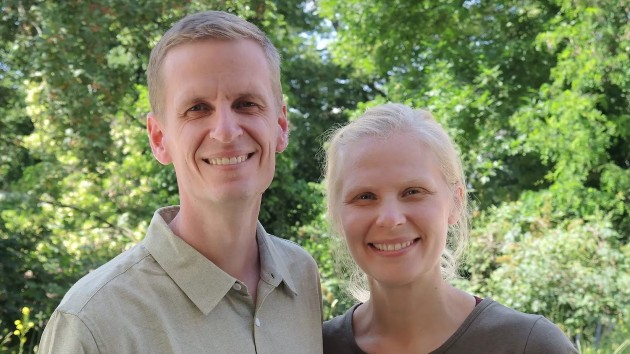
Serge, an international Christian missions organization, has confirmed that American medical missionary Dr. Peter Stafford, his wife, Dr. Rebekah Stafford, and their four children have arrived safely in the United States. (Courtesy of Serge)

(NEW YORK) — The American doctor who contracted Ebola in the Democratic Republic of Congo (DRC) has returned to the United States.

Dr. Peter Stafford; his wife, Dr. Rebekah Stafford; and their four children arrived safely on Monday, according to Serge, the international Christian missionary group that employs the couple.

“I am filled with gratitude to God for preserving my life, to all those who prayed on my behalf, and to the many medical providers who cared for me. I am feeling well and thankful to be reunited with Rebekah and the kids,” Peter Stafford said in a statement. “Our prayers continue for those in Congo who are facing this devastating epidemic and for the ongoing efforts to control the disease.”

Peter Stafford tested positive while working with patients in the DRC and was evacuated to Germany to receive specialty care. He was hospitalized at Charité University Hospital in Berlin.

Rebekah Stafford and their four children were also evacuated to Germany and moved into a separate space at the hospital as high-risk contacts.

The family was discharged from the hospital earlier this month and Peter Stafford has remained Ebola free since May 30, according to Serge. U.S. health authorities are in regular contact with Peter Stafford, Serge said.

“Our hearts remain deeply saddened for our Congolese friends and colleagues and those impacted by this outbreak,” Matt Allison, executive director of Serge, said in a statement. “Our mission is more critical than ever as we mobilize medical support and resources to partners in the area.”

Allison continued, “Thank you to those who have prayed and given sacrificially to this work. Also, we would like to express our immense gratitude to the many international organizations, governments, and partners who cared for the Stafford family and brought them home safely.”

The outbreak was first detected in the DRC’s northeastern province of Ituri, with cases officially confirmed by the health ministry on May 15. It marks the 17th outbreak of Ebola virus disease in the DRC, which is Africa’s second-largest country and its fourth-most populous nation.

Congo’s Health Minister Roger Kamba said during a press briefing on Monday evening that the DRC has now recorded 808 confirmed Ebola cases and 192 deaths. In neighboring Uganda, at least 19 cases — mostly linked to travel — and two deaths have been confirmed, according to the Ugandan health ministry.

Copyright © 2026, ABC Audio. All rights reserved.

WHO says risk of Ebola in World Cup host countries is low

Workers wearing protective visit a patient in an isolation unit an Ebola treatment center on June 2, 2026 in Monigi, Democratic Republic of Congo. (Daniel Buuma/Getty Images)(GENEVA) -- The World Health Organization said on Thursday that the risk of Ebola transmission in Europe and World Cup host countries is low as the tournament gets ready to kick off across the U.S., Canada and Mexico.Dr Hans Henri P. Kluge, WHO's regional director for Europe, said in a statement that there are currently no Ebola cases in North America or Europe amid an outbreak spreading in the Democratic Republic of Congo.The DRC has recorded 676 confirmed cases as of Thursday morning, according to DRC's minister of health. In Uganda, there are 19 confirmed cases -- many of them travel-related -- and two deaths, the country's health officials said.Kluge made reference to an Ebola patient who was treated in the European Region after being evacuated from the outbreak region.An American physician, Dr. Peter Stafford, tested positive for Ebola after being exposed while treating patients at Nyankunde Hospital. Stafford, a medical missionary with the mission organization Serge, was transferred to Germany and treated at Berlin's Charite University Hospital.His wife, Dr. Rebekah Stafford, and their four children were also transferred to the same hospital, where they were monitored in quarantine for 21 days as high-risk contacts.Last week, the family was released from the hospital after Dr. Peter Stafford had no symptoms for more than 72 hours and a negative result in repeated PCR tests, Serge said."There is no reason to change your plans. Travel as normal, stay informed and enjoy the tournament," Kluge said.Kluge said there are several reasons why the risk is low in other countries: most cases are in remote areas of the DRC, Ebola is not an airborne illness and it is spread through direct contact with the bodily fluids of a sick person.Additionally, screening is in place before travel is allowed from affected regions and people are only infectious once visibly ill, according to Kluge.The CDC has temporarily restricted entry to the U.S. for certain travelers who were recently in the DRC, Uganda or South Sudan. Currently, U.S. citizens and nationals may still enter but will undergo enhanced public health screenings.Kludge said the WHO does not recommend travel restrictions, "though if you don't have to travel to the affected areas in the Democratic Republic of the Congo or Uganda, it is safer not to."He added that it's important to challenge the stigma associated with Ebola patients and those from affected regions or African communities."The spread of Ebola is not determined by nationality or ethnicity," he said. "Stigma discourages people from seeking care and can make outbreaks harder to control. Stay informed, rely on trusted sources and treat others with understanding. With common sense and compassion, we can keep both people and the game safe."Copyright © 2026, ABC Audio. All rights reserved.
Read Next Story