
Texas reports state’s 1st human case of West Nile virus this year

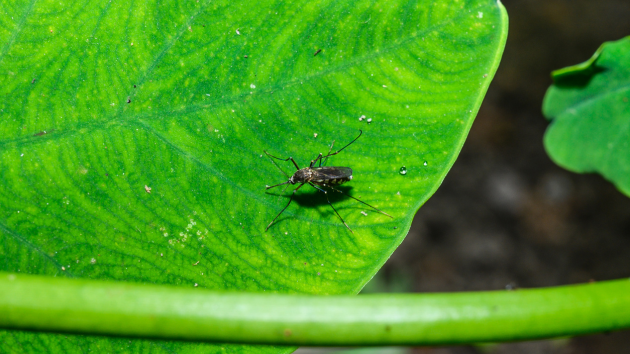
Female Aedes mosquitoes, including the Asian tiger mosquito (Aedes albopictus) and the yellow fever mosquito (Aedes aegypti), are observed feeding on human blood in Tehatta, West Bengal, India, on May 01, 2026. These mosquitoes are known to transmit diseases such as dengue, chikungunya, Zika, yellow fever, and West Nile virus. Rising temperatures are contributing to their survival. (Photo by Soumyabrata Roy/NurPhoto via Getty Images)

(TEXAS) — Texas health officials on Tuesday confirmed the state’s first human West Nile virus case this year, an indication that mosquito season is beginning in the United States. 

Public health officials have been warning that rising temperatures have allowed mosquitoes to thrive, increasing the risk of the diseases that they spread, including West Nile. 

Last year, the U.S. reported 2,076 cases of West Nile across 47 states, according to data from the Centers for Disease Control and Prevention. Colorado had the highest number of cases (285), followed by Illinois, Texas, Minnesota and California.

The Texas Department of State Health Services said the patient was a resident of Harris County, which includes Houston, but no other information about the patient was made available.

“West Nile and other mosquito-borne illnesses are a fact of life in Texas in the warmer months, and all Texans should take precautions against mosquito bites to stay safe and healthy,” Texas DSHS Commissioner Dr. Jennifer A. Shuford said in a press release. “By removing standing water around the home, people can eliminate mosquito breeding grounds and reduce insect populations in their area.”

Since 1999, West Nile virus has killed about 2,900 Americans, according to the CDC. Cases are typically reported between June and October, historically peaking in August.

The virus is spread through the bite of an infected mosquito. Risk increases with older age, certain medical conditions — such as cancer, high blood pressure and kidney disease — and a weakened immune system. 

Symptoms include fever, headache, body aches, vomiting, diarrhea and a rash. Severe illness can affect the central nervous system and result in hospitalization or death, according to the CDC.

There is currently no vaccine that protects against West Nile virus, and preventing mosquito bites is the best way to protect yourself, the CDC says.

No specific treatments are available. Doctors recommend patients rest, drink fluids and take pain medication to help relieve some symptoms. People with severe illness may need to be hospitalized for supportive treatment, according to the CDC.

The CDC says most people infected with West Nile virus are believed to have lifelong immunity. However, some with weakened immune systems or certain conditions may have their immunity wane over time. 

Copyright © 2026, ABC Audio. All rights reserved.

Stag shot dead in Richmond Park after picnic attack, as officials warn against feeding deer

(CNN) — A stag at one of London’s royal parks has been shot dead by a wildlife officer after injuring a man who was having a picnic, as park authorities warn against feeding the animals.The Royal Parks charity, which manages Richmond Park, where the incident took place over the weekend, warned that human behavior is endangering the lives of the deer who have resided there for centuries.The charity, which manages several parks and green spaces in London, including Hyde Park, Green Park and Regent’s Park, said the man was injured “after the stag approached his picnic group looking for food.” The man’s injuries weren’t life-changing or life-threatening, police said.“Sadly, the stag’s behaviour meant that it had to be put down as it was deemed to be a danger to visitors,” Royal Parks said in a statement on Instagram. “We suspect that this particular stag may have learnt to associate visitors with food. If visitors follow our advice and do not feed or interfere with the deer, it is highly unlikely that they will exhibit this type of behaviour.”A spokeswoman for the Royal Parks confirmed to CNN that the stag was shot dead by one of the charity’s wildlife officers.The Metropolitan Police said officers were called to the scene by the London Ambulance Service (LAS) just before 6:30 p.m. (1:30 p.m. ET) on Saturday.“Officers attended alongside LAS and found a man, aged in his 60s, with wounds to his chest,” the Met Police said in an email to CNN. “The man was taken to hospital where his injuries were assessed as non-life-changing or life-threatening.”‘Dangerous’ behaviorThe Royal Parks said it was “shocked and alarmed” to see images and videos of people feeding the deer in nearby Bushy Park, which the charity also manages, since the weekend.“This is highly dangerous behaviour,” the statement continued. “Deer in Bushy Park and Richmond Park are wild animals and should never be fed, approached or touched. Repeated feeding can cause deer to lose their natural wariness of people and seek out food from visitors, creating risks for both people and wildlife. Getting this close, and offering food, puts people at real risk of serious injury.”The history of Richmond Park’s wild red and fallow deer is a long one. Charles I brought his court to nearby Richmond Palace in 1625 to escape the plague in London. He transformed the landscape into a hunting park, introducing the animals in 1637.Visitors are explicitly warned with clearly marked signs not to feed the 630-strong herd and keep well away from the animals. The same applies to Bushy Park, which is home to 320 deer. The two parks cover 3,600 acres (5.6 square miles) between them.Visitors are advised to keep at least 50 meters (164 feet) away from the deer, never feed or touch them and if one approaches you to put food and packaging out of sight and move away slowly and calmly.Visitors have been asked to report anyone putting themselves or the animals at risk to police.The-CNN-Wire™ & © 2026 Cable News Network, Inc., a Warner Bros. Discovery Company. All rights reserved.
Read Next Story