
Takeaways from Fed Chair Jerome Powell’s tenure as he steps down

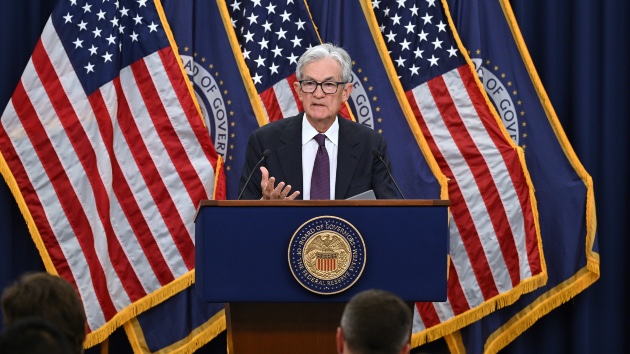
U.S. Federal Reserve Chair Jerome Powell attends a press conference in Washington, D.C., the United States, April 29, 2026. (Photo by Li Rui/Xinhua via Getty Images)

(NEW YORK) — A global pandemic that put millions of Americans out of work within days. The highest inflation in four decades. An unprecedented federal criminal investigation.

Fed Chair Jerome Powell faced a succession of crises over his 8-year tenure atop the central bank, which ends on Friday. Powell’s decisions along the way held stakes as concrete as the budgets of everyday Americans and as heady as the political independence of a pillar institution.

President Donald Trump’s Fed Chair nominee Kevin Warsh is set to take the helm, inheriting a resilient economy by some measures, though one suffering from a renewed bout of inflation.

Powell said last month that he would take the unusual step of staying on at the central bank’s 12-person board of governors after his term expires. The move grants Powell a role in interest-rate policy that could last until 2028, though he says he will step down once a Fed inspector general’s investigation into a renovation of the central bank headquarters is closed.

The transition offers an opportunity to look back at Powell’s tenure, which spanned two presidents, three Treasury secretaries and 66 interest-rate decisions.

“You don’t choose your challenges, but you do choose how you respond,” Claudia Sahm, chief economist at New Century Advisors and a former Fed official, told ABC News. “In the end, Powell’s legacy will be judged by those outcomes.”

When Trump nominated Powell to become Fed chair, Trump described him as a “consensus builder” who “understands what it takes for our economy to grow.”

Powell, a former investment banker and Treasury official under President George H.W. Bush, assumed the role in 2018. At the time, the economy was humming, the unemployment rate clocked in at a historically low level and inflation stood just a tick above the Fed’s target rate of 2%.

Powell hiked interest rates four times in his first year, putting strain on the stock market but leaving the Fed in position to stimulate the economy with rate cuts in the event of a slowdown. Policymakers wouldn’t have to wait long.

In the early months of 2020, the COVID-19 pandemic put tens of millions of Americans into lockdown, halting business across industries like restaurants and hospitality, while putting a large swathe of the labor force out of work.

At an emergency meeting in March 2020, Powell slashed interest rates to near-zero levels in an effort to stimulate a battered economy.

“Families, businesses, schools, organizations, and governments at all levels are taking steps to protect people’s health. These measures, which are essential for containing the outbreak, will nonetheless understandably take a toll on economic activity in the near term,” Powell told reporters at the time.

The unemployment rate soared from 4.4% in March to 14.7% in April, U.S. Bureau of Labor Statistics data showed.

To supercharge the recovery, Trump and President Joe Biden enacted economic stimulus meant to support people who’d lost their jobs or faced other hardship. Alongside low interest rates, that spending helped bring about a speedy economic recovery from the downturn.

The COVID-19 recession lasted only two months, making it the shortest in U.S. history, according to the National Bureau of Economic Research.

The speedy recovery vindicated the Fed’s decision to slash interest rates, though it hadn’t been a particularly difficult choice, Alan Blinder, a professor of economics at Princeton University and former vice chairman of the Federal Reserve, told ABC News.

“The dropping of rates to the floor was both necessary and appropriate, and in a real sense, obvious,” Blinder said.

A bout of acute inflation soon took hold, however, emerging as a result of a supply shortage imposed by the COVID-19 pandemic and exacerbated by the Russia-Ukraine war. Powell initially downplayed the price increases, describing them as “transitory.” It proved a consequential mistake — and Powell would later admit his error.

Annual inflation peaked at a 40-year high of 9.1% in June 2022. By then, Powell had begun to ratchet up interest rates and it would continue over the following year. The aggressive series of rate hikes put the central bank’s benchmark rate at its highest level since 2001. The move sent mortgage and credit card rates soaring.

By June 2023, annual inflation had plummeted to 3%, but Americans remained widely dissatisfied with price increases long afterward. Many economists forecast a recession and the type of job losses it typically entails. Fortunately, the downturn never came to pass.

“Inflation stayed high for too long but once it came down, it came down really fast. It came down without creating unnecessary pain in the labor market,” Wendy Edelberg, director of the Hamilton Project and senior fellow in economic studies at the Brookings Institution, told ABC News.

In September 2024, less than two months before the presidential election, the Fed cut interest rates by 0.5%. The decision drew criticism from allies of Trump, who considered the move a potential boost for the economy that would benefit incumbent Democrats. Trump went on to win the election.

Within weeks of his return to the White House, in early 2025, Trump voiced public criticism of Powell, urging him to cut interest rates. The attacks intensified criticism of Powell that had begun in Trump’s first term.

Over the ensuing months, Trump began to slam Powell for cost overruns in a renovation project at the Fed’s headquarters in Washington, D.C. Last July, Trump made the first official trip to the Fed by a sitting president in almost 20 years, donning a hard hat as he toured the renovation with Powell.

The Fed attributed spending overruns to unforeseen cost increases, saying that its building renovation would ultimately “reduce costs over time by allowing the Board to consolidate most of its operations,” according to the central bank’s website.

By January, the Department of Justice had opened a criminal investigation into Powell, ratcheting up an extraordinary clash between the White House and the Fed. It was the first criminal probe of a Fed chair in the 113-year history of the central bank.

The probe centered on Powell’s testimony to Congress last year about the cost overruns. Powell issued a rare video message rebuking the investigation as a politically motivated effort to influence the Fed’s interest rate policy.

“No one — certainly not the chair of the Federal Reserve — is above the law,” Powell said. “But this unprecedented action should be seen in the broader context of the administration’s threats and ongoing pressure.”

Trump previously denied any involvement in the criminal investigation. The DOJ moved to drop its criminal probe into Powell last month. Washington U.S. Attorney Jeaninne Pirro said the investigation into the office renovation would be taken up by the Fed’s inspector general.

“The attack on the Fed chair was appalling,” Rebel Cole, a professor of finance at Florida Atlantic University who formerly worked at the Federal Reserve, told ABC News. “Powell stood up to it.”

Warsh, a former Fed official, will serve a 4-year term as chair. He is set to lead the Fed in a challenging period for central bank policymakers.

Inflation rose for a second consecutive month as the U.S.-Israeli war with Iran continued to send gasoline prices surging in April, government data on Tuesday showed. Annual inflation jumped to its highest level in three years, according to the U.S. Bureau of Labor Statistics.

Despite the disruption, some measures of economic health have proven resilient.

The unemployment rate held steady at a historically low level of 4.3% in April, leaving it little changed from when Powell began his tenure in 2018.

“The economy is pretty good but far from perfect,” Blinder said, faulting Powell in part for elevated inflation, while attributing much of the blame to the Iran war. At the same time, Blinder praised Powell for his commitment to the independence of the Fed.

“That’s the legacy that Warsh is inheriting,” Blinder said.

Copyright © 2026, ABC Audio. All rights reserved.

Las decisiones que cambian la vida de las familias inmigrantes ante la ofensiva de Trump

Una conmoción silenciosa se desarrolla en hogares, escuelas, iglesias y lugares de trabajo de todo Estados Unidos, mientras las familias intentan prepararse para —o evitar— un encuentro con las autoridades migratorias.Algunas han abandonado Estados Unidos tras décadas de construir su vida aquí. Otras han considerado dar a su hijo aún no nacido en adopción para que el bebé pueda, quizás, tener un futuro mejor.Hay padres que designan tutores para sus hijos en caso de ser detenidos o deportados, mientras que otros han dejado de trabajar, de hacer la compra o incluso de salir de casa, dependiendo en su lugar de vecinos e iglesias.Las decisiones son profundamente personales. Algunas son irreversibles.Emma Confesor estaba embarazada de su cuarto hijo cuando una pregunta que nunca había imaginado empezó a quitarle el sueño: ¿tendría su bebé un futuro mejor si lo criara otra persona?Confesor, de 39 años, emigró desde Puebla (México) hace más de dos décadas. Sin embargo, la incertidumbre en torno a los intentos del presidente Donald Trump de acabar con la ciudadanía por derecho de nacimiento la llevó a considerar dar a su hijo aún no nacido en adopción.“No me parecía justo que el bebé no tuviera la ciudadanía”, dijo Confesor entre lágrimas. “Había considerado la adopción para que el bebé pudiera tener un futuro mejor”.Durante semanas, esa posibilidad la obsesionó. Confesó que le costaba dormir por miedo a que a su hijo se le negara el futuro que ella creía que debía tener todo bebé nacido en Estados Unidos.Confesor no era la única.En una demanda de la Unión Americana de Libertades Civiles (ACLU, por sus siglas en inglés) contra el decreto de Trump, otra mujer embarazada relató que llegó a estar tan desesperada por garantizar que su hijo naciera ciudadano estadounidense que preguntó a su médico si se podía inducir el parto antes de tiempo para que el niño llegara antes de que la medida entrara en vigor. Su médico le aconsejó no hacerlo.Entonces llegó la decisión que lo cambió todo.El 30 de junio, la Corte Suprema dictaminó que la 14° Enmienda garantiza la ciudadanía por derecho de nacimiento, rechazando así el intento del Gobierno de poner fin a la ciudadanía automática para los hijos nacidos en suelo estadounidense de padres que no son ciudadanos.Para Confesor, el miedo que había marcado su embarazo empezó a disiparse.“Me siento aliviada”, afirmó. “No dejaba de pensar: ‘No es justo’. No dormía bien porque me preocupaba que esto pudiera afectarme. No solo a mí, sino a tantas madres que van a tener a sus bebés aquí”.Mientras Confesor temía por el futuro de su bebé, otros padres se preparaban ante la posibilidad de no estar presentes para criar a sus hijos, quienes nacieron como ciudadanos estadounidenses.En Maryland, una madre salvadoreña firmó documentos legales para designar al padre Vidal Rivas, sacerdote de su iglesia local, como tutor temporal de su hijo de 7 años en caso de que ella y su esposo fueran deportados.“No es fácil firmar un documento en el que sientes que estás entregando a tu hijo a otra persona”, dijo entre lágrimas a Univision, cadena afiliada a CNN.La incertidumbre, comentó, le había pasado factura.“No dejo de darle vueltas al asunto… Siento que mi salud se ha deteriorado porque simplemente no sabes qué va a pasar”, dijo. “Sinceramente, me he quedado en casa, rezando para que se haga la voluntad de Dios”.Ella forma parte de un número creciente de padres inmigrantes que elaboran planes de contingencia por si llegan a ser detenidos o deportados.Muchas familias ya se han visto obligadas a separarse. Una investigación de CNN publicada en septiembre del año pasado reveló que más de 100 niños ciudadanos estadounidenses —desde recién nacidos hasta adolescentes— habían quedado sin sus padres tras operaciones de control migratorio. Algunos fueron acogidos por familiares, vecinos o amigos de la familia; otros pasaron al sistema de acogida temporal.En la Iglesia Episcopal de San Mateo (St. Matthew’s Episcopal Church) en Hyattsville, Maryland, Rivas ha sido designado tutor legal suplente de al menos 31 niños cuyos padres temen ser detenidos o deportados.“Muchos de estos padres no tienen otros familiares en el país”, dijo Rivas. “Algunos quieren que sus hijos se queden aquí. Yo asumiría la responsabilidad legal de ellos para que puedan seguir asistiendo a la escuela y tener lo que necesitan. Otros padres esperan que sus hijos puedan terminar la secundaria antes de ser enviados a reunirse con ellos”.Rivas afirmó que actuará como tutor durante el tiempo que las familias lo necesiten. “Es realmente como si fueran tus propios hijos”, comentó.Para otros, marcharse se ha convertido en la única opción que todavía sienten como propia.Abdiel y Adilene Domínguez habían construido casi toda su vida en Minnesota. Abdiel llegó desde México a los seis años y Adilene cuando era una bebé; ambos estaban protegidos por el programa de Acción Diferida para los Llegados en la Infancia (DACA, por sus siglas en inglés), que otorga a ciertos inmigrantes traídos a EE.UU. cuando eran niños una protección temporal contra la deportación y autorización para trabajar, aunque no un estatus legal permanente.Se casaron, criaron a cuatro hijos, compraron una casa y fundaron una iglesia en Minneapolis.Sin embargo, a medida que se intensificaban las medidas de control migratorio, declararon a CNN que sentían miedo de ir a las tiendas o enviar a sus hijos a la escuela. Abdiel también comentó que le habían informado que su licencia de conducir comercial sería cancelada.En lugar de esperar a ver qué sucedía, vendieron su casa, sus vehículos y sus pertenencias, y se marcharon a México.Siete meses después, vivían con la madre de Abdiel en Morelos, donde los niños tenían dificultades con el español y con la inscripción escolar, mientras sus padres intentaban adaptarse a un país que ya no les resultaba familiar.“No sé nada sobre México”, dijo Adilene a la CNN. “Todo lo que conozco es Minnesota. Estoy en estado de shock”.Los Domínguez se marcharon por su cuenta, sin recurrir a ningún programa federal. No obstante, la presión que describieron refleja una estrategia más amplia del Gobierno de Trump para incentivar a los inmigrantes a marcharse voluntariamente.El proyecto “Homecoming”, una iniciativa dotada con US$ 915 millones, ofrece vuelos gratuitos y ayudas económicas de hasta US$ 2.600 a los inmigrantes que deciden marcharse a través de la aplicación CBP Home. Un documento interno del Departamento de Seguridad Nacional (DHS) revisado por CNN en marzo reveló que cerca de 72.000 personas habían salido del país a través del programa; más de la mitad ya se encontraba bajo custodia del Servicio de Inmigración y Control de Aduanas (ICE) al momento de inscribirse.Asimismo, en lo que va del año fiscal, más de 72.000 casos en los tribunales de inmigración concluyeron con una salida voluntaria, frente a los más de 35.000 registrados el año anterior.Estas consecuencias también están transformando la vida de los ciudadanos estadounidenses que forman parte de familias de estatus migratorio mixto.En Pittsburgh, CNN acompañó a Julio Mendoza —un inmigrante mexicano indocumentado que residía en Estados Unidos desde los 11 años— mientras se preparaba para marcharse junto a su esposa estadounidense, Sasha, y sus tres hijos nacidos en el país.Sasha comentó que temían que Julio fuera detenido un día y simplemente no regresara a casa. Para evitar ese riesgo, toda la familia decidió trasladarse junta a México.“Todo lo que hacemos, lo hacemos juntos”, declaró Julio a CNN.Para las familias que deciden quedarse, la alteración de sus vidas suele manifestarse de forma silenciosa, a través de las rutinas que comienzan a abandonar.En todo el país, los inmigrantes han dejado de asistir al trabajo, han retirado a sus hijos de la escuela y evitan acudir a tiendas, iglesias y otros lugares que antes eran ejes fundamentales de su vida cotidiana.Jacobita Cortés, pastora metodista unida en Chicago, señaló que el miedo ha modificado la dinámica de su comunidad. “Tienen miedo de ir a la tienda, al supermercado”, dijo Cortés a CNN. “¿Adónde va nuestra gente? A los supermercados donde compran las tortillas y la carne; a la iglesia donde van a dar gracias a Dios”.Algunas iglesias, señaló, han trasladado sus servicios a internet, mientras las congregaciones ayudan a las familias que temen salir de casa a hacer la compra o a organizar la recogida de los niños en la escuela mediante vecinos y voluntarios.“Si alguien necesita que otra persona haga las compras, solo tiene que levantar el teléfono y llamar”, dijo Cortés. Para los padres que sienten miedo, añadió, el consejo es “buscar a alguien que pueda ayudar, un vecino o alguien que pueda recoger a los niños de la escuela”.Este mismo patrón se ha observado en otros lugares. En Minneapolis y Nueva Orleans, CNN constató cómo tiendas y restaurantes, habitualmente concurridos, quedaban desiertos durante los operativos federales de inmigración, ya que algunos inmigrantes evitaban ir a trabajar y los padres no llevaban a sus hijos a la escuela.En el barrio de Little Haiti, en Brooklyn, las calles y los negocios —normalmente muy animados— han quedado en silencio después de que la administración Trump pusiera fin al Estatus de Protección Temporal para los haitianos.Los líderes comunitarios también advirtieron sobre las repercusiones en hospitales, residencias de ancianos y servicios de atención médica a domicilio, sectores donde trabajan muchos inmigrantes llegados de Haití.Para algunos, el miedo ya no se limita a la posibilidad de ser deportados; está transformando lo que significa vivir en Estados Unidos.The-CNN-Wire™ & © 2026 Cable News Network, Inc., a Warner Bros. Discovery Company. All rights reserved.
Read Next Story