
Court dismisses Elon Musk’s case against Sam Altman and OpenAI

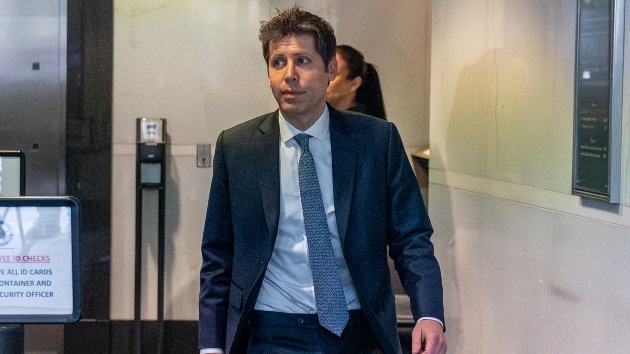
OpenAI CEO Sam Altman arrives to court at the Ronald V. Dellums Federal Building on May 12, 2026 in Oakland, California. (Photo by Benjamin Fanjoy/Getty Images)

(NEW YORK) — A jury on Monday found that Elon Musk waited too long to bring claims accusing OpenAI, under Sam Altman’s leadership, of abandoning its public-benefit mission as it moved toward a for-profit structure.

The nine-person advisory jury determined that the claims against OpenAI and Altman were barred due to the statute of limitations. Judge Yvonne Gonzalez Rogers accepted the determination and dismissed the claims.

The three-week trial at a federal courthouse in Oakland, California, featured testimony from Musk and Altman, as well as Microsoft CEO Satya Nadella.

When Musk sued OpenAI and Altman two years ago, he claimed that the company abandoned its mission of benefiting humanity.

Musk, a co-founder of OpenAI, said he reached an agreement with the company’s leaders on the nonprofit course of the firm when it launched in 2015.

Musk accused the company of later breaching agreement when it made ChatGPT-4 available for use by Microsoft — meaning the tech giant got access to the then-most powerful version of its popular chatbot under an exclusive licensing agreement. Microsoft and OpenAI have renegotiated the exclusive licensing agreement, allowing OpenAI to strike deals with other tech firms.

OpenAI rebuked the charges, calling them “baseless.” Microsoft also denied any wrongdoing. Musk, the world’s richest person, counts $803 billion in wealth, according to Forbes. He was seeking $150 billion in damages from the tech companies, as well as the removal of Altman from OpenAI’s board of directors.

Musk also sought a legal order that requires OpenAI to abide by its alleged founding mission of aiding humanity and retaining its nonprofit form

OpenAI, which is not publicly traded, valued itself at $852 billion after a round of funding in March. Microsoft’s value — as measured by market capitalization — stands at about $3.1 trillion.

Musk pleaded two claims against OpenAI: unjust enrichment and breach of charitable trust.

Lawyers for Altman argued that Musk was motivated by a pursuit of control over OpenAI, rather than an effort to safeguard its non-profit status. In fact, Musk sought to fold OpenAI into Tesla — a move that would have absorbed the venture into a for-profit entity, lawyers for Altman said in a legal filing.

In 2018, Musk told a former OpenAI employee that financial support from Tesla would help OpenAI compete with tech giant Google, the filing said.

“Tesla [was] the only path that could even hope to hold a candle to Google,” Musk said, according to the legal filing.

For his part, Musk said in the lawsuit that the agreement on OpenAI’s non-profit status was memorialized in a legal filing when OpenAI was incorporated.

In the lawsuit, Musk alleged that Altman and OpenAI President Greg Brockman reaffirmed the founding agreement in written messages over the ensuing years.

“[I] remain enthusiastic about the non-profit structure!” Altman wrote to Musk in 2017, according to the lawsuit.

Musk, who helped bankroll OpenAI, launched a rival for-profit AI company in 2023 called xAI, which built a chatbot that competes with ChatGPT.

Acknowledging his previous criticism of the pace and ambitions of AI development, Musk said in a conference call on X in July 2023 that he entered the industry reluctantly.

Copyright © 2026, ABC Audio. All rights reserved.

Watch Live: Trump signs order on vaccination recommendations

▶ Watch Video: CBS News Live 2 Washington — President Trump signed an executive order on Monday laying out new recommendations for childhood vaccinations, saying that while "we do not know" exactly what the cause of autism is, it is "essential" to have the "best vaccine recommendations in the entire world." A draft of the order, which was obtained by CBS News before the president signed it, said there should be a more limited number of vaccines recommended for children. It directed the Health and Human Services Department to reassess vaccine sequencing and timing within 90 days. The draft order CBS News reviewed didn't mention autism, but the president did — repeatedly.  As he prepared to sign the order, Mr. Trump said, "Today, we're proud to officially announce the United States of America's Gold Standard Childhood Vaccination Recommendations and that has to do with many subjects but including autism in particular," said the president. "Decades ago, children received only a small fraction of the vaccines required today," the president said. "In those times, people were much healthier and of course, the high rates of autism now observed did not exist. So, there's a reason for such epidemic rates of autism. And we're going to bring it back to much closer to where it was.""While we do not know exactly what the cause is with respect to autism, it is essential to our research efforts that we have the very best vaccine recommendations in the entire world," he continued. "So we're reducing them, we're changing it to visits over the period of a year, a year and a half, so they get 20% of what they would have gotten in one big shot." The president cited no evidence for his claims. Research has found no evidence of increased rates of autism among those who are vaccinated compared to those who are not. Vaccines also undergo intensive safety testing. Research shows that genetics play a role in autism diagnoses. The NIH says some possible risk factors for autism include prenatal exposure to pesticides or air pollution, extreme prematurity or low birth weight, certain maternal health conditions, or parents conceiving at an older age. HHS Secretary Robert F. Kennedy, Jr., said next month, the federal government's Advanced Research Projects Agency for Health is "preparing a major new initiative focused on foundational causes and biology of autism.""We will examine every biologically plausible hypothesis and leave no legitimate, scientific question unexplored," Kennedy said. "Mr. President, you have told us you want answers, so do I. We have just over two years to finish the work and I know you're impatient. And we are moving with an urgency that that deadline demands. We will bring you actions and findings as soon as they are read." The president said the announcement is a "major victory" for parents and constitutional rights. While the CDC advises states on policy, states set policies for school immunization schedules.  The draft order also encouraged single-dose vaccines, rather than combination shots, saying, "to the maximum extent feasible, all childhood immunizations should be administered at separate medical visits." For instance, it recommends breaking the MMR vaccine into three shots. The order puts some vaccines, like RSV and hepatitis A and B, in a category of shots only for high-risk children. It comes after the Centers for Disease Control and Prevention in January recommended reducing the number of childhood vaccinations for 11 diseases. The American Academy of Pediatrics broke with the CDC and continued to recommend vaccination against 18 childhood diseases. In March, a federal judge blocked the CDC's recommended changes to the childhood vaccine schedule.The draft order cited recent efforts to align the vaccine schedule with what it calls "best practices" from peer nations, along with protecting religious liberty and parental authority. But it acknowledges  that litigation has resulted in delayed implementation of that push, leading the administration to pursue additional measures. "In many cases, we were requiring 72 jabs for our beautiful, healthy, lovely, delicate little children," the president said. The American Academy of Pediatrics pointed out that so-called "peer nations" have different vaccination needs, and best practices vary. It said vaccine guidance may differ across countries because they face threats from different diseases, population demographics, health care systems and vaccine availability.Dr. Jay Bhattacharya, director of the National Institutes of Health, was asked about plans for the executive order Sunday on CBS News' "Face the Nation with Margaret Brennan.""I think that parents, for most kids, especially for the measles vaccines, the DTP, all the standard childhood vaccines, it's very important that parents vaccinate their kids," Bhattacharya said."I trust the science" on childhood vaccines, Bhattacharya added, and noted that he has vaccinated his own children.The executive order comes as measles cases have risen to their highest levels in 35 years. Bhattacharya, who's also been serving as acting CDC director in recent months, acknowledged that the U.S. may lose its measles elimination status, while pointing to other countries that have recently lost their status.
Read Next Story