
College students’ killings latest case to rely on ChatGPT as evidence

▶ Watch Video: Florida investigates OpenAI over ChatGPT’s alleged role in college shooting

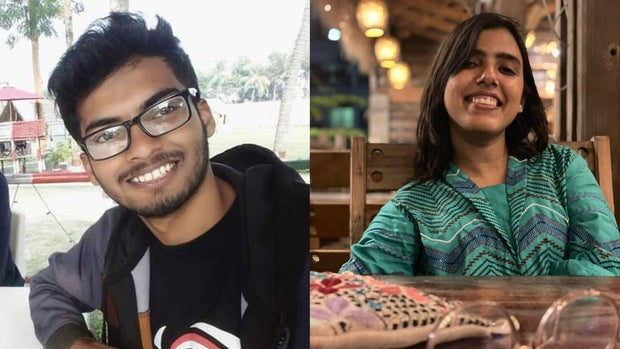
The brutal killings of University of South Florida graduate students Nahida Bristy and Zamil Limon, allegedly plotted in part using ChatGPT, is the latest example of a suspect using an artificial intelligence tool as research prior to committing a crime.

Hisham Abugharbieh, 26, the roommate of Limon, was arrested over the weekend and charged with two counts of premeditated murder. Limon’s body was found on the Howard Frankland Bridge in St. Petersburg. Human remains were found Monday in the search for Bristy, but they have not been officially identified. Bristy’s family told CBS News that police said she is also likely dead.

Abugharbieh allegedly used ChatGPT extensively in the days leading up to the crime, according to court documents released Sunday. Among the questions he allegedly asked in the days leading up to the pair’s disappearance was how to dispose of a body.

Among those questions, on April 13: What would happen if someone was “put in a black garbage bag and thrown in dumpster.” The AI chatbot responded that it sounded dangerous, prompting Abugharbieh to allegedly ask, “How would they find out.”
zamil-limon-nahida-bristy-usf-split.jpg
Zamil Limon and Nahida Bristy, both 27, were last seen in the Tampa area on April 16, the University of South Florida Police Department said.

Families of Zamil Limon and Nahida Bristy

On April 15, the day before the doctoral students went missing, Abugharbieh allegedly asked ChatGPT, “Can a VIN number on a car be changed?” and, “Can you keep a gun at home with out a license,” according to court documents. On the same night his phone pinged near the location where Limon’s body was found, the suspect asked ChatGPT if cars are “checked at the Hillsborough River state park.”

A spokesperson for OpenAI, the developers of ChatGPT, said in a statement to CBS News: “This is a terrible crime, and our thoughts are with everyone affected. We’re looking into these reports and will do whatever we can to support law enforcement in their investigation.”

Abugharbieh was held without bond following an initial court appearance on Tuesday. He has yet to enter a plea.

Florida opens investigation into ChatGPT

Florida Attorney General James Uthmeier announced last week that his office had launched a criminal investigation into OpenAI after reviewing conversation logs between ChatGPT and a Florida State University student who opened fire on the campus in April 2025. The shooting killed two people and left several others injured. 

“My prosecutors have looked at this and they’ve told me if it was a person on the other end of that screen, we would be charging them with murder,” Uthmeier said during a news conference on April 21, saying the AI tool offered “significant advice” to suspect Phoenix Ikner.

An OpenAI spokesperson said the company identified an account believed to be associated with Ikner and shared it with law enforcement. The company added ChatGPT “did not encourage or promote illegal or harmful activity” and the bot provided responses to questions with information found in public sources on the internet. 

“Last year’s mass shooting at Florida State University was a tragedy, but ChatGPT is not responsible for this terrible crime,” OpenAI said in its statement.

Dr. Jill Schiefelbein, an AI strategist and professor at the Muma College of Business at the University of South Florida, said if politics are taken out of it, the investigation could lead to solutions on issues such as what is a reasonable time for a technology to report someone who violates their terms and conditions. 

“I wouldn’t blame the technology any more than I would blame a vehicle that gets into an accident by a human driver,” she told CBS News. “It’s how these tools are used, whether it’s a firearm, whether it’s a vehicle, whether it’s a tool that helps you retrieve information, it’s the user intent behind it that’s the issue.”

“Does that mean I believe that there shouldn’t be stricter guardrails in place? Absolutely not,” she said.

While OpenAI rejected any responsibility for the Florida State University shooting, the company has not been silent on all crimes involving the AI tool.

Sam Altman, the CEO of OpenAI, issued an apology last week to a community in British Columbia where eight people were killed by a teen who had previously exhibited concerning behavior on ChatGPT. Jesse Van Rootselaar, 18, allegedly opened fire on Feb. 10 at Tumbler Ridge Secondary School, killing a teacher and five students, before dying from a self-inflicted gunshot, police said. Van Rootselaar had earlier killed her mother and 11-year-old half-brother at their home.

“The pain your community has endured is unimaginable,” Altman wrote in a letter shared on social media by British Columbia Premier David Eby. “I have been thinking of you often over the past few months.”
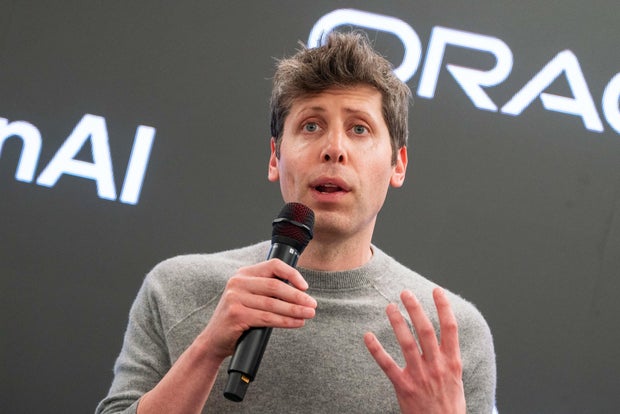
OpenAI CEO Sam Altman
OpenAI CEO Sam Altman attends the 12th annual Breakthrough Prize Awards in Santa Monica, California, on April 18, 2026.

Tayfun Coskun/Anadolu via Getty Images

Altman wrote in the letter, dated April 23, that Van Rootselaar’s ChatGPT account had been banned in June 2025. The account was flagged by automated abuse detection tools and human investigators who identify potential misuses of ChatGPT for violent activities, OpenAI told CBS News in February. OpenAI said the account was then banned for violating its usage policies. 

OpenAI said the company had weighed whether to flag the account to law enforcement, but had determined at the time it did not pose an imminent and credible risk of serious physical harm to others, so it failed to meet the threshold for referral.

Altman wrote in his letter that OpenAI will remain focused on preventative efforts “to help ensure something like this never happens again.”

“I want to express my deepest condolences to the entire community,” he said. “No one should ever have to endure a tragedy like this.”

Doctor convicted of attempted manslaughter of his wife wants a new trial, saying jurors may have been confused

(CNN) — Along the steep Pali Puka trail last spring, the verdant beauty of Oahu spilled out to the Pacific Ocean from the scenic path where Gerhardt and Arielle Konig stood. On that high ridge, they fought for their lives – emotionally, then physically – each later would testify.A trip intended to celebrate Arielle’s birthday – and maybe salvage their troubled marriage – ended with the couple, who share two young children, on the ground attacking each other. He bashed her in the face with a rock. She bit him and squeezed his testicles.Who started the melee became the question at the heart of an attempted second-degree murder charge filed against Gerhardt Konig.Prosecutors said the defendant wanted to kill his spouse and tried to push her off the cliff. But after an emotional, 10-day trial a year later that saw husband, wife and one of Gerhardt Konig’s children from a prior marriage on the stand, the jury found him guilty of the lesser charge of attempted manslaughter.At Konig’s request, a judge on Friday heard arguments on whether a new jury should hear the case because of what two jurors in news interviews revealed soon after issuing the verdict that could send Konig to prison for up to 20 years, along with concern one juror may have communicated about the case outside the jury room during deliberations.“Jury irregularities call into serious question the integrity of this verdict,” defense attorney Thomas Otake wrote in an appeal filed in May.At Friday’s hearing, Judge Paul Wong said the court would question jurors about any outside communications during deliberations before deciding whether to grant a new trial. The court will revisit the matter on September 11.“The court must ascertain the extent of the influence,” Wong said.Whether defendant intended to kill is at issueFinding insufficient evidence to convict Konig of attempted murder, the jury found him guilty of attempted manslaughter, with his actions – even if extremely dangerous – motivated by “extreme mental or emotional disturbance.”Ruling out an attempted murder charge was a relief to Konig’s legal team and left open the possibility Konig could be sentenced to probation, with no jail time at all.“We are thankful that they did not convict him of attempted murder, which would have been life in prison,” Otake told reporters shortly after the verdict was announced.Still, the defense attorney immediately promised an appeal based on unspecified concerns about the judge’s rulings during the trial. When his motion dropped a month later, however, it wasn’t the judge Otake took issue with:The request for a new trial was based on what jurors said after the verdict.“Somebody was definitely hurt; it was a bodily injury to the head that could result in serious bodily injury,” foreperson Makalapua Atkins told CNN affiliate East Idaho News about jurors’ state of mind in deliberations.“The intent to kill is improbable to us based on the evidence presented,” Atkins said in an interview after the verdict with True Crime AZ, adding, “The only people who know what happened on that cliff are the two that were involved.”But under Hawaii law, Konig’s defense team has argued, even a conviction for attempted manslaughter would require the jury to find the defendant was trying to kill the victim – and the foreperson said they didn’t.“The jury did not unanimously believe that Dr. Konig had an intent to kill his wife,” Atkins confirmed in a sworn statement to the defense attorney accompanying his appeal. Prosecutors also asked Atkins to sit down with them for an interview, but she declined, their response to the request for appeal states. CNN could not reach Atkins for comment.Another juror, identified publicly only as Juror #3, also said he had not been convinced Gerhardt Konig intended to take Arielle’s life that day.“I don’t know if he was trying to kill his wife, personally,” he told Honolulu TV station KHON in an on-camera interview. “I do know that it was the capacity to kill his wife, personally. That how I felt about it.”If jurors didn’t understand what was required for conviction, Konig’s attorneys argued, it opens the door to a new trial.“Conduct that could result in death or has the capacity to kill may be reckless, but it is not necessarily intentional, and Hawaiʻi does not recognize attempted reckless manslaughter,” Konig’s defense attorneys said, with the emphasis, in a court filing.Did the jury understand the law?“The jurors’ public remarks raise a serious concern that the verdict may rest upon findings inconsistent with the convicted offense,” Konig’s defense attorneys said in a motion for a new trial.The judge’s instructions – 33 in all – were a lot to digest. They laid out a menu of five possible charges – from second-degree attempted murder to third-degree assault – explaining the order in which they had to be considered and steps to evaluating each.“If and only if you unanimously find that all the elements of Attempted Murder in the Second Degree have been proven by the prosecution beyond a reasonable doubt, and you unanimously find that the defendant was not acting in Self-Defense, then you must consider the affirmative defense of Extreme Mental or Emotional Disturbance,” one instruction states.In their response to Konig’s request for a new trial, prosecutors did not try to rebut the claim jurors were confused, instead saying it doesn’t matter. The “internal thought process” of the jury, even when revealed voluntarily by jurors, should not be reconsidered by the court after a verdict, prosecutor Joel Garner stated.“Jurors can change their mind, but what matters is whether the verdict was unanimous at the time it was rendered,” the prosecution wrote. “In this case it was, even according to the on-the-record statements of the foreperson – and therefore a later declaration disagreeing with the verdicts is not a sufficient basis to grant a motion for a new trial.”Juror may have revealed their discussions during deliberationKonig’s defense also raises another concern about the jury: that one member may have been communicating about the case to an outsider while deliberations were still underway.“I’ve been texting with one of the juror’s (sic) and they’re going for count 3 attempted manslaughter,” says a message posted to the live chat of trial coverage by the Law&Crime Network.The comment was first spotted by someone – whose name is redacted in the court filing – and emailed to prosecutors, who alerted the judge.“What caught my attention is that this commenter specifically predicted the verdict – that Konig would be convicted of attempted manslaughter – before it was announced,” the person wrote in the email.Whether it was legitimate or a hoax has not been proven, but Konig’s defense attorneys say the fact that it correctly foreshadowed the verdict should give it credibility.“Although the full scope of any such communication remains unknown, these circumstances raise substantial concerns regarding the jury’s exposure to outside influence or extraneous information during deliberations,” the defense team wrote.Prosecutors say even if the comment was authentic, it doesn’t require a new trial unless there is proof that “external influence” swayed the decision of the juror.“A juror disclosing where the jury stands is certainly problematic, but on its own it does not indicate that the other party influenced that juror in any way,” Garner said in their court filing.Could a new trial backfire?If Konig, who is in jail pending his sentencing, is granted a new trial, it could come with a big risk: He could face the attempted murder charge again after beating it in his first trial.Otake is trying to make sure that doesn’t happen.“The jury did not convict Dr. Konig of attempted murder in the second degree,” the defense lawyer wrote, arguing the conviction on the lesser charge amounts to an attempted murder acquittal since the jury could not convict Konig of both.“Any retrial must therefore be limited to offenses consistent with the jury’s verdict and the constitutional protections against double jeopardy,” Otake added.The Department of the Prosecuting Attorney in Honolulu has not said whether it would try to pursue an attempted murder conviction again if a retrial is ordered.Either way, the legal fight between Gerhardt and Arielle Konig will continue, as their divorce is still pending.“The marriage,” Arielle Konig wrote in her divorce petition, “is irretrievably broken.”The-CNN-Wire™ & © 2026 Cable News Network, Inc., a Warner Bros. Discovery Company. All rights reserved.
Read Next Story