
College students’ killings latest case to rely on ChatGPT as evidence

▶ Watch Video: Florida investigates OpenAI over ChatGPT’s alleged role in college shooting

The brutal killings of University of South Florida graduate students Nahida Bristy and Zamil Limon, allegedly plotted in part using ChatGPT, is the latest example of a suspect using an artificial intelligence tool as research prior to committing a crime.

Hisham Abugharbieh, 26, the roommate of Limon, was arrested over the weekend and charged with two counts of premeditated murder. Limon’s body was found on the Howard Frankland Bridge in St. Petersburg. Human remains were found Monday in the search for Bristy, but they have not been officially identified. Bristy’s family told CBS News that police said she is also likely dead.

Abugharbieh allegedly used ChatGPT extensively in the days leading up to the crime, according to court documents released Sunday. Among the questions he allegedly asked in the days leading up to the pair’s disappearance was how to dispose of a body.

Among those questions, on April 13: What would happen if someone was “put in a black garbage bag and thrown in dumpster.” The AI chatbot responded that it sounded dangerous, prompting Abugharbieh to allegedly ask, “How would they find out.”
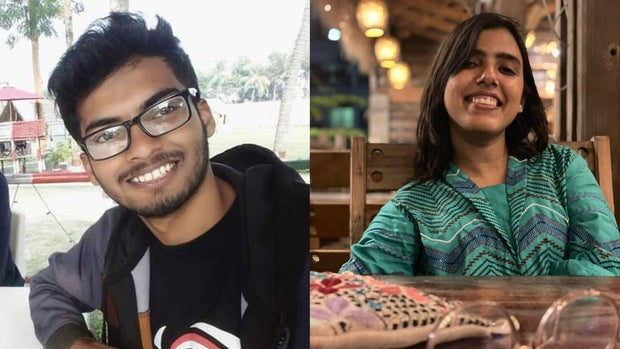
zamil-limon-nahida-bristy-usf-split.jpg
Zamil Limon and Nahida Bristy, both 27, were last seen in the Tampa area on April 16, the University of South Florida Police Department said.

Families of Zamil Limon and Nahida Bristy

On April 15, the day before the doctoral students went missing, Abugharbieh allegedly asked ChatGPT, “Can a VIN number on a car be changed?” and, “Can you keep a gun at home with out a license,” according to court documents. On the same night his phone pinged near the location where Limon’s body was found, the suspect asked ChatGPT if cars are “checked at the Hillsborough River state park.”

A spokesperson for OpenAI, the developers of ChatGPT, said in a statement to CBS News: “This is a terrible crime, and our thoughts are with everyone affected. We’re looking into these reports and will do whatever we can to support law enforcement in their investigation.”

Abugharbieh was held without bond following an initial court appearance on Tuesday. He has yet to enter a plea.

Florida opens investigation into ChatGPT

Florida Attorney General James Uthmeier announced last week that his office had launched a criminal investigation into OpenAI after reviewing conversation logs between ChatGPT and a Florida State University student who opened fire on the campus in April 2025. The shooting killed two people and left several others injured. 

“My prosecutors have looked at this and they’ve told me if it was a person on the other end of that screen, we would be charging them with murder,” Uthmeier said during a news conference on April 21, saying the AI tool offered “significant advice” to suspect Phoenix Ikner.

An OpenAI spokesperson said the company identified an account believed to be associated with Ikner and shared it with law enforcement. The company added ChatGPT “did not encourage or promote illegal or harmful activity” and the bot provided responses to questions with information found in public sources on the internet. 

“Last year’s mass shooting at Florida State University was a tragedy, but ChatGPT is not responsible for this terrible crime,” OpenAI said in its statement.

Dr. Jill Schiefelbein, an AI strategist and professor at the Muma College of Business at the University of South Florida, said if politics are taken out of it, the investigation could lead to solutions on issues such as what is a reasonable time for a technology to report someone who violates their terms and conditions. 

“I wouldn’t blame the technology any more than I would blame a vehicle that gets into an accident by a human driver,” she told CBS News. “It’s how these tools are used, whether it’s a firearm, whether it’s a vehicle, whether it’s a tool that helps you retrieve information, it’s the user intent behind it that’s the issue.”

“Does that mean I believe that there shouldn’t be stricter guardrails in place? Absolutely not,” she said.

While OpenAI rejected any responsibility for the Florida State University shooting, the company has not been silent on all crimes involving the AI tool.

Sam Altman, the CEO of OpenAI, issued an apology last week to a community in British Columbia where eight people were killed by a teen who had previously exhibited concerning behavior on ChatGPT. Jesse Van Rootselaar, 18, allegedly opened fire on Feb. 10 at Tumbler Ridge Secondary School, killing a teacher and five students, before dying from a self-inflicted gunshot, police said. Van Rootselaar had earlier killed her mother and 11-year-old half-brother at their home.

“The pain your community has endured is unimaginable,” Altman wrote in a letter shared on social media by British Columbia Premier David Eby. “I have been thinking of you often over the past few months.”
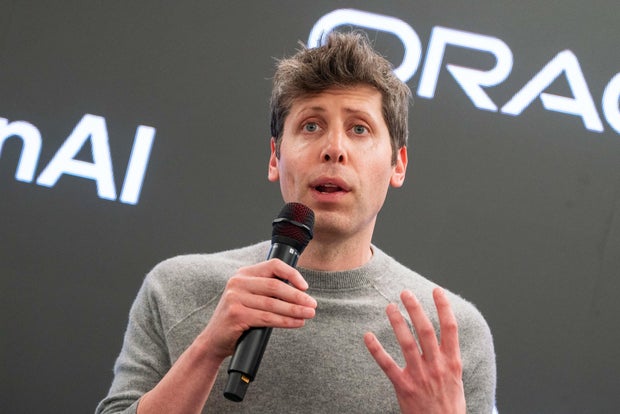
OpenAI CEO Sam Altman
OpenAI CEO Sam Altman attends the 12th annual Breakthrough Prize Awards in Santa Monica, California, on April 18, 2026.

Tayfun Coskun/Anadolu via Getty Images

Altman wrote in the letter, dated April 23, that Van Rootselaar’s ChatGPT account had been banned in June 2025. The account was flagged by automated abuse detection tools and human investigators who identify potential misuses of ChatGPT for violent activities, OpenAI told CBS News in February. OpenAI said the account was then banned for violating its usage policies. 

OpenAI said the company had weighed whether to flag the account to law enforcement, but had determined at the time it did not pose an imminent and credible risk of serious physical harm to others, so it failed to meet the threshold for referral.

Altman wrote in his letter that OpenAI will remain focused on preventative efforts “to help ensure something like this never happens again.”

“I want to express my deepest condolences to the entire community,” he said. “No one should ever have to endure a tragedy like this.”

False claims about miscarriage risk from Covid-19 vaccines are spreading online. They use a faulty interpretation of data

(CNN) — Numerous studies have shown that Covid-19 vaccines are safe during pregnancy, but Republican senators have recently stirred up false and misleading claims that are now spreading on social media.On Monday, Sens. Ron Johnson of Wisconsin and Rand Paul of Kentucky released a batch of text messages retrieved from Dr. Anthony Fauci’s former government phone as part of an investigation into the former health official’s leadership and actions during the Covid-19 pandemic – including messages in which he discusses the possible risks and safety of the vaccine during pregnancy.These messages were a launching pad for the spread of inaccurate data, particularly claims about an 82% risk of miscarriage associated with Covid-19 vaccines. The incorrect figure spread online, including in a since-deleted post by Sen. Ted Cruz.“This is a well-studied area. We knew this in 2021, that there wasn’t an increased risk, and now we have five more years of data. So it’s hard to believe we would miss a factor of eight increase in miscarriages,” Dr. Kevin Ault, an ob/gyn and president-elect of the National Foundation for Infectious Diseases, told CNN’s Erin Burnett on Thursday.In a ​news release, Johnson references an exchange Fauci had in January 2021, in which he said that a second dose of a Covid-19 vaccine “theoretically could be associated with miscarriage in the 1st trimester,” as well as a criticism of a study that was published in the New England Journal of Medicine in April 2021.In that study, researchers used data from a vaccine safety monitoring system to track outcomes for nearly 4,000 women enrolled in the registry who received Covid-19 vaccines in the early months of the rollout. Among them, the researchers identified 827 women who had a “completed pregnancy” — of which 712 were live births, 104 were spontaneous abortions or miscarriages, and 11 were other outcomes.Initially, the researchers used this data to suggest that Covid-19 vaccines had a 12.6% miscarriage rate: 104 spontaneous abortions out of 827 completed pregnancies. That’s comparable with the average miscarriage rate of 10% to 20%, according to the Mayo Clinic.However, a correction was issued in September 2021 to clarify that there was not enough data to calculate the risk of miscarriage using this particular study. The follow-up time was limited, so outcomes were unknown for the vast majority of participants, and the denominator of 827 completed pregnancies did not sufficiently represent the full sample of nearly 4,000 participants.Still, that correction has been used to manipulate the study data in a way that significantly misrepresents miscarriage risk associated with Covid-19 vaccinations.The researchers note that 700 of the completed pregnancies were in their third trimester when the mother was vaccinated, and they say that “any risk estimate would need to account for gestational week-specific risk of spontaneous abortion.” This meant “no denominator was available to calculate a risk estimate for spontaneous abortions.”But in their claims about the risks of vaccination, critics are instead inaccurately constricting the denominator to exclude those 700 completed pregnancies in the third trimester. This would lead to an overestimation of miscarriage risk of 82%, based on a faulty calculation of 104 spontaneous abortions out of 127 pregnancies completed in the first or second trimester.Experts in public health and pregnancy care emphasize that the benefits that the Covid-19 vaccine offers pregnant moms — and their babies — significantly outweigh any risk.“It is without question that the benefits of the vaccine outweigh the risks, and the world’s literature on this topic includes hundreds of thousands of women,” said Dr. Brenna Hughes, chair of the Society for Maternal-Fetal Medicine’s Infectious Disease and Emerging Threats Committee.The US Centers for Disease Control and Prevention cites dozens of studies on its website that come to the same conclusion.”COVID-19 vaccination before and during pregnancy did not increase health risks for pregnant women or their babies,” the agency says. “In addition, studies have also shown that COVID-19 vaccination during pregnancy provides protection to both the pregnant woman and the baby.”Hughes says that miscarriage concerns are common for pregnant women and that doctors are constantly discussing risks and benefits with their patients.“When we offer any intervention in pregnancy, the first question is: ‘Is it safe for me? Is it safe for the baby?’”With Covid-19 vaccines, the risks she tells people about most are a sore arm and some possible fatigue. The benefits are “incredibly clear,” she said, and outcomes are “quite the opposite of what of what some of this misinformation is saying.”Covid-19 infection poses significantly more risk to pregnant women than the vaccines, experts say.“We had hundreds of maternal deaths in 2021 due to Covid, and we still have severe illnesses, ICU stays, stillbirth, preterm deliveries related to those respiratory diseases,” Ault said. “Vaccination during pregnancy reduces the risk of all those things. So if somebody’s making decisions on these bad sources of information, that has a real downstream effect on maternal health.”And Hughes says she worries that the resurfacing of misinformation about Covid-19 vaccines may leave pregnant women with broader doubts about other interventions.“One of the concerns that we’re seeing now is that people aren’t sure who to trust and who the trusted messenger should be,” Hughes said, but medical societies are the most reliable sources of information.“We are very careful about the science that we put into our guidelines,” she said. “We rigorously assess it for quality. We debate it to make sure that we think that the science is strong enough, and it is not one person making a decision or a recommendation. This is a committee of people with decades of expertise on these topics who really carefully look at the literature and ensure that we feel that it’s adequate before we make these recommendations.”The-CNN-Wire™ & © 2026 Cable News Network, Inc., a Warner Bros. Discovery Company. All rights reserved.
Read Next Story