
When Christopher Kennedy went to have an X-ray before a routine surgery, he thought he would be in and out. Then a technician spotted scarring in his lungs.
Kennedy, 68 at the time, had never noticed any warning signs. He was a retired Air Force technician who exercised regularly and spent his time landscaping his backyard and training Bernese Mountain dogs to be hospital therapy animals.
After several tests, a pulmonologist gave him an alarming diagnosis: Idiopathic pulmonary fibrosis, or IPF. It’s a type of lung disease with no known cause where scar tissue grows in the lungs and prevents oxygen from reaching the bloodstream, according to Dr. Panagis Galiatsatos, a medical spokesperson for the American Lung Association and pulmonologist at Johns Hopkins, who was not involved in Kennedy’s care. The condition is progressive with a “high mortality rate,” Galiatsatos said.
At first, Kennedy thought he could “beat” the disease. But as his lung function degraded, he realized that was “baloney.” Medications meant to slow the progressive fibrosis weren’t working, and he was starting to need oxygen in his daily life. Even walking to the kitchen was leaving him winded. In 2024, Cleveland Clinic pulmonologist Dr. Aman Pande confirmed Kennedy’s worst fear: He had less than a year to live.
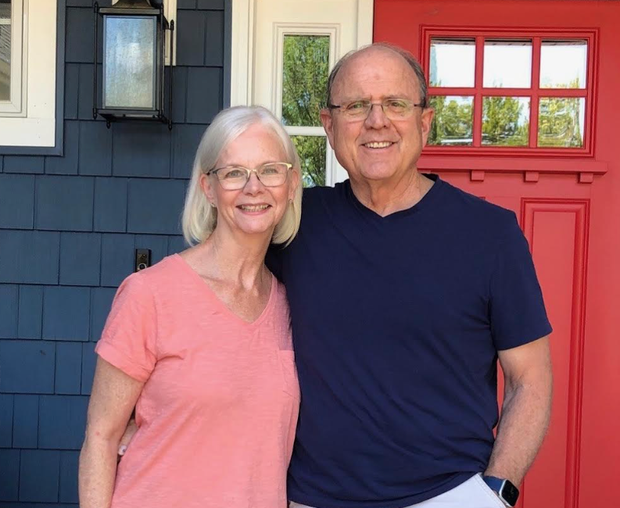
Christopher Kennedy / Cleveland Clinic
“We all wonder, as human beings, how we’re going to go,” Kennedy said. “And you never know. It’s a great mystery. Well, for the first time in my life, I was told ‘This is how you’re going to go.'”
“You come out one of two ways”
Pande did have one option for Kennedy: They could see if he was eligible for a double-lung transplant. Kennedy, at 74, was older than most patients who undergo the operation, but he was otherwise a promising candidate, Pande said. Lung transplants are usually the final option offered to IPF patients, Pande said, and are usually curative, though a small percentage of patients can see the condition recur.
Kennedy was initially resistant to the idea, because his younger brother had died after the same procedure. But after more convincing from Pande, he agreed to undergo testing to see if he would be eligible. Cleveland Clinic doctors “scoured everything,” Kennedy said. Finally, he was approved as a candidate. He was registered on the national transplant list, and waited for a pair of suitable lungs to become available.
As the months passed, Kennedy’s lung function continued to degrade. He went from using two liters of oxygen a day to 10. He had a mild case of COVID-19. He lost more than 40 pounds. In October 2024, he was admitted to the hospital.
“Dr. (Jason) Turowski, (a transplant pulmonologist at Cleveland Clinic) said ‘OK, we’re going to admit you and you come out one of two ways: With a set of lungs, or we’re going to carry you out,'” Kennedy recalled.
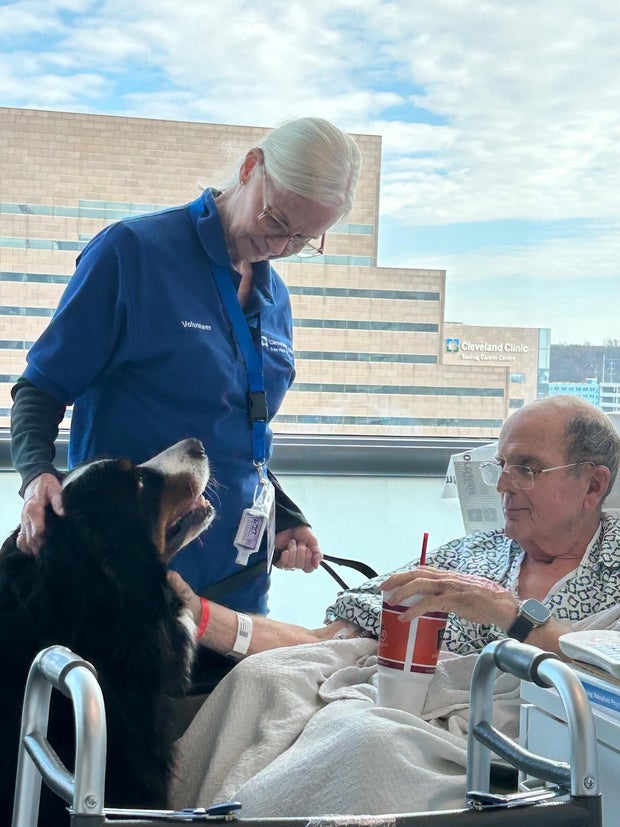
Christopher Kennedy / Cleveland Clinic
“You’re reminded every breath matters”
Kennedy spent a month in the hospital. There were two false alarms, where it seemed that a pair of lungs might be available but ultimately were not. The third time was the charm, and on Nov. 15, Kennedy underwent a double-lung transplant.
“It was a relief. I was apprehensive, obviously, and anxious. I can remember going into the operating room,” Kennedy said. “I can remember the flurry of activity, all the people that were in there getting me ready for the surgery. Next thing you know, you’re in your room.”
Just hours after the surgery, Kennedy’s lung capacity was already better than it had been in months. He had several setbacks, including a post-surgery infection and a stroke, but his “indomitable spirit” has helped him recover, said pulmonologist Rachel Powers, who has been part of Kennedy’s post-transplant care team.
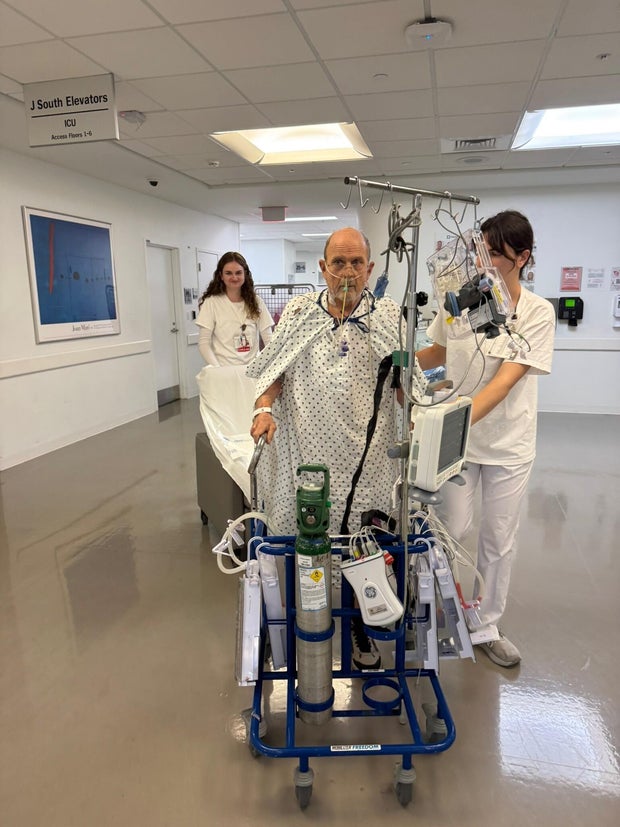
Christopher Kennedy / Cleveland Clinic
“I’m very proud of him. He really has kept a very good perspective of his course of recovery,” Powers said. “He’s kept such a good outlook, and I think that’s been really important for some of the things that he’s had to overcome after transplant.”
For Kennedy, now 75, life is now beginning to feel normal again. Tests show that his lung capacity is at 98%. He is back to spending time with his wife, children and grandkids. He is able to exercise at home and was recently able to take his dog for a walk without losing his breath. He’s almost done training the canine, a Bernese Mountain dog named Fini, to be a hospital therapy dog.
Kennedy had believed Fini would be the last therapy dog he trained, and named him after the retirement flights conducted by Air Force members. But in a few weeks, he’ll be getting a new puppy. He plans to name her Encore to celebrate his own second chance. Training hospital therapy dogs has become even more meaningful after his own medical journey, he said.
“There’s a lot of things that are different in my life. It gives you great perspective and proportion of life, of what’s important and what isn’t,” Kennedy said. “You take every breath for granted, because, you know, why would you not? But as soon as they become compromised, you’re reminded every breath matters. It keeps you centered.”
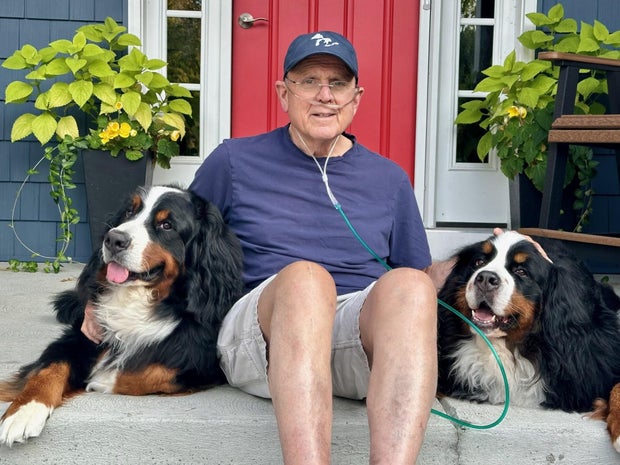
Christopher Kennedy / Cleveland Clinic