
Country star Colt Ford doesn’t remember the day he had a life-threatening heart attack.
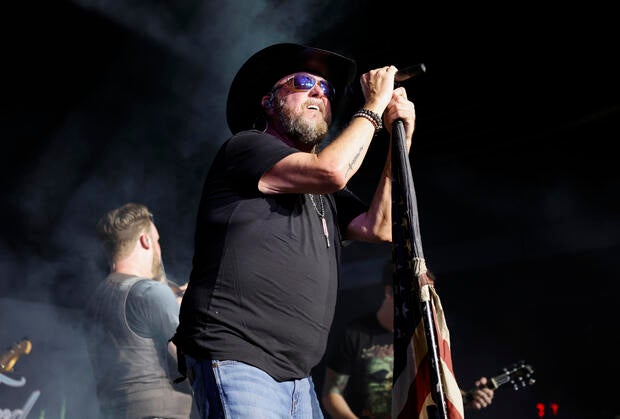
He and his band performed at Whiskey Row, a venue in Gilbert, Arizona, on April 4, 2024, but Ford told CBS News that he has no memory of the show. He also doesn’t remember the moments after the show, when he returned to the tour bus and collapsed.
“One of my guys just happened to walk back on the bus and find me already slumped over,” Ford, a former professional golfer, said.
Ford had experienced a massive heart attack. His bandmates called for help and started performing CPR. First responders took him to an area hospital, where he underwent a 10-hour surgery. He flat-lined twice, Colt said, and his heart had to be shocked back into beating.
After the surgery, he was transferred to the Mayo Clinic, where he was kept in a medically induced coma for eight days. He was also put on extracorporeal membrane oxygenation, or ECMO, a form of machine support that helps the heart and lungs.
Jason Kempin / Getty Images
No one, including Ford, had noticed any symptoms of the heart attack. Ford had undergone a check-up before his tour that found no problems, he said. He had recently lost weight and thought he was in good shape, and he was 53 years old at the time. His bandmates remembered the night as one of the best shows of their tour, and videos from the night show Ford active on stage.
“I woke up eight days later, and I don’t remember any of it,” Ford, now 54, said. “I had no concept of it.”
Do heart attacks always have symptoms?
Heart attacks don’t always have symptoms, according to Dr. Sawella Guseh, a cardiologist at Mass General Brigham who was not involved in Ford’s care. The phenomenon hasn’t been closely studied, so exact numbers of who does and doesn’t have symptoms don’t exist, he said, but silent heart attacks do make up a “significant” number of cases.
Some groups are more prone to “silent heart attacks,” Guseh said. That includes people with diabetes, who may have nerve damage from high blood sugar, meaning their nerves can’t alert their brains about the problems in the heart. Athletes and those with a high pain tolerance may not notice the symptoms, Guseh said.
Any shortness of breath after activities that don’t normally make someone breathless should be considered a symptom, he said. Even something seemingly unrelated to the cardiac system, like tooth pain after exertion, could be a sign that your heart is in danger.
Medical experts demonstrate life-saving techniques when someone goes into cardiac arrest
06:03
“I pretty much tell everybody, it’s not just chest pain, it’s anything that can happen with exertion between your ears and your belly button,” Guseh said. “Your brain doesn’t actually have a signature for the heart. The nerves from the heart that go to the brain are actually the same ones that come up from the stomach, so the brain is like ‘Something’s up, but I don’t actually know if that’s my heart or anything else.'”
Most people who have a heart attack or cardiac episode experience things like chest tightness or pressure. More unusual symptoms might include pain in the neck and jaw or in their shoulder. Women may be more likely to experience these kinds of symptoms, CBS News previously reported.
“I’ll say that usually when you go back and ask, you can find something that was a little bit off,” Guseh said. “But there are people where, yeah, they actually felt absolutely nothing.”
“I don’t know how much more dire it can be”
Dr. Kwan S. Lee, the Mayo Clinic cardiologist who led Ford’s care team, said the country singer most likely experienced a sudden artery block, which can cause the heart to stop abruptly. Keeping him alive afterwards required “the whole village,” Lee said. In addition to ECMO, Ford received multiple stents to open the blocked arteries in his heart. Weaning him off ECMO took more work, Lee said, and his care team had to ensure that he didn’t get any infections that could pose further danger.
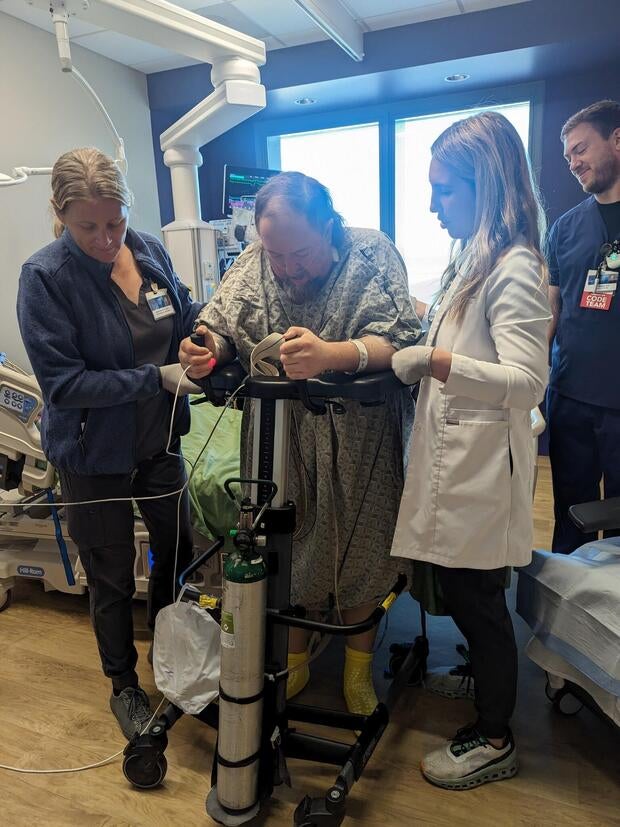
When Ford opened his eyes after eight days in a coma, he was too weak to even lift a Styrofoam cup of ice chips, he told CBS News. His wife and son were by his side, and his doctor filled him in on what had happened over the past several days.
“I was really, really, really sick. I died twice,” Ford said. “My doctor said I was 1% of the 1%. I don’t know how much more dire it can be than that.”
Colt Ford / Mayo Clinic
Even though he was awake, that wasn’t the end of his journey.
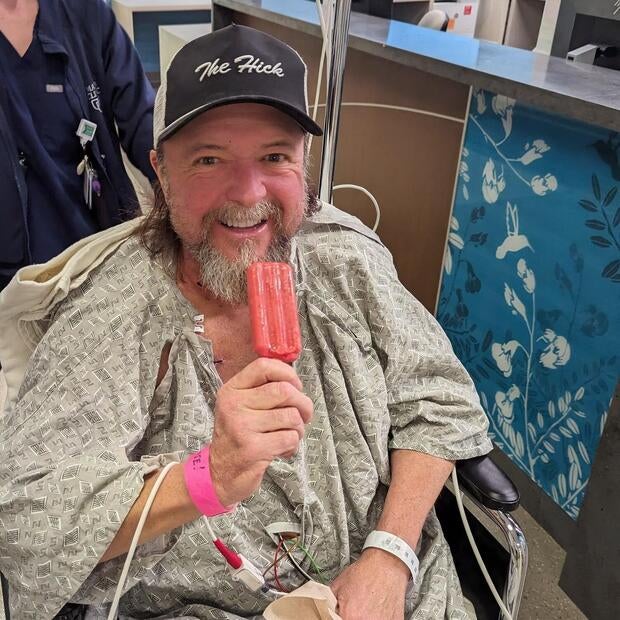
Ford underwent a fasciotomy to relieve pressure that had built up in his leg while he was asleep. He also had lost sensation in one leg below the knee. Once the conditions were treated, he had to begin physiotherapy and start a pharmaceutical regimen that would keep his heart stable even after he left the hospital. Ford said that process included learning “how to walk again,” while also focusing on his mental health.
“I’d never been through anything like that. We’ve all had injuries. As an athlete and musician, you learn to play through things, you play through pain. I’ve played shows with kidney stones,” Ford said. “But this wasn’t that. I was helpless there for a while.”
Colt Ford / Mayo Clinic
Recovering and returning to music
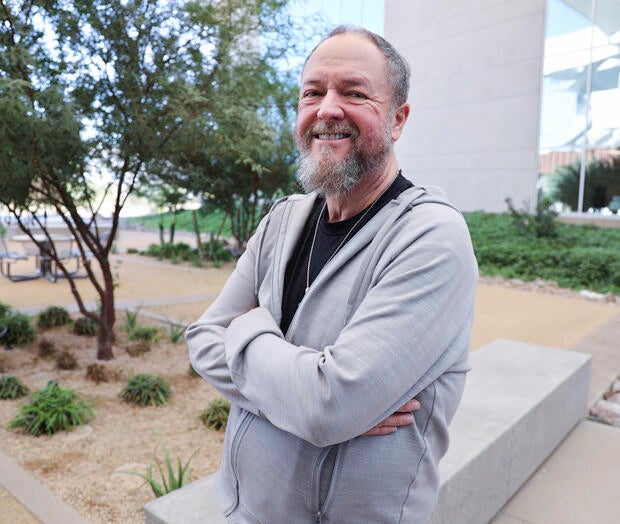
Ford went home from the hospital several weeks after waking up. He continued cardiac rehabilitation and physical therapy there. He has also urged fans, friends and family to learn from his story and take stock of their own health.
“All my friends, all my buddies, they’re all going to the doctor,” Ford said. “Everybody thought ‘Oh, Colt’s doing good. He’s lost all that weight. He’s great.’ And then I wake up eight days later.”
His goal, he said, was always to get back on stage. After almost a year of recovery, he’s getting ready to do just that: In a few months, he plans to join fellow musician Brantley Gilbert for a few shows.
He said he’s been dealing with anxiety related to returning to performing. It’s something he’s never experienced before, he said, but he hopes the appearances will make it possible to “progress a little bit further and see what we can do on our own.”
Colt Ford / Mayo Clinic
While recovering, he’s still had time for music. On Feb. 21, he released his first single since the heart attack. The song, “Hell Out Of It,” had been nearly complete when he collapsed, but the brush with death gave it new meaning.
“That fear of the unknown is such a real thing. You’re told that when you’re young, that it all goes fast, and I didn’t believe at that, you know? Like, oh, that’s just something old people tell you,” Ford said. “And now it’s like, every day, I’m like ‘Wow, you better pay attention, because it can change in the blink of an eye.'”